

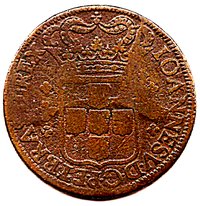
Obverse
Description:
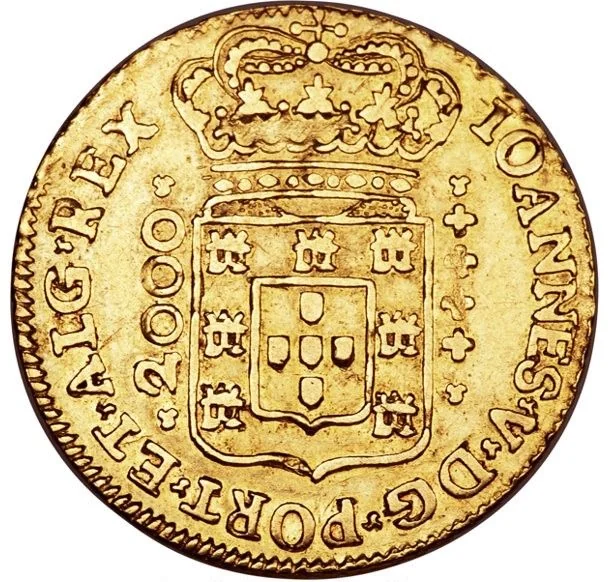
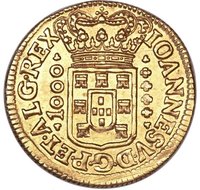
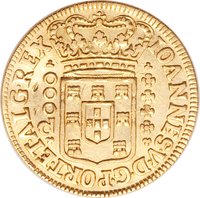
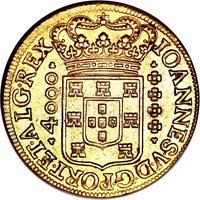
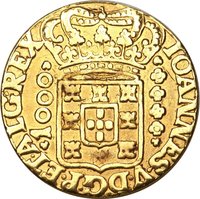
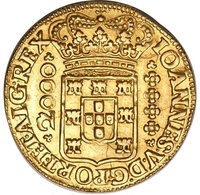
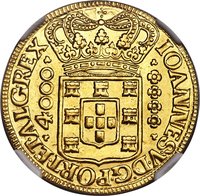
Portuguese arms crowned, flanked by 2000 and four flowers.
Inscription:
IOANNES. V. D. G. PORT. ET. ALG. REX.
2000
2000
Script: Latin
Engraver: Antônio Mengin
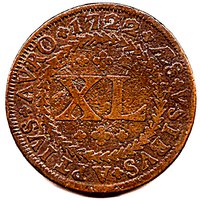
Reverse
Description:
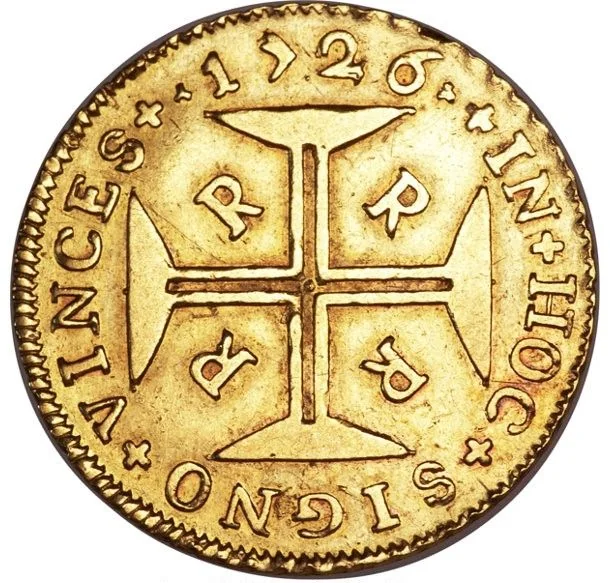
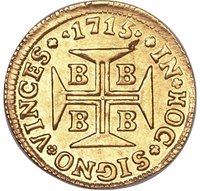
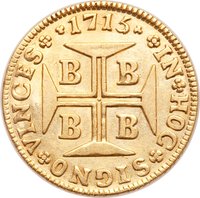
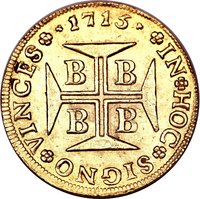
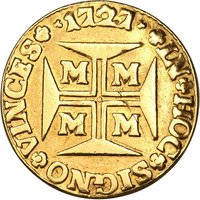
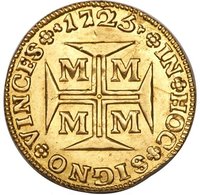
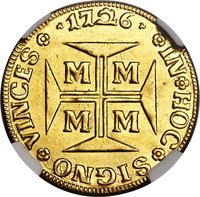
Cross of Christ flanked by four diagonal R's and date.
Inscription:
IN HOC SIGNO VINCES 1723
R R R R
R R R R
Script: Latin
Edge
Reeded.
Mints
| Name | Mark |
|---|---|
| Casa da Moeda do Brasil | RRRR |
Historical background
In 1723, Brazil’s currency situation was a direct consequence of its colonial relationship with Portugal and the economic boom driven by gold. The discovery of vast gold deposits in Minas Gerais at the end of the 17th century had transformed the colony into the financial heart of the Portuguese Empire. This mineral wealth led to a massive influx of people and trade, creating an urgent and growing demand for a reliable medium of exchange. However, the official Portuguese currency, the real (plural réis), was in chronically short supply, as Portugal sought to control and tax the flow of gold back to the metropolis.
This scarcity of official coinage resulted in a chaotic and multifaceted monetary environment. To facilitate daily transactions, a variety of substitute currencies circulated widely. These included crude gold flakes and dust (ouro em pó), which were often weighed for each transaction, as well as commodity money like sugar and tobacco. Most notably, Spanish American silver coins, especially the ubiquitous real de a ocho or "piece of eight," served as a vital de facto currency in ports and commercial centers due to their wide acceptance in Atlantic trade. This patchwork system was inefficient, prone to fraud, and complicated taxation and commerce.
The Portuguese crown, recognizing the disorder and the loss of seigniorage revenue, was actively working to assert control. The Lisbon Mint had begun striking gold coins specifically for Brazil a few years earlier, and 1723 fell within a period of increasing royal intervention to standardize the currency. The goal was to replace the heterogeneous mix of gold dust and foreign coins with official Portuguese-minted moedas, ensuring that all gold was stamped, taxed, and its value regulated. Thus, the currency situation in 1723 was one of transition—caught between the informal realities of a gold rush frontier and the tightening grip of imperial bureaucracy.
This scarcity of official coinage resulted in a chaotic and multifaceted monetary environment. To facilitate daily transactions, a variety of substitute currencies circulated widely. These included crude gold flakes and dust (ouro em pó), which were often weighed for each transaction, as well as commodity money like sugar and tobacco. Most notably, Spanish American silver coins, especially the ubiquitous real de a ocho or "piece of eight," served as a vital de facto currency in ports and commercial centers due to their wide acceptance in Atlantic trade. This patchwork system was inefficient, prone to fraud, and complicated taxation and commerce.
The Portuguese crown, recognizing the disorder and the loss of seigniorage revenue, was actively working to assert control. The Lisbon Mint had begun striking gold coins specifically for Brazil a few years earlier, and 1723 fell within a period of increasing royal intervention to standardize the currency. The goal was to replace the heterogeneous mix of gold dust and foreign coins with official Portuguese-minted moedas, ensuring that all gold was stamped, taxed, and its value regulated. Thus, the currency situation in 1723 was one of transition—caught between the informal realities of a gold rush frontier and the tightening grip of imperial bureaucracy.
Series: Serie of Doubloons
✨ Legendary