

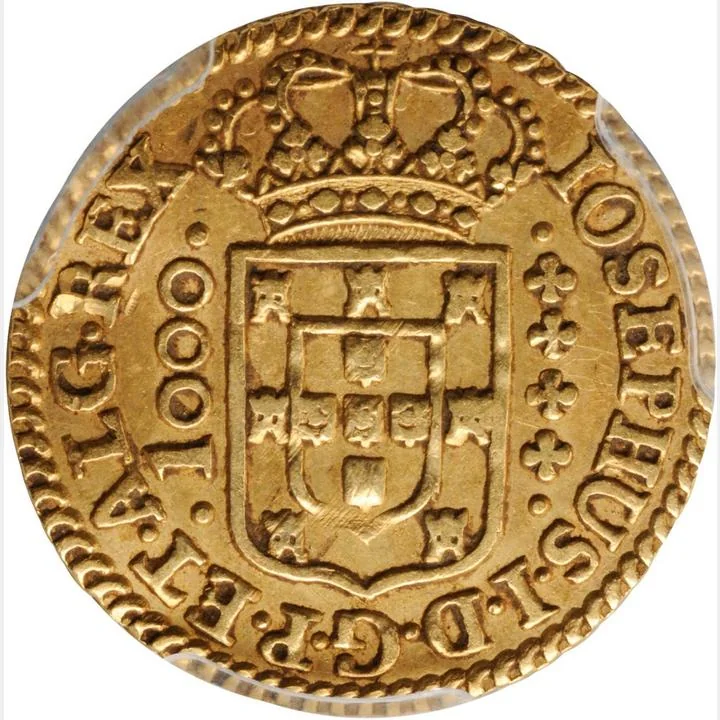
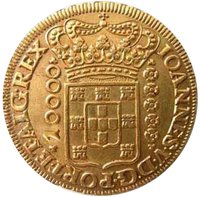
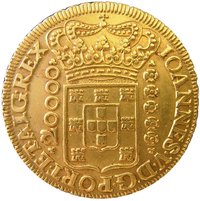
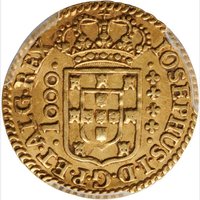
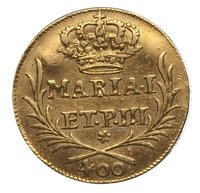
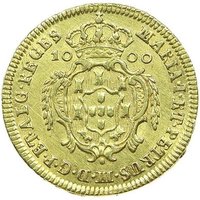
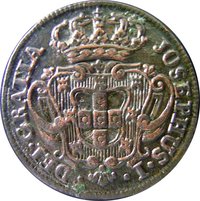
Obverse
Inscription:
IOSEPHUS D D PORT ET ALG REX
1000
1000
Script: Latin
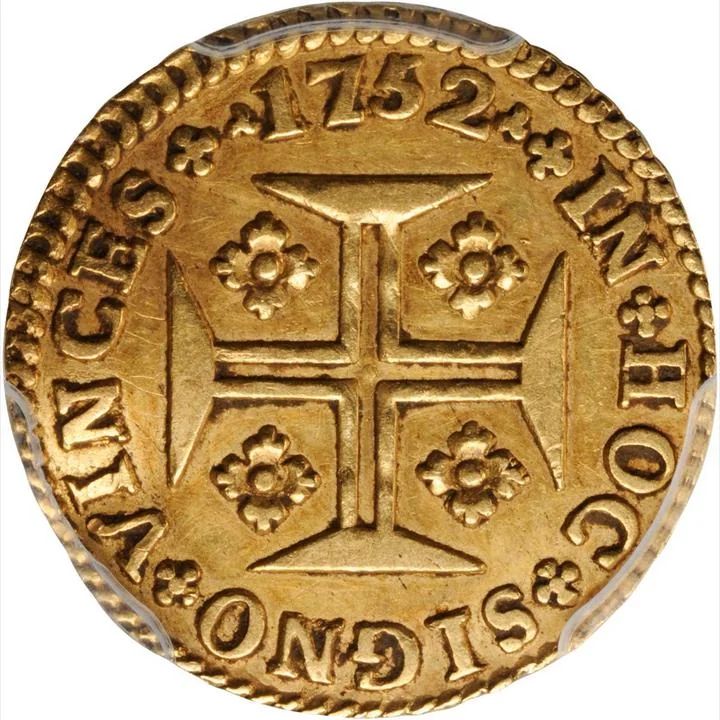
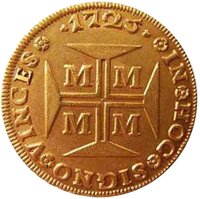
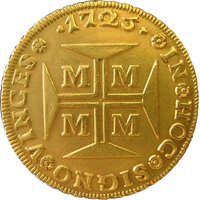
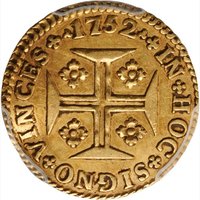
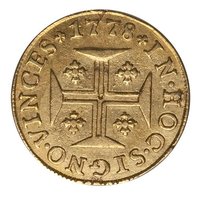
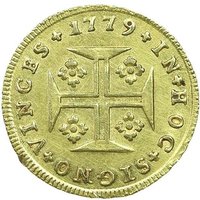
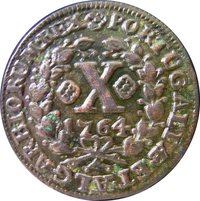
Reverse
Inscription:
1752-IN HOC SIGNO VINCES
Script: Latin
Edge
Rope shaped
Mints
| Name | Mark |
|---|---|
| Imprensa Nacional - Casa da Moeda | — |
Mintings
| Year | Mint Mark | Mintage | Quality | Collection |
|---|---|---|---|---|
| 1749 | — | — | ||
| 1752 | — | — | ||
| 1768 | — | — | ||
| 1769 | — | — | ||
| 1776 | — | 1 |
Historical background
In 1749, Portugal's currency situation was characterised by instability and scarcity, largely a legacy of the preceding decades. The reign of King João V (1706-1750) had seen immense wealth flow into the kingdom from Brazilian gold, particularly after the 1690s discoveries. However, this influx did not translate into a stable, abundant coinage for daily use. Instead, much of the gold was used to finance lavish royal projects, pay for imports (which created a trade deficit with England), and was often exported as bullion rather than being fully minted into domestic currency. This left the everyday economy struggling with a chronic shortage of circulating specie, especially lower-denomination coins for ordinary transactions.
The monetary system itself was complex and somewhat chaotic. The official unit of account was the real (plural réis), but transactions often referenced the milréis (1,000 réis). In practice, a confusing mix of older, debased Portuguese coins circulated alongside foreign currency, particularly Spanish silver pesos and gold moedas, and even Brazilian coins. The scarcity of official coinage led to widespread use of privately issued tokens and promissory notes, especially in commercial centres like Lisbon and Porto, further undermining state control over the money supply.
This precarious environment set the stage for significant reforms that would follow under the subsequent prime minister, the Marquis of Pombal. The 1749 monetary situation highlighted the disconnect between Brazil's mineral wealth and Portugal's domestic economic health, exposing an over-reliance on colonial extraction and a failure to develop a robust, sovereign monetary system. The need for standardisation, increased minting, and greater economic sovereignty became pressing concerns for the crown, paving the way for the centralising policies that would define the latter half of the 18th century.
The monetary system itself was complex and somewhat chaotic. The official unit of account was the real (plural réis), but transactions often referenced the milréis (1,000 réis). In practice, a confusing mix of older, debased Portuguese coins circulated alongside foreign currency, particularly Spanish silver pesos and gold moedas, and even Brazilian coins. The scarcity of official coinage led to widespread use of privately issued tokens and promissory notes, especially in commercial centres like Lisbon and Porto, further undermining state control over the money supply.
This precarious environment set the stage for significant reforms that would follow under the subsequent prime minister, the Marquis of Pombal. The 1749 monetary situation highlighted the disconnect between Brazil's mineral wealth and Portugal's domestic economic health, exposing an over-reliance on colonial extraction and a failure to develop a robust, sovereign monetary system. The need for standardisation, increased minting, and greater economic sovereignty became pressing concerns for the crown, paving the way for the centralising policies that would define the latter half of the 18th century.
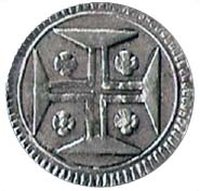
Series: Cross of Christ
✨ Legendary