


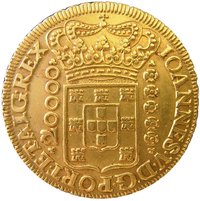
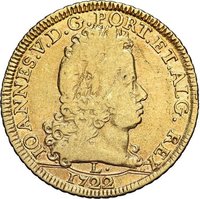
Obverse
Description:
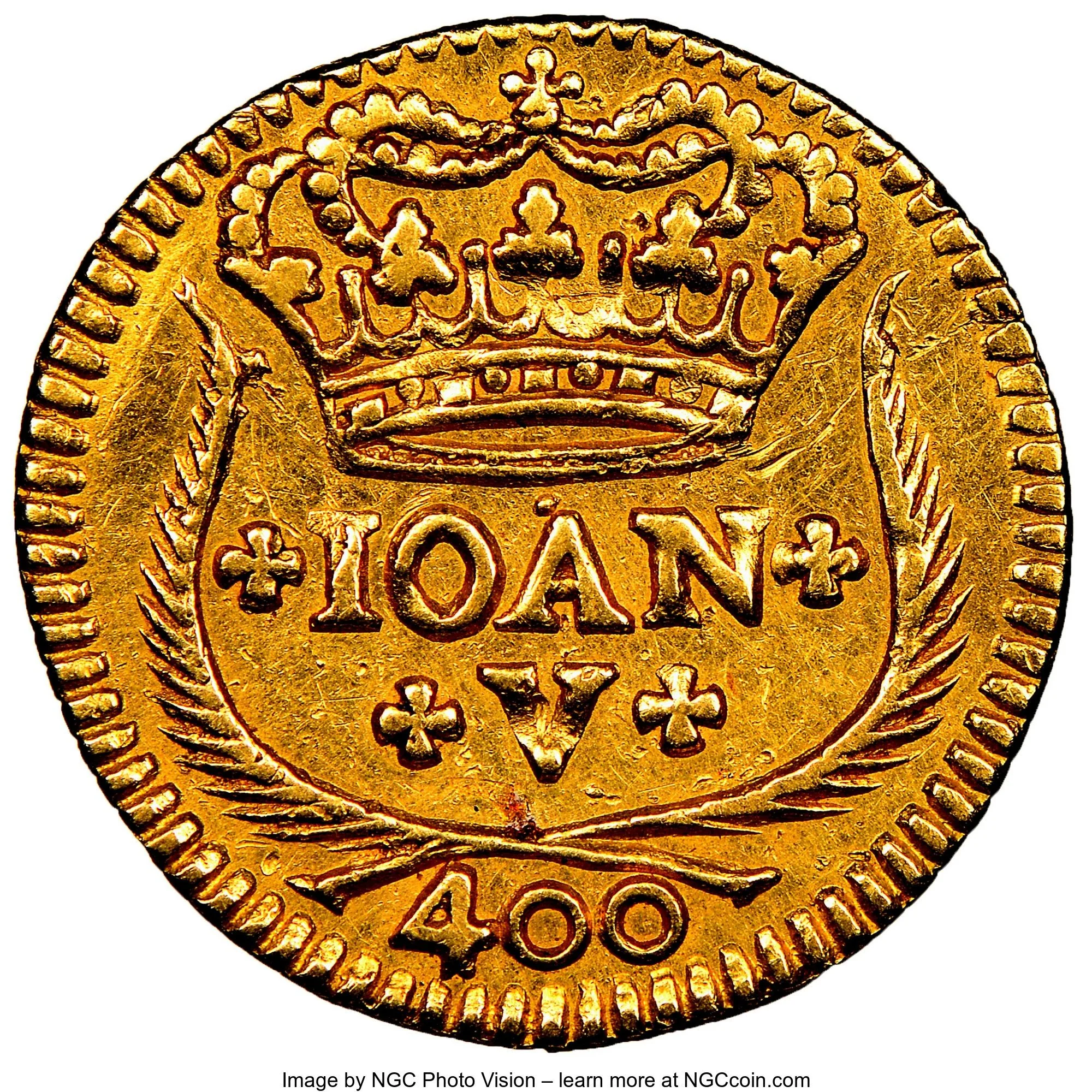
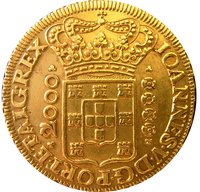
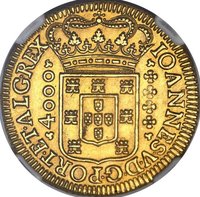
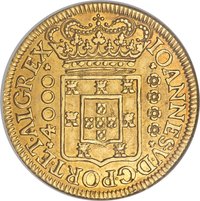
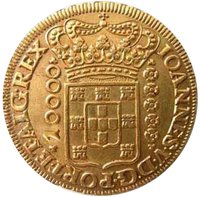
A royal crown above "IOAN V," a laurel crown, and the face value 400 below.
Inscription:
+IOAN+
+V+
400
+V+
400
Script: Latin
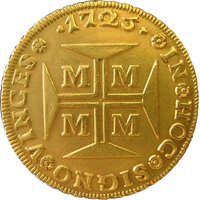
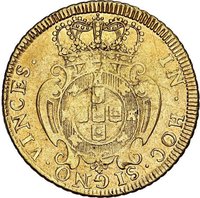
Reverse
Description:
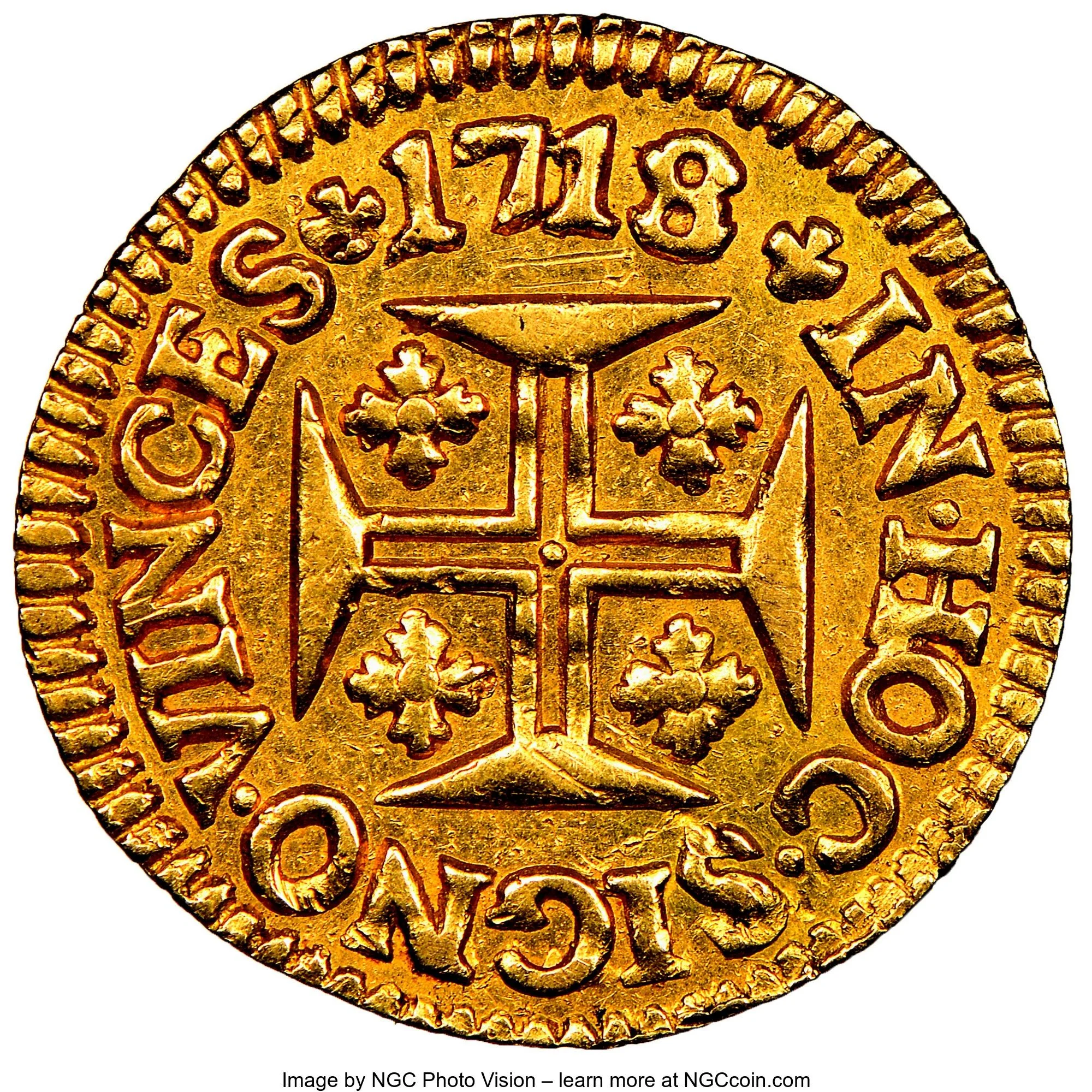
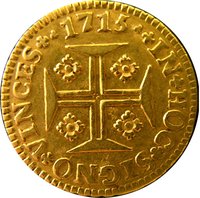
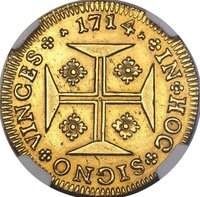
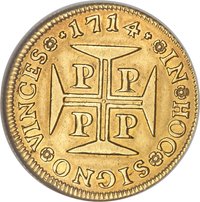
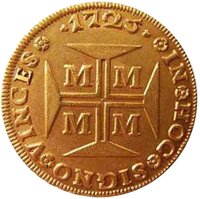
A Jerusalem cross fills the room, encircled by the date and the phrase "In hoc signo vinces." This phrase, from Constantine I's vision before the Battle of the Milvian Bridge (312 AD), was originally seen in Greek: "ἐν τούτῳ νίκα."
Inscription:
+1718+IN·HOC·SIGNO·VINCES
☩
☩
Script: Latin
Edge
Rope shaped
Mints
| Name | Mark |
|---|---|
| Imprensa Nacional - Casa da Moeda | ( ) |
| Vila Rica | M |
| Casa da Moeda do Brasil | R |
Mintings
| Year | Mint Mark | Mintage | Quality | Collection |
|---|---|---|---|---|
| 1718 | — | — | ||
| 1719 | — | — | ||
| 1720 | — | — | ||
| 1721 | — | — | ||
| 1722 | — | — | ||
| 1723 | — | — | ||
| 1724 | — | — | ||
| 1725 | — | — | ||
| 1725 | MMMM | — | ||
| 1726 | — | — | ||
| 1726 | MMMM | — | ||
| 1728 | — | — | ||
| 1729 | — | — | ||
| 1730 | — | — | ||
| 1730 | RRRR | — | ||
| 1731 | — | — | ||
| 1733 | — | — | ||
| 1734 | — | — | ||
| 1735 | — | — | ||
| 1736 | — | — | ||
| 1737 | — | — | ||
| 1738 | — | — | ||
| 1739 | — | — | ||
| 1741 | — | — | ||
| 1742 | — | — | ||
| 1743 | — | — | ||
| 1744 | — | — | ||
| 1746 | — | — | ||
| 1747 | — | — | ||
| 1748 | — | — |
Historical background
In 1718, Portugal's currency situation was characterized by significant instability and debasement, a direct legacy of King João V's expensive ambitions and the economic strains of the previous decades. The discovery of gold in Brazil (Minas Gerais) in the 1690s had begun to flood the metropolis with precious metal, but this wealth was primarily used to finance lavish court expenditures, monumental building projects like the convent-palace at Mafra, and a chronic trade deficit, particularly with England. Rather than strengthening the currency, this influx contributed to inflation and a reliance on raw bullion, while the state simultaneously engaged in the debasement of coinage to raise short-term revenue.
The circulating medium was a complex and degraded mix. Older, higher-value silver coins like cruzados circulated alongside a proliferation of lower-quality minted coins, including vast quantities of lightweight silver patacas and copper réis. The intrinsic metal value of many coins had fallen below their face value, leading to widespread hoarding of good coin (Gresham's Law), price confusion, and a loss of public confidence in the monetary system. This debasement eroded trust in domestic transactions and complicated foreign trade, as merchants had to constantly negotiate the actual value of Portuguese currency against more stable foreign units of account.
Consequently, the Portuguese economy in 1718 operated in a precarious state. While Brazilian gold provided a superficial sheen of prosperity, the underlying monetary system was weak and inefficient, hindering commercial development. The situation would eventually necessitate reform, leading to the important monetary reorganization of 1722, which introduced the cruzado as a new gold coin and attempted to standardize the chaotic system, aiming to stabilize the currency and better harness Brazil's mineral wealth for state finance.
The circulating medium was a complex and degraded mix. Older, higher-value silver coins like cruzados circulated alongside a proliferation of lower-quality minted coins, including vast quantities of lightweight silver patacas and copper réis. The intrinsic metal value of many coins had fallen below their face value, leading to widespread hoarding of good coin (Gresham's Law), price confusion, and a loss of public confidence in the monetary system. This debasement eroded trust in domestic transactions and complicated foreign trade, as merchants had to constantly negotiate the actual value of Portuguese currency against more stable foreign units of account.
Consequently, the Portuguese economy in 1718 operated in a precarious state. While Brazilian gold provided a superficial sheen of prosperity, the underlying monetary system was weak and inefficient, hindering commercial development. The situation would eventually necessitate reform, leading to the important monetary reorganization of 1722, which introduced the cruzado as a new gold coin and attempted to standardize the chaotic system, aiming to stabilize the currency and better harness Brazil's mineral wealth for state finance.
Series: Cross of Christ
⭐ Rare