

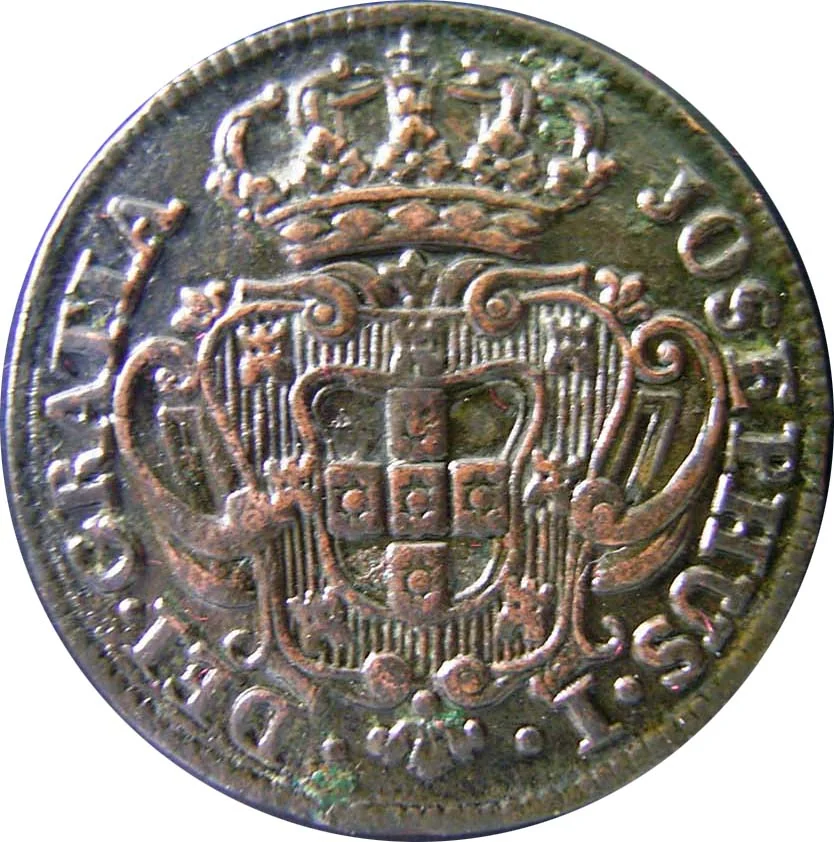
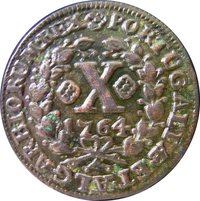
Obverse
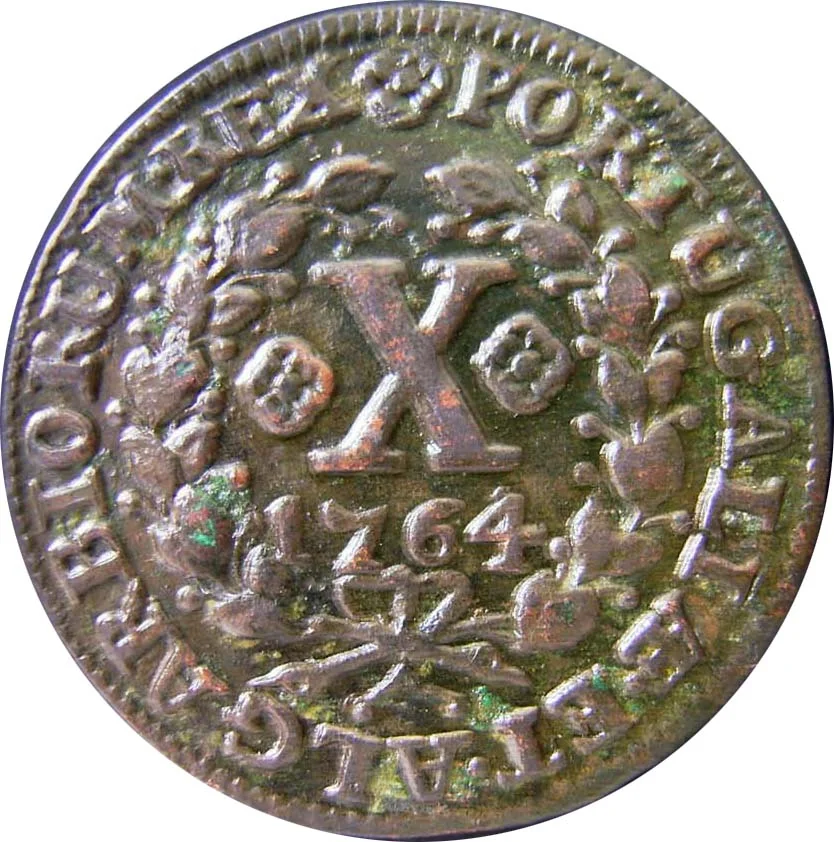
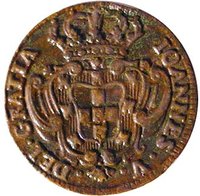
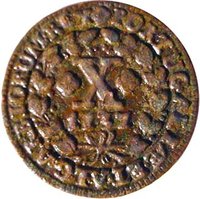
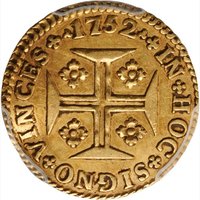
Reverse
Description:
Value (numeral) in wreath, date beneath.
Inscription:
PORTUGALIÆ·ET·ALGARBIORUM·REX
X
1764
X
1764
Script: Latin
Edge
Plain
Mints
| Name | Mark |
|---|---|
| Imprensa Nacional - Casa da Moeda | — |
Mintings
| Year | Mint Mark | Mintage | Quality | Collection |
|---|---|---|---|---|
| 1738 | — | — | ||
| 1749 | — | — | ||
| 1751 | — | — | ||
| 1752 | — | — | ||
| 1754 | — | — | ||
| 1757 | — | — | ||
| 1760 | — | — | ||
| 1761 | — | — | ||
| 1763 | — | — | ||
| 1764 | — | — | ||
| 1765 | — | — | ||
| 1776 | — | 2,021,000 |
Historical background
In 1738, Portugal's currency situation was a complex and troubled legacy of the early 18th-century gold boom from Brazil. The massive influx of Brazilian gold, particularly after the 1690s, had initially enriched the monarchy under King João V (the "Magnanimous"), funding lavish Baroque projects. However, this wealth led to severe inflation and a chronic trade deficit, as manufactured goods were imported from Britain (under the terms of the 1703 Methuen Treaty) in exchange for port wine, draining gold out of the country as quickly as it arrived. By 1738, the physical supply of gold coinage in circulation within Portugal itself was paradoxically scarce, despite the kingdom being the source of the flood.
The monetary system was a confusing patchwork of old and new units. The standard gold coin was the moeda (or cruzado), but the most prominent circulating coin was the gold peça, or "piece-of-eight," valued at 12,800 réis. Silver and copper coins, essential for everyday transactions, were in chronically short supply, leading to widespread use of cut and foreign coinage, particularly Spanish pieces. This scarcity of small denomination money crippled local commerce and caused significant social hardship. Furthermore, the purity and weight of coins had been frequently altered by royal decree to generate seigniorage revenue, eroding public trust in the currency's value.
The year 1738 falls within a period of attempted stabilization. In 1732, the government had introduced new, higher-quality gold coins, like the 12,800-réis moeda de ouro, to restore confidence. However, the structural problems remained deeply entrenched. The economy was overly dependent on colonial wealth, lacked domestic industry, and was tied to an unfavorable commercial treaty. Consequently, while the monarchy appeared fabulously wealthy on paper and in its architectural splendor, the Portuguese currency system in 1738 was fragile, inflated, and inadequate for the needs of its domestic economy, storing up problems that would intensify later in the century.
The monetary system was a confusing patchwork of old and new units. The standard gold coin was the moeda (or cruzado), but the most prominent circulating coin was the gold peça, or "piece-of-eight," valued at 12,800 réis. Silver and copper coins, essential for everyday transactions, were in chronically short supply, leading to widespread use of cut and foreign coinage, particularly Spanish pieces. This scarcity of small denomination money crippled local commerce and caused significant social hardship. Furthermore, the purity and weight of coins had been frequently altered by royal decree to generate seigniorage revenue, eroding public trust in the currency's value.
The year 1738 falls within a period of attempted stabilization. In 1732, the government had introduced new, higher-quality gold coins, like the 12,800-réis moeda de ouro, to restore confidence. However, the structural problems remained deeply entrenched. The economy was overly dependent on colonial wealth, lacked domestic industry, and was tied to an unfavorable commercial treaty. Consequently, while the monarchy appeared fabulously wealthy on paper and in its architectural splendor, the Portuguese currency system in 1738 was fragile, inflated, and inadequate for the needs of its domestic economy, storing up problems that would intensify later in the century.
🌱 Common