

moeda – Portugal
Add to wishlist
Portugal
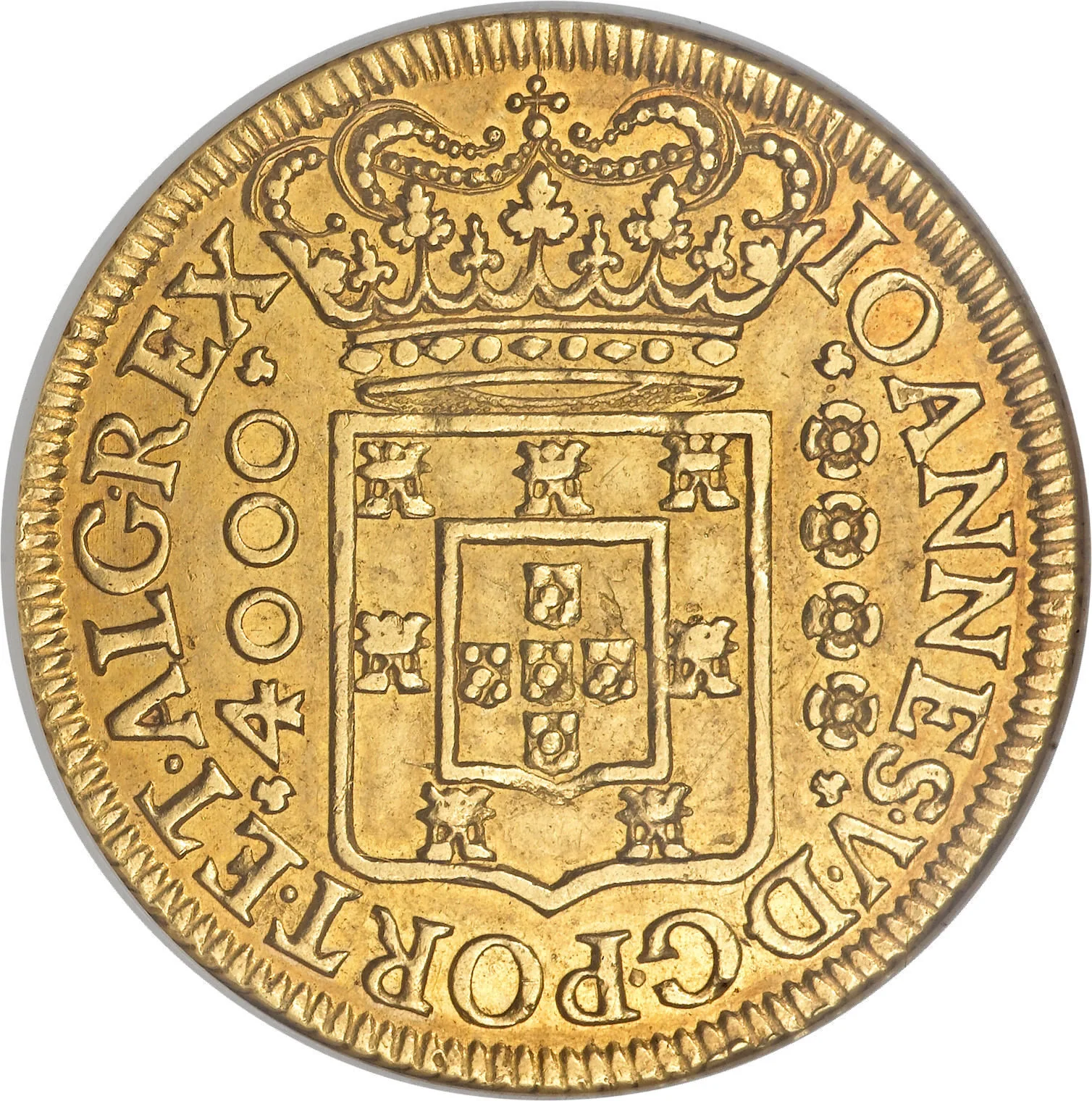
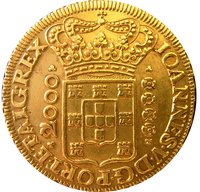
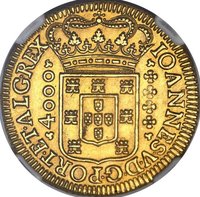
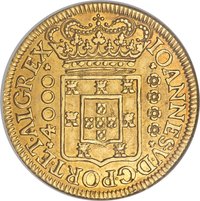
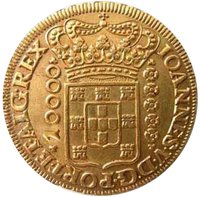
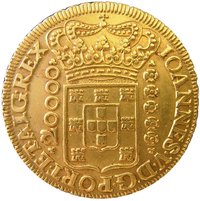
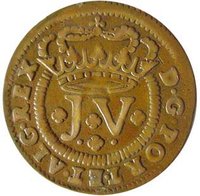
Obverse
Inscription:
IOANNES.V.D.G.PORT.ET.ALG.REX
4000
4000
Script: Latin
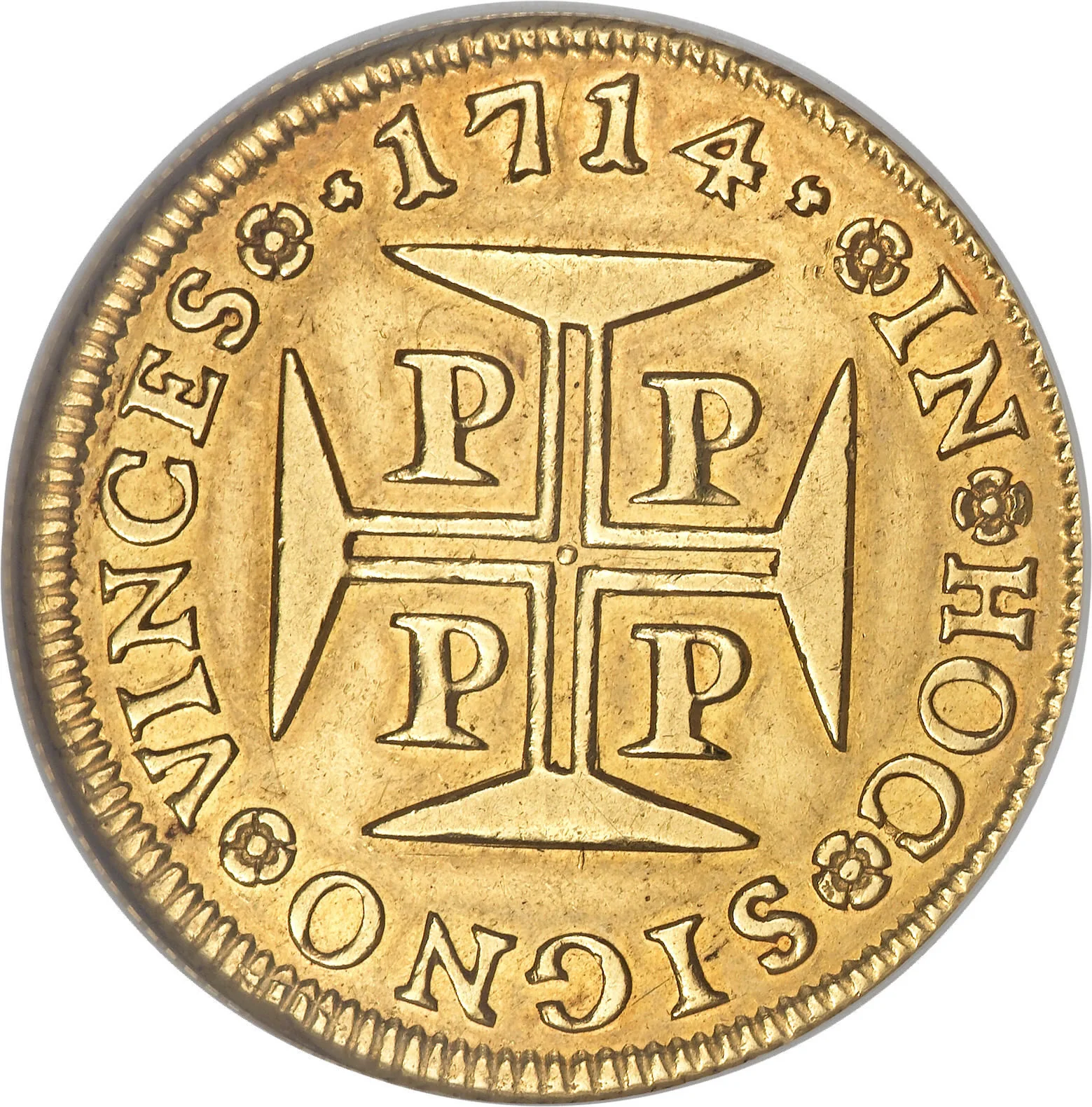
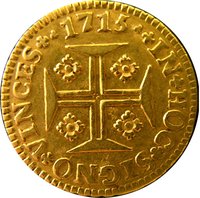
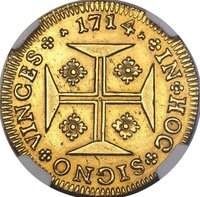
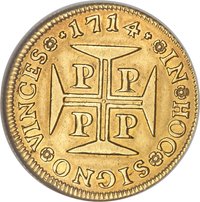
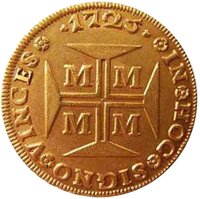
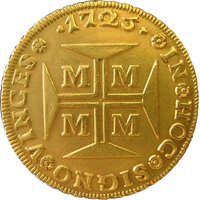
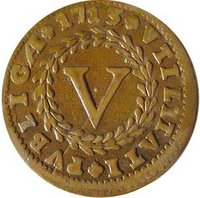
Reverse
Description:
Cross of Christ Military Order, mint mark P, 4PP on corners.
Inscription:
*1714* *IN*HOC*SIGNO*VINCES
PP
PP
PP
PP
Script: Latin
Edge
Mints
| Name | Mark |
|---|---|
| Porto | PPPP |
Historical background
In 1712, Portugal's currency situation was defined by the profound economic strain of the War of the Spanish Succession (1701-1714). The kingdom, allied with England and the Grand Alliance against France and Spain, faced immense fiscal pressure from maintaining its military commitments. This led the monarchy of King John V to resort to repeated debasements of the coinage, reducing the precious metal content in coins like the cruzado to fund the war effort. Consequently, the currency's intrinsic value fell sharply, fueling inflation, disrupting trade, and creating a complex system where older, higher-grade coins were hoarded while newer, debased coins circulated at a discount.
This monetary instability was exacerbated by a significant influx of gold from Brazil, particularly from the Minas Gerais region, which began arriving in substantial quantities around this time. While this Brazilian gold would later underpin a period of great wealth, in 1712 its initial impact was destabilizing. The sudden increase in bullion, combined with the debased coinage, complicated the exchange rates between gold, silver, and copper coins, leading to widespread confusion in commercial transactions. Furthermore, much of this gold was quickly exported to pay for manufactured goods from England (under the terms of the 1703 Methuen Treaty) and to settle war debts, limiting its immediate benefit to the domestic Portuguese economy.
The overall result was a period of monetary confusion and economic difficulty for the general population. Prices were volatile, public confidence in the currency was low, and the Crown's financial administration struggled to manage the competing demands of war finance, a shifting bullion supply, and a strained domestic economy. Thus, 1712 represents a low point in Portuguese monetary history, caught between the exigencies of a costly European war and the turbulent dawn of its Brazilian gold age, with a currency system in clear distress.
This monetary instability was exacerbated by a significant influx of gold from Brazil, particularly from the Minas Gerais region, which began arriving in substantial quantities around this time. While this Brazilian gold would later underpin a period of great wealth, in 1712 its initial impact was destabilizing. The sudden increase in bullion, combined with the debased coinage, complicated the exchange rates between gold, silver, and copper coins, leading to widespread confusion in commercial transactions. Furthermore, much of this gold was quickly exported to pay for manufactured goods from England (under the terms of the 1703 Methuen Treaty) and to settle war debts, limiting its immediate benefit to the domestic Portuguese economy.
The overall result was a period of monetary confusion and economic difficulty for the general population. Prices were volatile, public confidence in the currency was low, and the Crown's financial administration struggled to manage the competing demands of war finance, a shifting bullion supply, and a strained domestic economy. Thus, 1712 represents a low point in Portuguese monetary history, caught between the exigencies of a costly European war and the turbulent dawn of its Brazilian gold age, with a currency system in clear distress.
Series: Cross of Christ
✨ Legendary