

2 euro (Grand Duke Henri and Grand Duke Adolphe) – Luxembourg
Add to wishlist
Circulating commemorative coins
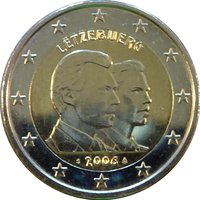
Commemoration: 50th birthday of Grand Duke Henri, 5th anniversary of his accession to the throne and 100th anniversary of the death of Grand Duke Adolphe
Luxembourg
Context
Years: 2005–2008
Year:: 2005
Issuer: Luxembourg
Period:
Ruler: Henry
Currency:
(since 2002)
Total mintage: 2,769,000
Material
References
KM: #
Numista: #2196
Value
Exchange value: 2 EUR
Inflation-adjusted value: 3.15 EUR
Obverse
Description:
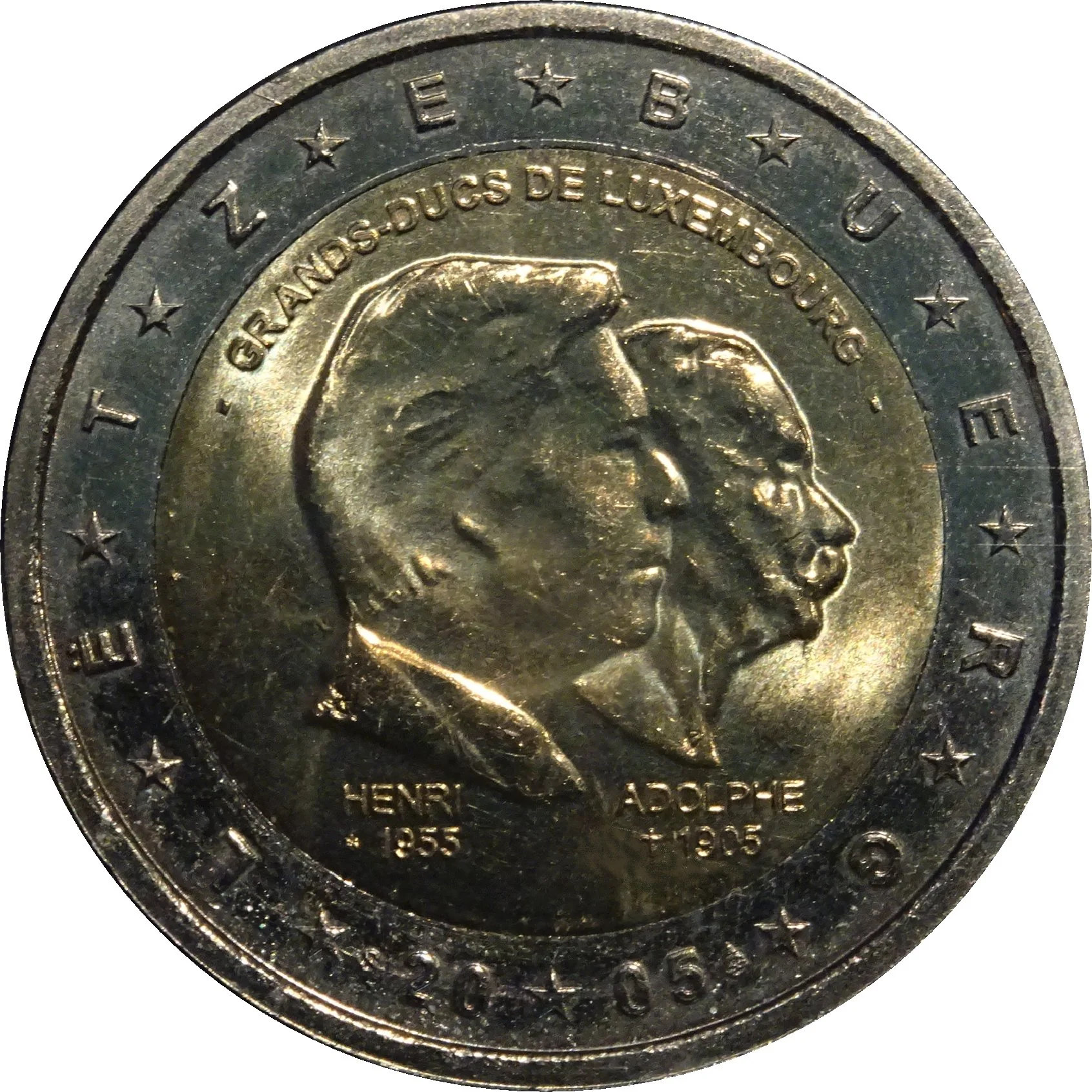
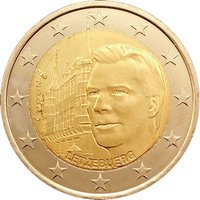
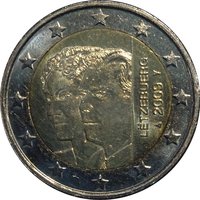
Grand Dukes Henri and Adolphe's superimposed effigies are in the centre, surrounded by the country name, date, and EU stars. The date below is flanked by an 'S' and the mint logo.
Inscription:
L Ë T Z E B U E R G
S 20 05
- GRANDS-DUCS DE LUXEMBOURG -
HENRI *1955
ADOLPHE †1905
S 20 05
- GRANDS-DUCS DE LUXEMBOURG -
HENRI *1955
ADOLPHE †1905
Translation:
L Ë T Z E B U E R G
S 20 05
- GRANDS-DUCS DE LUXEMBOURG -
HENRI *1955
ADOLPHE †1905
LUXEMBOURG
S 20 05
- GRAND DUKES OF LUXEMBOURG -
HENRI *1955
ADOLPHE †1905
S 20 05
- GRANDS-DUCS DE LUXEMBOURG -
HENRI *1955
ADOLPHE †1905
LUXEMBOURG
S 20 05
- GRAND DUKES OF LUXEMBOURG -
HENRI *1955
ADOLPHE †1905
Script: Latin
Languages: Luxembourgish, French
Reverse
Edge
Legend:
2 ** 2 ** 2 ** 2 ** 2 ** 2 **
Categories
| Person> Monarch |
| Event> Birth anniversary |
| Event> Death anniversary |
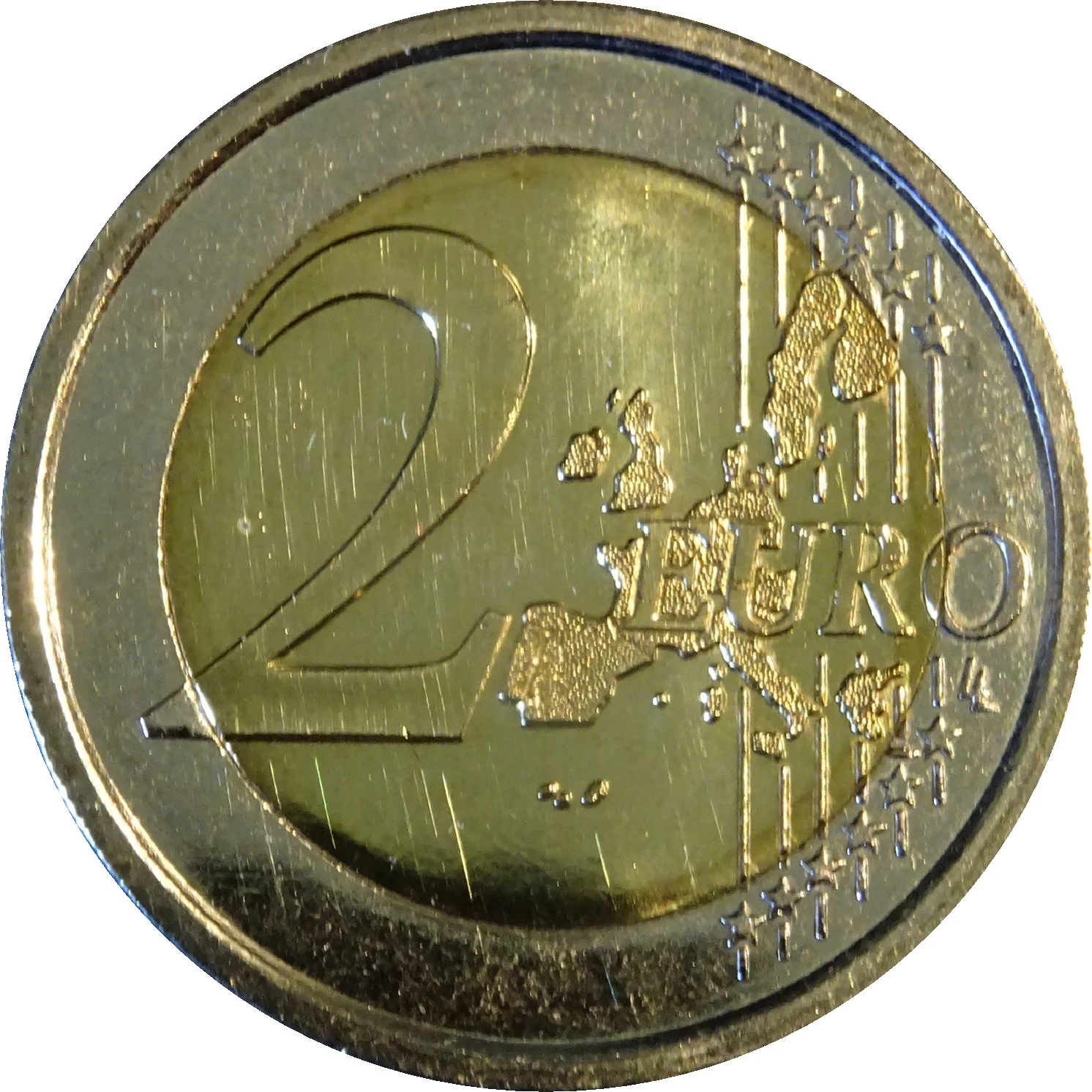
| Map |
Mints
| Name | Mark |
|---|---|
| Monnaie de Paris | (F) |
| Mint of Finland | (S) |
Mintings
| Year | Mint Mark | Mintage | Quality | Collection |
|---|---|---|---|---|
| 2005 | S | 2,720,000 | ||
| 2005 | S | 45,000 | BU | |
| 2005 | S | 1,500 | Proof | |
| 2008 | — | 2,500 | Proof |
🌱 Very Common