

25 Centavos – Guatemala
Guatemala
Context
Material
References
KM: #Click to copy to clipboard253
Numista: #8774
Value
Exchange value: 0.25 GTQ
Bullion value: $17.05
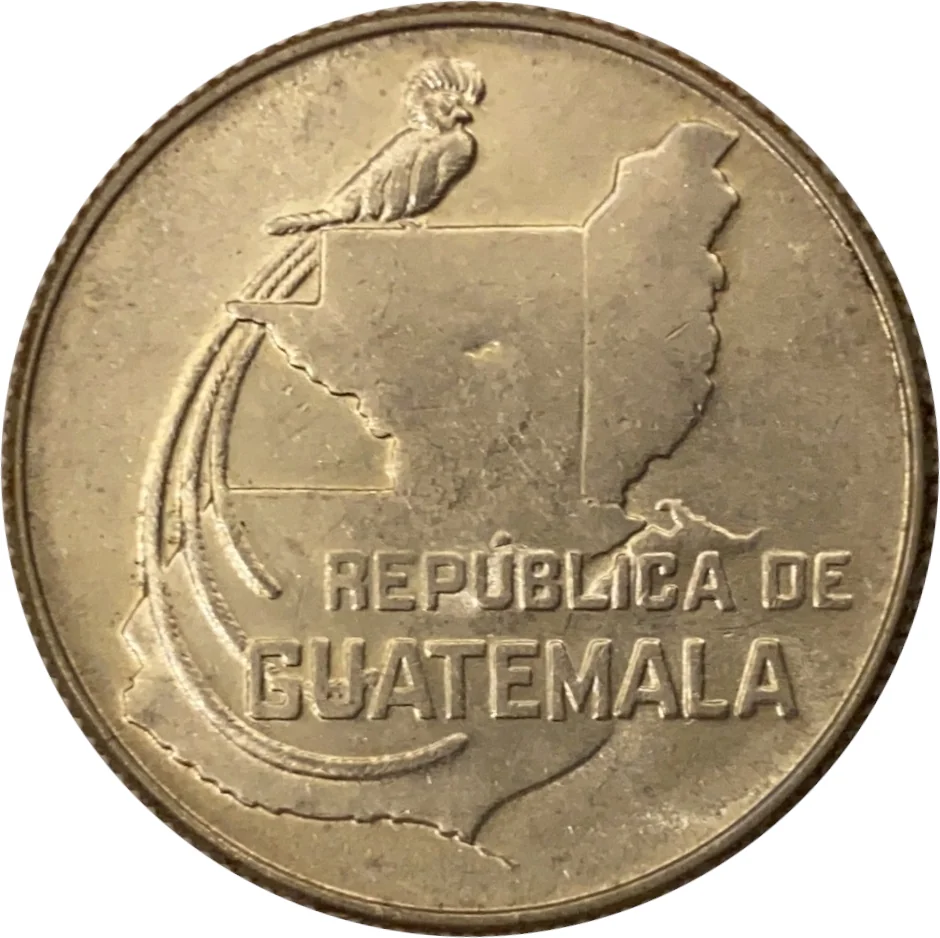
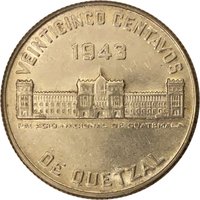
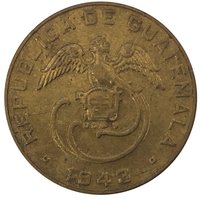
Obverse
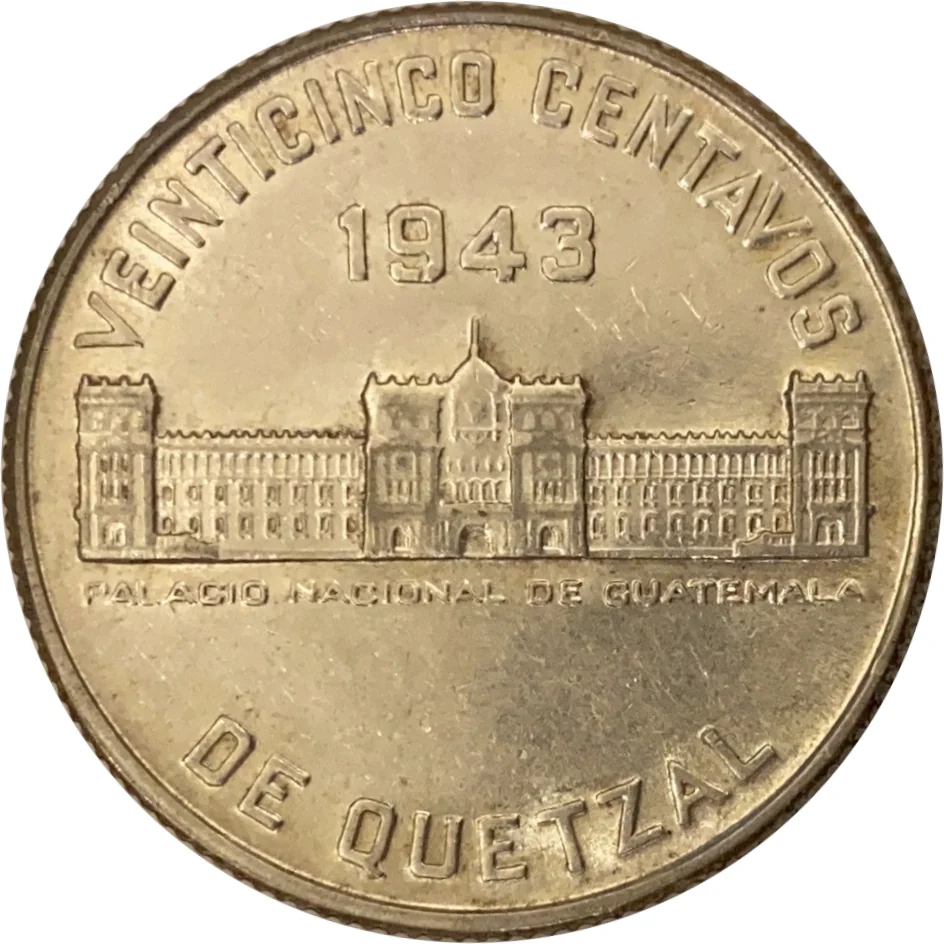
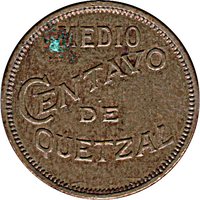
Reverse
Edge
Reeded
Mints
| Name | Mark |
|---|---|
| United States Mint of Philadelphia | — |
Mintings
| Year | Mint Mark | Mintage | Quality | Collection |
|---|---|---|---|---|
| 1943 | — | 900,000 |
Historical background
In 1943, Guatemala's currency situation was defined by its integration into the U.S. dollar bloc and the enduring legacy of the Coffee Quetzal system established in the 1920s. The national currency, the quetzal, was pegged at a fixed rate of 1 quetzal to 1 U.S. dollar, a parity maintained since the currency's creation in 1924. This stability was managed by the Currency Board (Comisión de Cambio), which required that all quetzal notes in circulation be fully backed by gold and U.S. dollar reserves. Consequently, Guatemala did not have a central bank to conduct independent monetary policy; the money supply was directly tied to the country's export earnings and foreign reserves.
The economy was heavily dependent on agricultural exports, primarily coffee, bananas, and later during World War II, on strategic materials like rubber and cinchona bark. The war profoundly influenced the currency environment. While disrupting some Atlantic trade routes, it also created strong Allied demand for Guatemala's commodities, leading to an inflow of U.S. dollars. This bolstered the Currency Board's reserves and supported the fixed exchange rate. However, the war also caused shortages of imported manufactured goods, leading to inflationary pressures that the rigid currency board system was not designed to mitigate through interest rate adjustments or discretionary lending.
Politically, this period fell within the lengthy authoritarian rule of General Jorge Ubico (1931-1944). His conservative fiscal government strongly favored the hard-currency peg, seeing it as a symbol of national stability and creditworthiness, particularly to foreign investors like the United Fruit Company. The system benefited large export landowners and foreign interests but offered little flexibility to address domestic economic needs. The structural limitations of the currency board, combined with wartime inflation and growing social discontent, would contribute to the pressures that culminated in Ubico's overthrow in the October Revolution of 1944, setting the stage for future monetary and banking reforms.
The economy was heavily dependent on agricultural exports, primarily coffee, bananas, and later during World War II, on strategic materials like rubber and cinchona bark. The war profoundly influenced the currency environment. While disrupting some Atlantic trade routes, it also created strong Allied demand for Guatemala's commodities, leading to an inflow of U.S. dollars. This bolstered the Currency Board's reserves and supported the fixed exchange rate. However, the war also caused shortages of imported manufactured goods, leading to inflationary pressures that the rigid currency board system was not designed to mitigate through interest rate adjustments or discretionary lending.
Politically, this period fell within the lengthy authoritarian rule of General Jorge Ubico (1931-1944). His conservative fiscal government strongly favored the hard-currency peg, seeing it as a symbol of national stability and creditworthiness, particularly to foreign investors like the United Fruit Company. The system benefited large export landowners and foreign interests but offered little flexibility to address domestic economic needs. The structural limitations of the currency board, combined with wartime inflation and growing social discontent, would contribute to the pressures that culminated in Ubico's overthrow in the October Revolution of 1944, setting the stage for future monetary and banking reforms.
Series: System: 1925-1949
🌱 Fairly Common