

½ penny – Jamaica
Add to wishlist
Jamaica
Context
Material
Diameter: 25 mm
Weight: 5.7 g
Shape: Round
Composition: Copper-nickel
Technique: Milled
Alignment: Medal alignment
flip
References
KM: #
Numista: #11433
Obverse
Description:
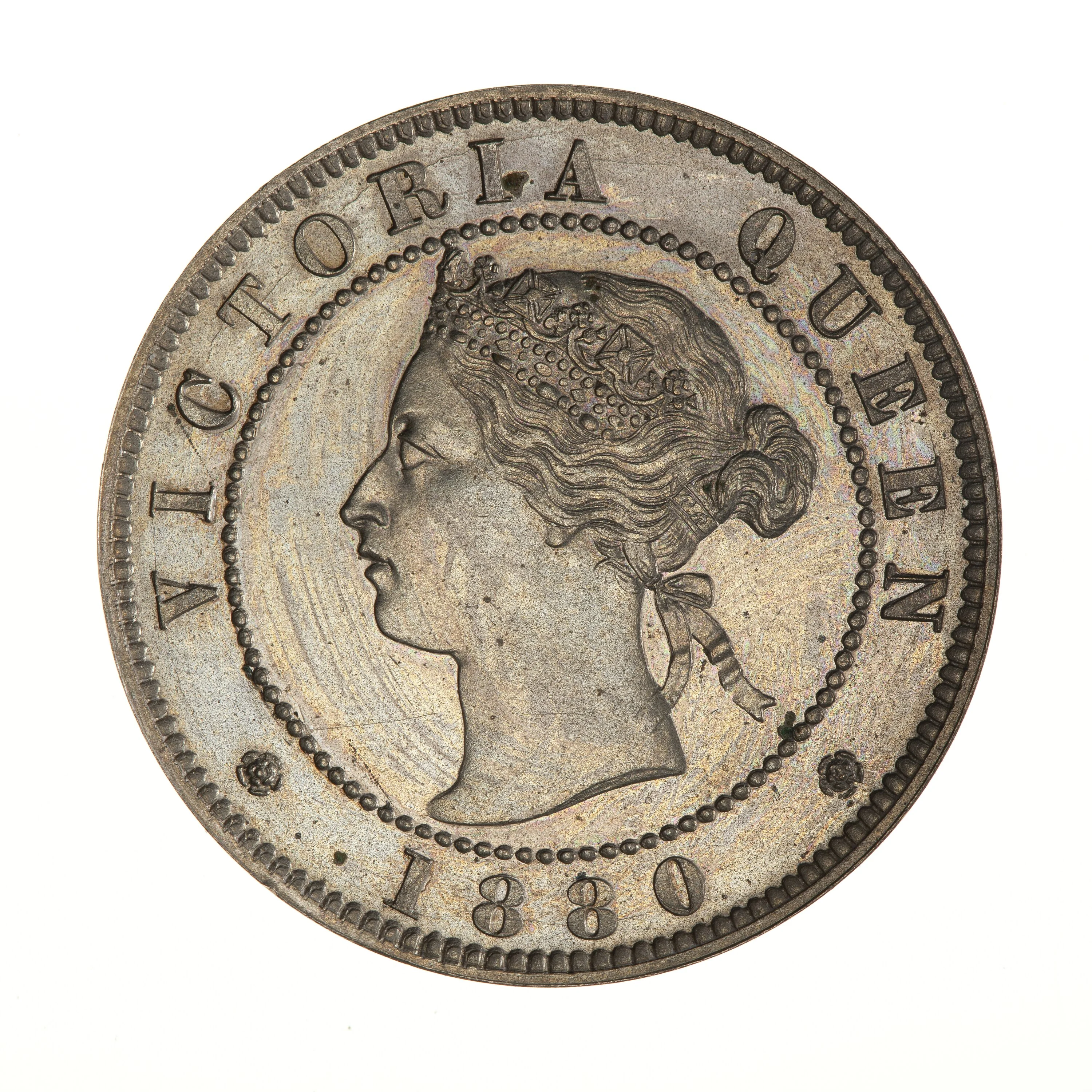
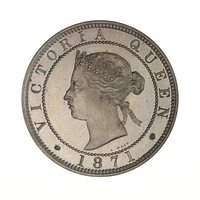
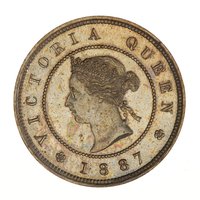
Queen Victoria left-facing portrait within beaded circle, surrounded by legend.
Inscription:
VICTORIA QUEEN
🏵 1899 🏵
🏵 1899 🏵
Script: Latin
Engraver: Leonard Charles Wyon
Reverse
Description:
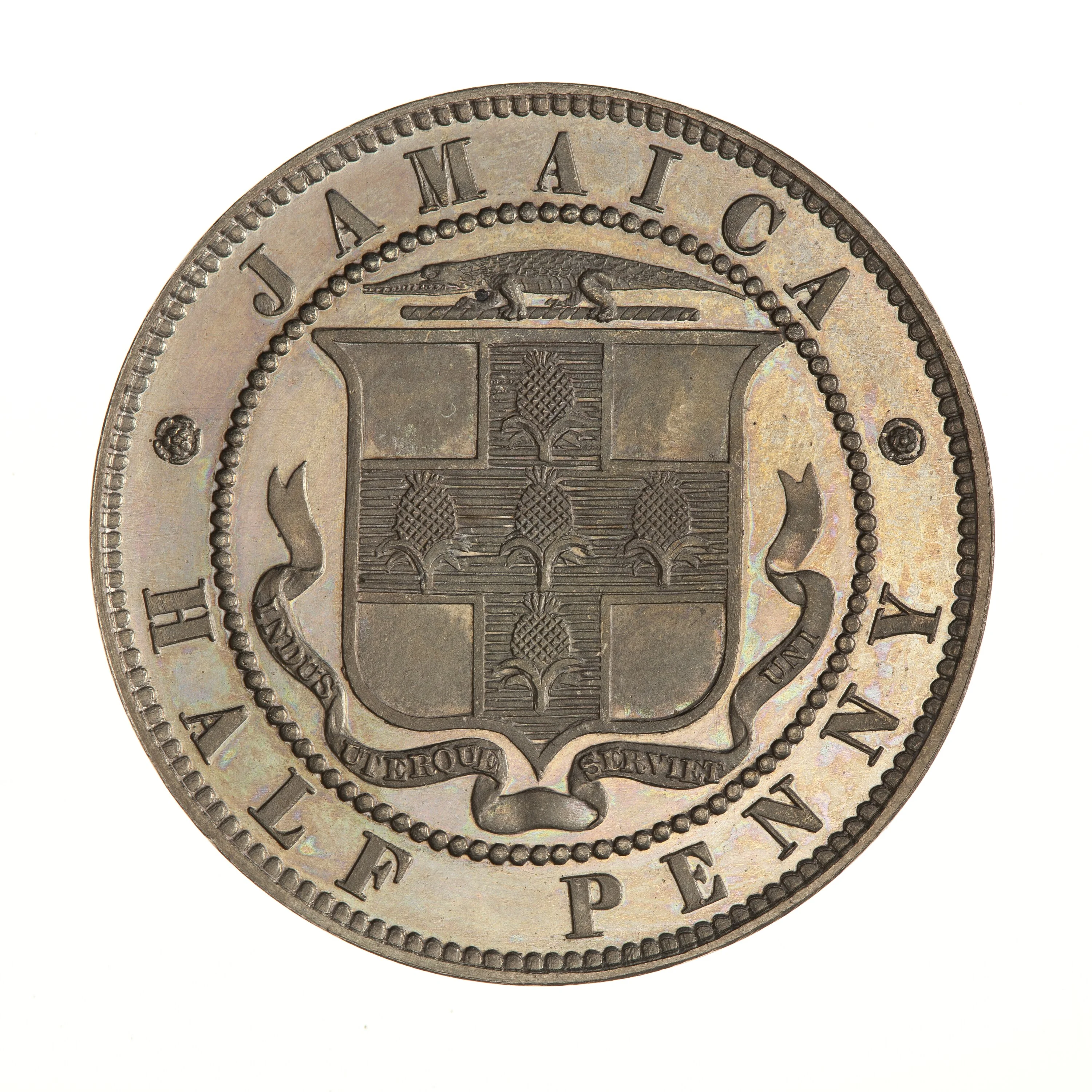
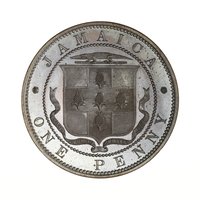
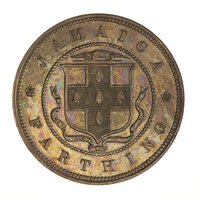
Jamaican coat of arms in beaded circle.
Inscription:
JAMAICA
🏵 HALF PENNY 🏵
INDUS UTERQUE SEVIET UNI
🏵 HALF PENNY 🏵
INDUS UTERQUE SEVIET UNI
Translation:
JAMAICA
🏵 HALF PENNY 🏵
BOTH INDUSTRIES WILL SERVE ONE
🏵 HALF PENNY 🏵
BOTH INDUSTRIES WILL SERVE ONE
Script: Latin
Language: Latin
Engraver: George William de Saulles
Edge
Plain
Mints
| Name | Mark |
|---|---|
| Royal Mint (Tower Hill) | — |
| Heaton and Sons / The Mint Birmingham | H |
Mintings
| Year | Mint Mark | Mintage | Quality | Collection |
|---|---|---|---|---|
| 1869 | — | 192,000 | ||
| 1869 | — | — | Proof | |
| 1870 | — | 240,000 | ||
| 1870 | — | — | Proof | |
| 1871 | — | — | Proof | |
| 1871 | — | 240,000 | ||
| 1880 | — | 192,000 | ||
| 1880 | — | — | Proof | |
| 1882 | H | 96,000 | ||
| 1882 | H | — | Proof | |
| 1884 | — | 96,000 | ||
| 1884 | — | — | Proof | |
| 1885 | — | 96,000 | ||
| 1885 | — | — | Proof | |
| 1887 | — | 72,000 | ||
| 1888 | — | 96,000 | ||
| 1888 | — | — | Proof | |
| 1889 | — | 96,000 | ||
| 1890 | H | 120,000 | ||
| 1891 | — | 120,000 | ||
| 1893 | — | 144,000 | ||
| 1894 | — | 96,000 | ||
| 1895 | — | 96,000 | ||
| 1897 | — | 120,000 | ||
| 1899 | — | 120,000 | ||
| 1900 | — | 120,000 |
Historical background
In 1869, Jamaica's currency situation was a complex legacy of its colonial status and economic struggles. The island operated on a sterling-based system, but the official British coins were perpetually scarce in circulation. This shortage was exacerbated by the post-Emancipation economic adjustments and a severe depression following the collapse of the plantation system. Consequently, a confusing array of Spanish and Spanish-colonial silver coins, particularly Spanish dollars and their cut fractions (known as "bits"), remained in widespread daily use, creating an unofficial but practical dual-currency environment.
The official fixity to sterling also created significant problems for trade. Jamaica's primary trading partner was not the United Kingdom, but the United States and Canada. The sterling standard, with its high value relative to the U.S. dollar, made Jamaican exports less competitive and complicated direct transactions with North American merchants. This monetary misalignment stifled economic recovery and fueled discontent among local traders and producers who found the system cumbersome and ill-suited to the island's actual commercial patterns.
Recognizing these impediments, the colonial government was actively moving toward a major reform. In 1869, legislation was being prepared to deliberately break from the sterling standard—a radical move for a British colony. The plan, enacted the following year, was to introduce a new decimal currency, the Jamaican dollar, pegged directly and intentionally to the lower value of the U.S. dollar. Thus, 1869 represents a pivotal year of transition, where the frustrations of an outdated sterling system reached their peak, setting the stage for a pragmatic reorientation of Jamaica's monetary policy toward its geographic and economic reality in the Americas.
The official fixity to sterling also created significant problems for trade. Jamaica's primary trading partner was not the United Kingdom, but the United States and Canada. The sterling standard, with its high value relative to the U.S. dollar, made Jamaican exports less competitive and complicated direct transactions with North American merchants. This monetary misalignment stifled economic recovery and fueled discontent among local traders and producers who found the system cumbersome and ill-suited to the island's actual commercial patterns.
Recognizing these impediments, the colonial government was actively moving toward a major reform. In 1869, legislation was being prepared to deliberately break from the sterling standard—a radical move for a British colony. The plan, enacted the following year, was to introduce a new decimal currency, the Jamaican dollar, pegged directly and intentionally to the lower value of the U.S. dollar. Thus, 1869 represents a pivotal year of transition, where the frustrations of an outdated sterling system reached their peak, setting the stage for a pragmatic reorientation of Jamaica's monetary policy toward its geographic and economic reality in the Americas.
🌱 Common