

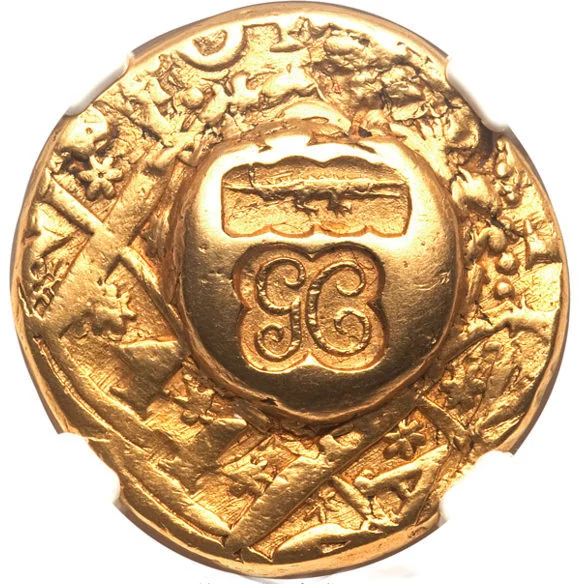
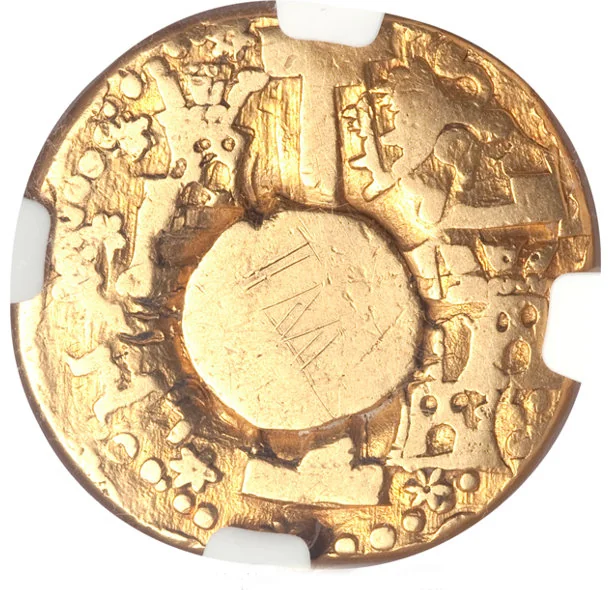
5 pounds – Jamaica
Add to wishlist
Jamaica
Context
Material
Weight: 26.88 g
Gold Weight:: 26.88 g
Shape: Irregular round
Composition: Gold
Magnetic: No
Techniques: Counterstamped, Hammered
References
KM: #
Numista: #219084
Value
Bullion value: $4098.00
Mints
| Name | Mark |
|---|---|
| Lima | — |
Mintings
| Year | Mint Mark | Mintage | Quality | Collection |
|---|---|---|---|---|
| 1773 | — | — |
Historical background
In 1773, Jamaica was a wealthy but financially strained British colony, its economy entirely built upon the brutal system of plantation slavery and the export of sugar, rum, and coffee. The island operated on a complex and inadequate monetary system dominated by the Spanish dollar (or piece of eight), which was the de facto standard due to extensive trade with Spanish America. However, a chronic shortage of official British coinage led to a reliance on a confusing array of foreign coins, including Portuguese johannes and moidores, all circulating at values set by local proclamation and often physically cut into "bits" to make change.
This scarcity of sound currency was exacerbated by the colony's persistent trade deficit with Britain. Plantation owners, living on credit from London merchants, sent the bulk of their sterling profits abroad to pay debts and finance their lavish lifestyles, draining specie from the island. To facilitate local transactions, the Assembly frequently issued paper money in the form of treasury bills and promissory notes, but these were prone to depreciation and loss of public confidence, especially after a previous oversisuance in the 1740s had led to significant inflation.
Consequently, the currency situation in 1773 was one of fragility and frustration. The local economy hinged on unstable paper and mutilated foreign coin, while the real wealth—sterling—was siphoned off to the metropole. This monetary instability reflected the deeper contradictions of a slave society: immense agricultural productivity that enriched absentee owners and the British state, but a domestic economy perpetually undercapitalized and vulnerable to crisis, setting the stage for further financial experiments and disputes with London in the years leading up to the American Revolution.
This scarcity of sound currency was exacerbated by the colony's persistent trade deficit with Britain. Plantation owners, living on credit from London merchants, sent the bulk of their sterling profits abroad to pay debts and finance their lavish lifestyles, draining specie from the island. To facilitate local transactions, the Assembly frequently issued paper money in the form of treasury bills and promissory notes, but these were prone to depreciation and loss of public confidence, especially after a previous oversisuance in the 1740s had led to significant inflation.
Consequently, the currency situation in 1773 was one of fragility and frustration. The local economy hinged on unstable paper and mutilated foreign coin, while the real wealth—sterling—was siphoned off to the metropole. This monetary instability reflected the deeper contradictions of a slave society: immense agricultural productivity that enriched absentee owners and the British state, but a domestic economy perpetually undercapitalized and vulnerable to crisis, setting the stage for further financial experiments and disputes with London in the years leading up to the American Revolution.

✨ Legendary