

1 Farthing – Jamaica
Jamaica
Context
Material
Diameter: 20.2 mm
Weight: 2.8 g
Thickness: 1.13 mm
Shape: Round
Composition: Copper-nickel
Technique: Milled
Alignment: Medal alignment
flip
References
KM: #Click to copy to clipboard15
Numista: #18078
Obverse
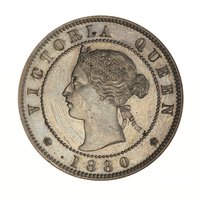
Description:
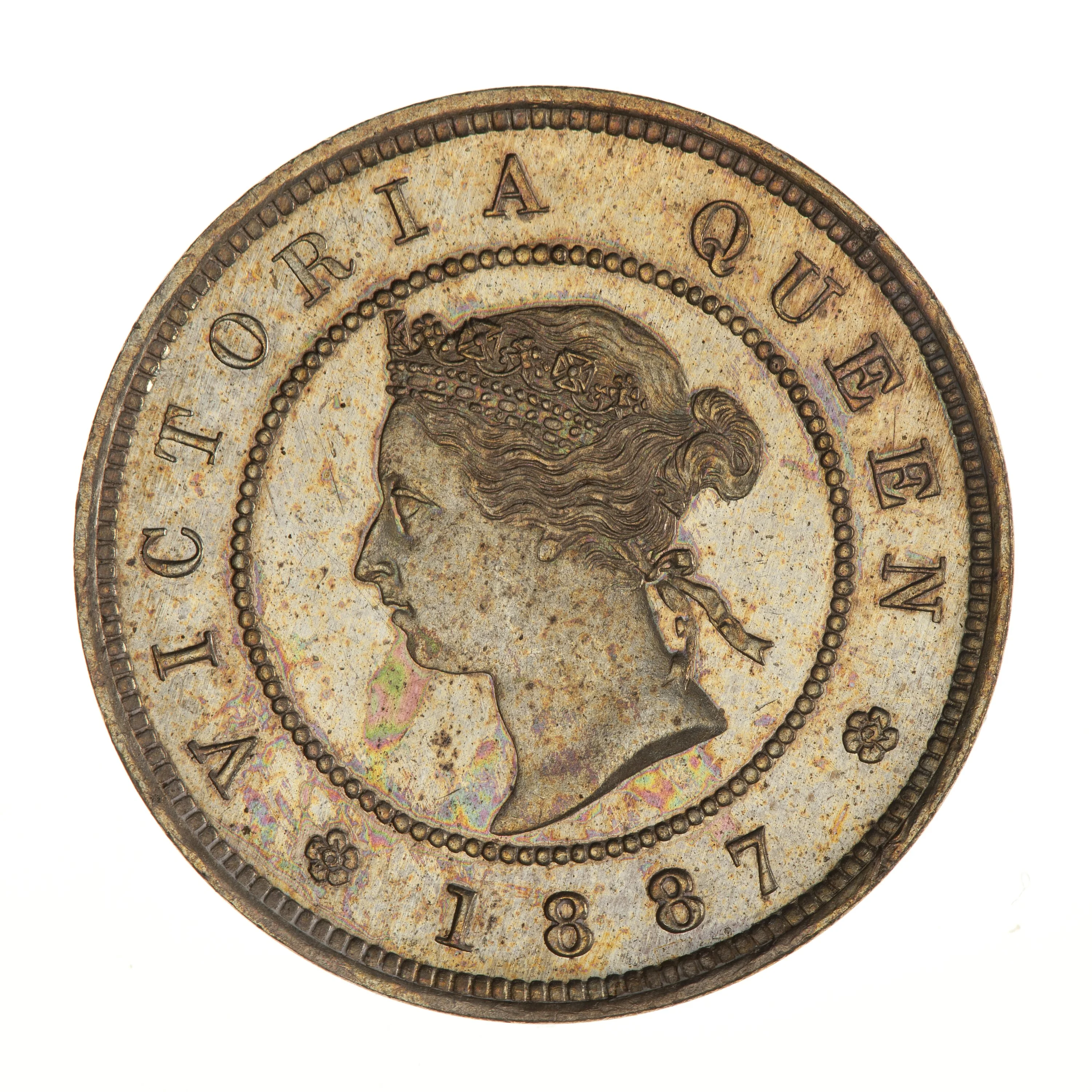
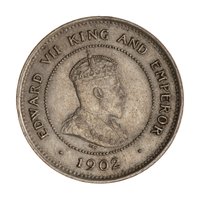
Queen Victoria left-facing crowned portrait. Legend surrounding.
Inscription:
VICTORIA QUEEN
🏵 1894 🏵
🏵 1894 🏵
Script: Latin
Engraver: Leonard Charles Wyon
Reverse
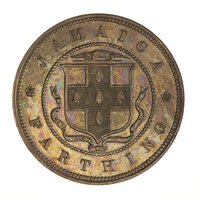
Description:
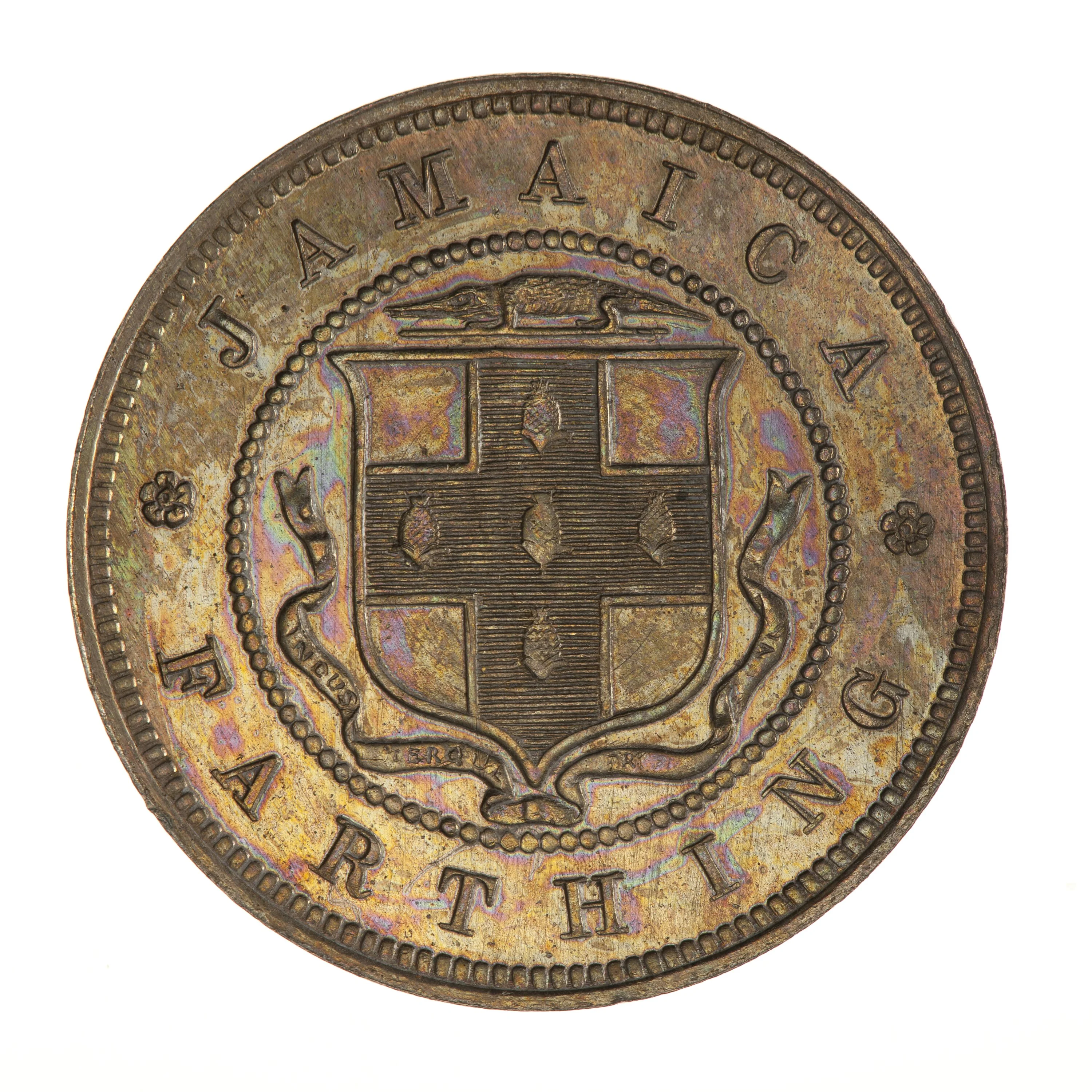
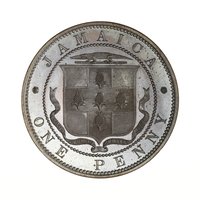
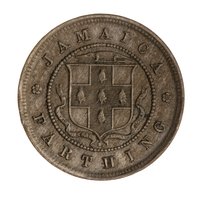
Jamaican coat of arms in beaded circle.
Inscription:
JAMAICA
🏵 FARTHING 🏵
INDUS UTERQUE SERVIET UNI
🏵 FARTHING 🏵
INDUS UTERQUE SERVIET UNI
Translation:
JAMAICA
FARTHING
BOTH INDS WILL SERVE ONE
FARTHING
BOTH INDS WILL SERVE ONE
Script: Latin
Engraver: George William de Saulles
Edge
Plain
Mints
| Name | Mark |
|---|---|
| Royal Mint (Tower Hill) | — |
| Heaton and Sons / The Mint Birmingham | H |
Mintings
| Year | Mint Mark | Mintage | Quality | Collection |
|---|---|---|---|---|
| 1880 | — | 192,000 | ||
| 1880 | — | — | Proof | |
| 1882 | H | 384,000 | ||
| 1882 | H | — | Proof | |
| 1884 | — | 96,000 | ||
| 1884 | — | — | Proof | |
| 1885 | — | 96,000 | ||
| 1885 | — | — | Proof | |
| 1887 | — | 192,000 | ||
| 1887 | — | — | Proof | |
| 1888 | — | 192,000 | ||
| 1888 | — | — | Proof | |
| 1889 | — | 192,000 | ||
| 1890 | H | 96,000 | ||
| 1891 | — | 96,000 | ||
| 1893 | — | 96,000 | ||
| 1894 | — | 144,000 | ||
| 1894 | — | — | Proof | |
| 1895 | — | 144,000 | ||
| 1897 | — | 144,000 | ||
| 1899 | — | 144,000 | ||
| 1900 | — | 144,000 |
Historical background
In 1880, Jamaica operated under a complex and often chaotic currency system, a legacy of its colonial status within the British Empire. The official currency was British sterling, with pounds, shillings, and pence as the formal units of account for government and large-scale commerce. However, the island's economy was practically dominated by the Spanish dollar and its fractional parts, known locally as "bits." This silver coinage, primarily from Spanish America, was the preferred medium for everyday transactions among the population, creating a de facto dual-currency system where goods had both a sterling price and a more commonly used dollar price.
This situation arose from centuries of regional trade and a chronic shortage of official British coinage on the island. The Spanish dollar's stability and wide acceptance across the Caribbean made it indispensable. To bring order, British authorities had assigned the dollar a fixed sterling value of 4 shillings 2 pence, but its actual market value fluctuated. Furthermore, a proliferation of worn and cut coins, alongside various banknotes issued by private commercial banks, added to the confusion and risk of fraud in daily business.
The year 1880 fell within a period of increasing pressure for monetary reform. Planters, merchants, and the colonial administration found the system inefficient and a hindrance to clear accounting, especially as Jamaica deepened its economic ties with London. This friction would culminate just a few years later, in 1883, when the British government would finally demonetize the Spanish dollar and formally introduce a decimal currency system based on the pound, aiming to fully align Jamaica's currency with the British sterling standard and simplify its troubled financial landscape.
This situation arose from centuries of regional trade and a chronic shortage of official British coinage on the island. The Spanish dollar's stability and wide acceptance across the Caribbean made it indispensable. To bring order, British authorities had assigned the dollar a fixed sterling value of 4 shillings 2 pence, but its actual market value fluctuated. Furthermore, a proliferation of worn and cut coins, alongside various banknotes issued by private commercial banks, added to the confusion and risk of fraud in daily business.
The year 1880 fell within a period of increasing pressure for monetary reform. Planters, merchants, and the colonial administration found the system inefficient and a hindrance to clear accounting, especially as Jamaica deepened its economic ties with London. This friction would culminate just a few years later, in 1883, when the British government would finally demonetize the Spanish dollar and formally introduce a decimal currency system based on the pound, aiming to fully align Jamaica's currency with the British sterling standard and simplify its troubled financial landscape.
🌱 Fairly Common