

5 Pesos – Mexico
Mexico
Context
Years: 1980–1985
Issuer: Mexico 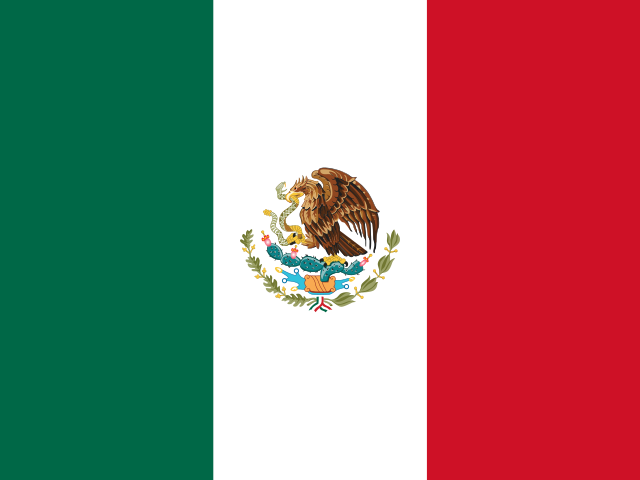
Period:
(since 1823)
Currency:
(1863—1992)
Demonetization: 15 November 1995
Total mintage: 410,601,057
Material
References
KM: #Click to copy to clipboard485
Numista: #818
Value
Exchange value: 5 MXP
Inflation-adjusted value: 14843.54 MXP
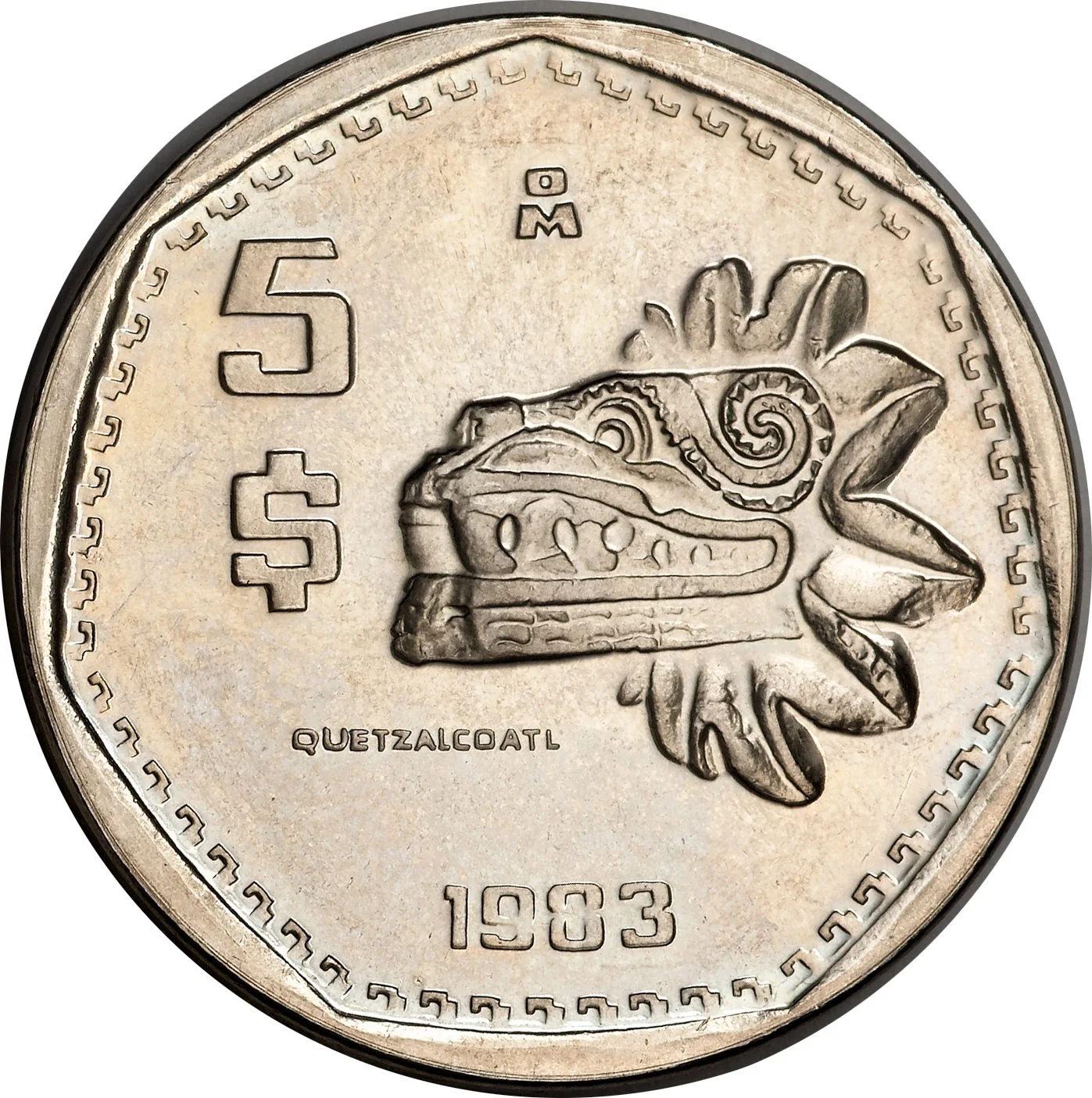
Obverse
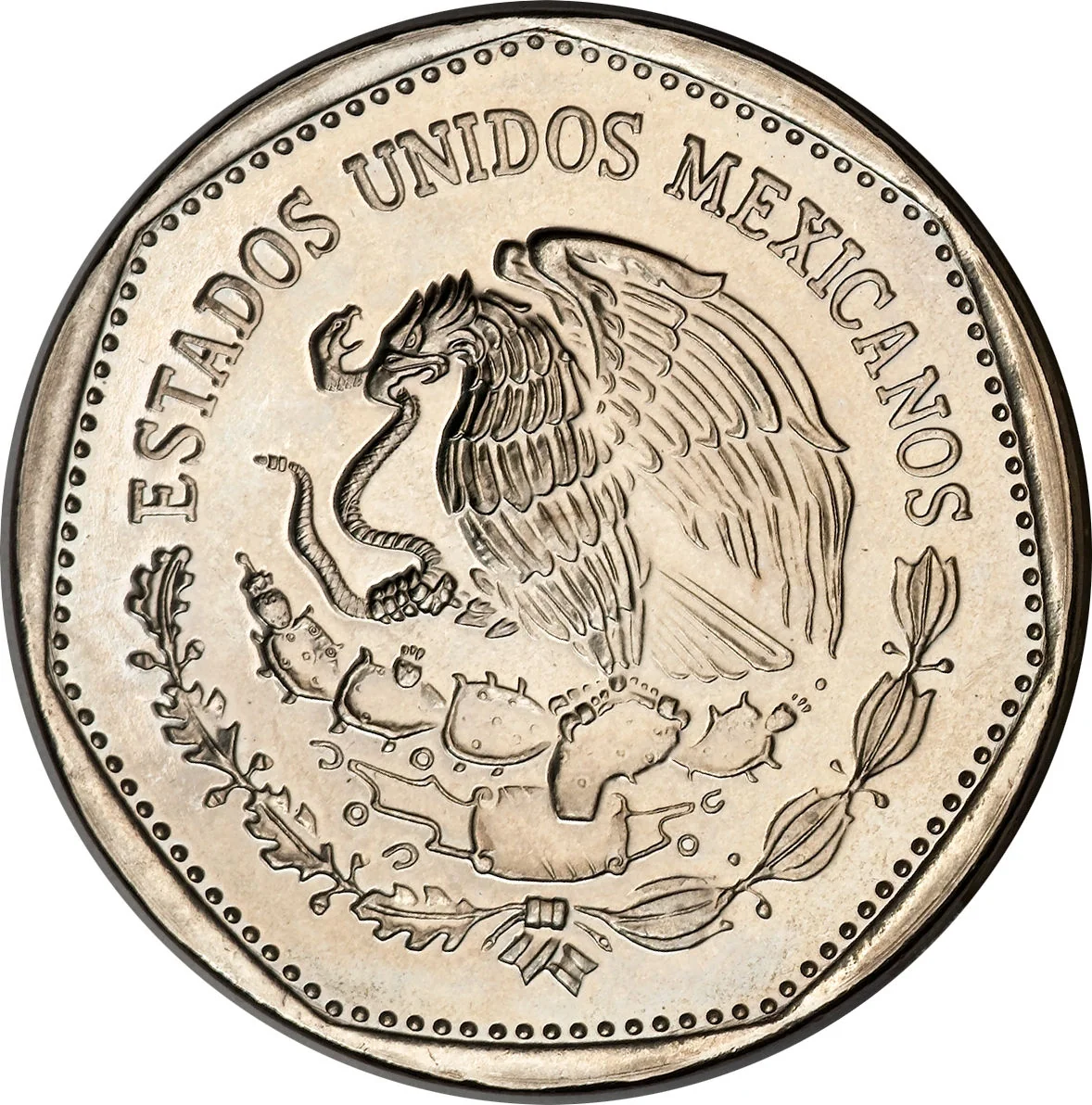
Reverse
Description:
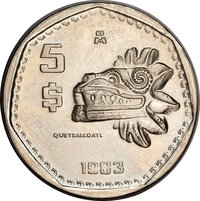
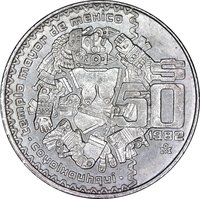
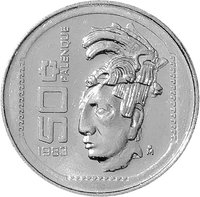
Quetzalcoatl sculpture left of "$" and "PESO," date beneath.
Inscription:
Mo
5
$
QUETZALCOATL
1983
5
$
QUETZALCOATL
1983
Script: Latin
Edge
Plain with inscription
Legend:
INDEPENDENCIA Y LIBERTAD
Translation:
Independence and Liberty
Language: Spanish
Mints
| Name | Mark |
|---|---|
| Mexican Mint | (Mo) |
Mintings
| Year | Mint Mark | Mintage | Quality | Collection |
|---|---|---|---|---|
| 1980 | Mo | 266,899,999 | ||
| 1981 | Mo | 30,500,000 | ||
| 1982 | Mo | 1,051 | Proof | |
| 1982 | Mo | 20,000,000 | ||
| 1983 | Mo | 7 | Proof | |
| 1984 | Mo | 16,300,000 | ||
| 1985 | Mo | 76,900,000 |
Historical background
In 1980, Mexico was in the final stages of an economic boom fueled by massive oil revenues and expansive foreign borrowing. The discovery of vast petroleum reserves in the 1970s led the government, under President José López Portillo, to pursue an ambitious development strategy known as "administración de la abundancia" (administration of abundance). The peso, which had been pegged at 12.50 to the U.S. dollar since 1954, remained artificially strong and stable, supported by capital inflows and oil exports. This overvalued exchange rate made imports cheap and fueled a consumption boom, but it also masked growing structural weaknesses by making Mexican non-oil exports less competitive on the global market.
Beneath this apparent stability, severe imbalances were accumulating. Public sector spending skyrocketed as the government invested in state-owned industries and social programs, while inflation, driven by domestic demand and global oil shocks, began to significantly outpace that of the United States. The current account deficit widened despite oil exports, as imports surged. Crucially, the economy became perilously dependent on continuous high oil prices and ever-increasing foreign debt, which was denominated almost entirely in dollars. The fixed exchange rate regime eliminated a key adjustment mechanism, allowing these distortions to grow unchecked.
By the end of 1980, the situation was becoming untenable. World oil prices began to soften, and global interest rates rose sharply, dramatically increasing the cost of servicing Mexico's dollar-denominated debt. Capital flight accelerated as domestic and international investors lost confidence, draining foreign reserves. While the full-blown crisis—the devaluation of the peso, the debt moratorium, and the "Lost Decade"—would erupt in 1982, the currency situation in 1980 was a calm before the storm. The fixed peso was a brittle facade, preserving an illusion of prosperity while the foundations of the Mexican economy were eroding.
Beneath this apparent stability, severe imbalances were accumulating. Public sector spending skyrocketed as the government invested in state-owned industries and social programs, while inflation, driven by domestic demand and global oil shocks, began to significantly outpace that of the United States. The current account deficit widened despite oil exports, as imports surged. Crucially, the economy became perilously dependent on continuous high oil prices and ever-increasing foreign debt, which was denominated almost entirely in dollars. The fixed exchange rate regime eliminated a key adjustment mechanism, allowing these distortions to grow unchecked.
By the end of 1980, the situation was becoming untenable. World oil prices began to soften, and global interest rates rose sharply, dramatically increasing the cost of servicing Mexico's dollar-denominated debt. Capital flight accelerated as domestic and international investors lost confidence, draining foreign reserves. While the full-blown crisis—the devaluation of the peso, the debt moratorium, and the "Lost Decade"—would erupt in 1982, the currency situation in 1980 was a calm before the storm. The fixed peso was a brittle facade, preserving an illusion of prosperity while the foundations of the Mexican economy were eroding.
Series: Mesoamerican cultures
🌱 Very Common