

25 Pesos (Benito Juarez) – Mexico
Circulating commemorative coins
Commemoration: Centenary of the Death of Benito Juarez
Mexico
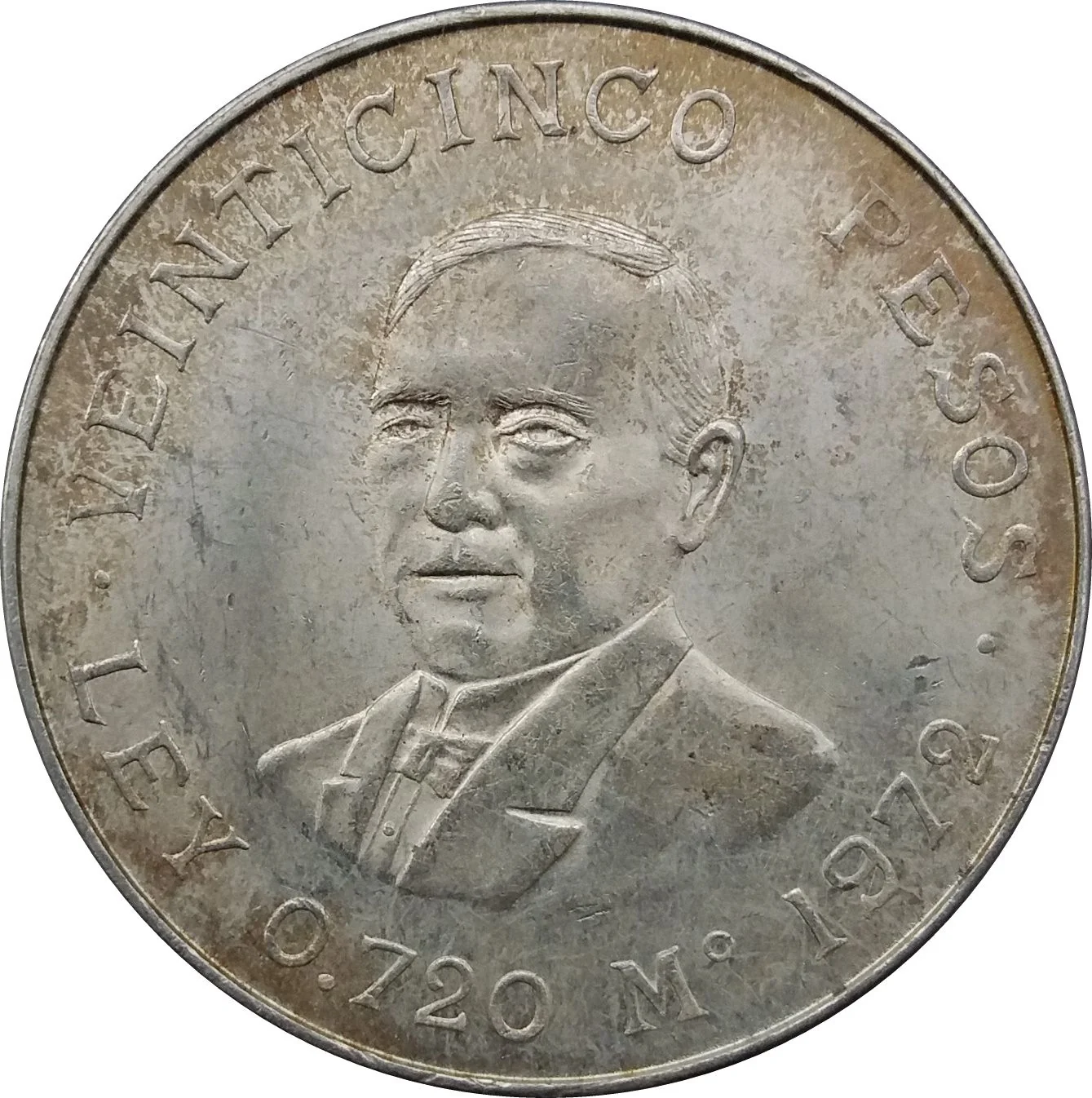
Obverse
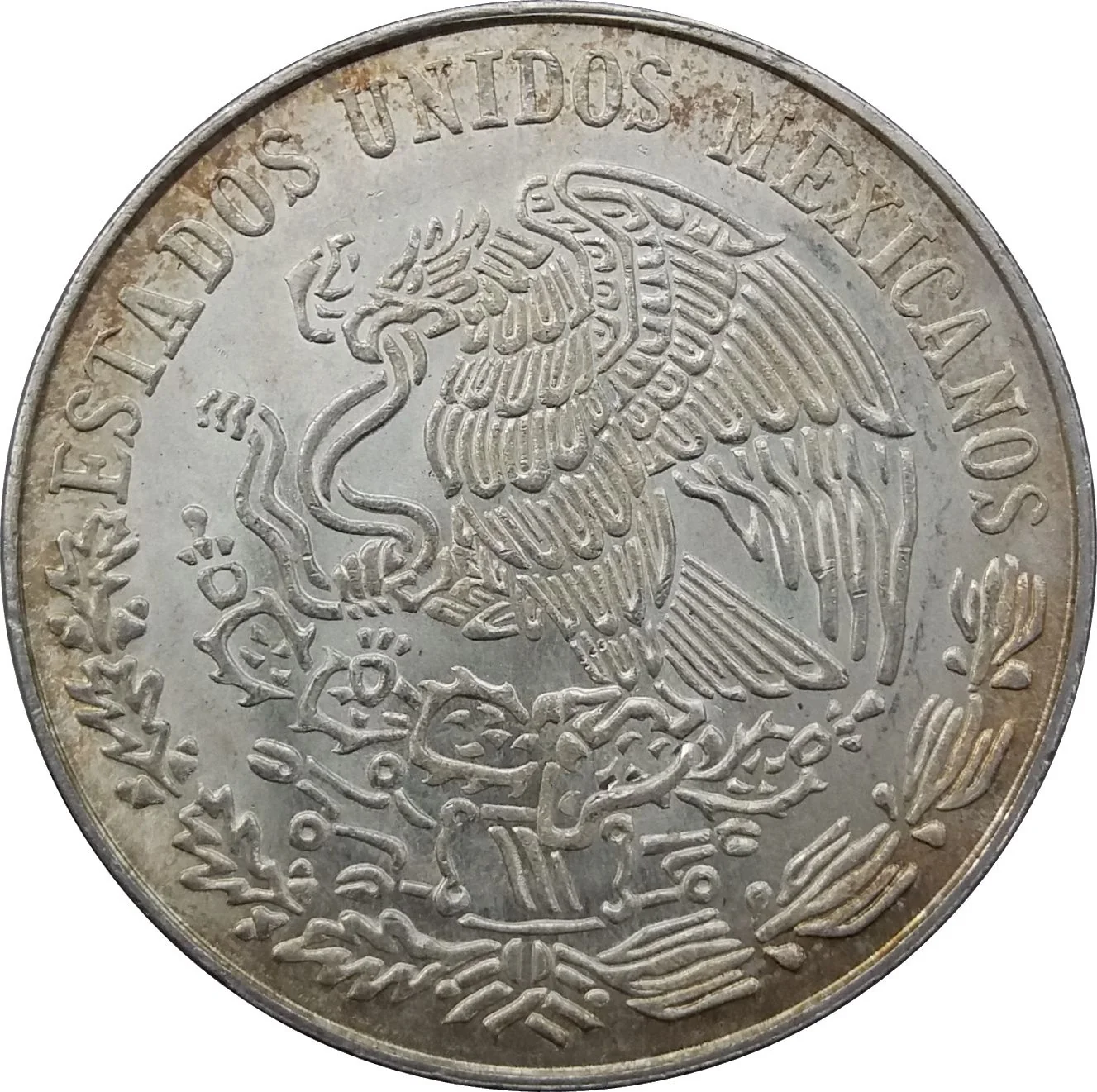
Reverse
Description:
Benito Juárez facing forward.
Inscription:
VEINTICINCO PESOS
LEY 0.720 Mo 1972
LEY 0.720 Mo 1972
Script: Latin
Edge
Inscripted
Legend:
INDEPENDENCIA LIBERTAD
Categories
| Person> Politician |
Mints
| Name | Mark |
|---|---|
| Mexican Mint | (Mo) |
Mintings
| Year | Mint Mark | Mintage | Quality | Collection |
|---|---|---|---|---|
| 1972 | Mo | 2,000,000 |
Historical background
In 1972, Mexico's currency situation was characterized by a period of relative stability under the Bretton Woods system, but with underlying pressures that foreshadowed future crises. The Mexican peso was pegged to the U.S. dollar at a fixed rate of 12.50 pesos per dollar, a parity that had been maintained since 1954. This stability, managed by the Banco de México, was a cornerstone of the country's "Desarrollo Estabilizador" (Stabilizing Development) model, fostering confidence for foreign investment and predictable trade during decades of strong economic growth known as the "Mexican Miracle."
However, this fixed exchange rate masked growing macroeconomic imbalances. The state-led development model, financed in part by external borrowing, began to strain public finances. While inflation in Mexico was rising faster than in its primary trading partner, the United States, the fixed peso-dollar peg made Mexican exports increasingly expensive and imports cheaper. This eroded the country's trade competitiveness and contributed to a widening current account deficit. The system's rigidity meant the peso was becoming progressively overvalued, a problem papered over by capital inflows and foreign reserves.
The international context added significant strain. The year 1971 was a major shock when U.S. President Richard Nixon suspended the dollar's convertibility to gold, effectively ending the Bretton Woods system. This ushered in an era of global monetary instability and devaluation pressures. While Mexico initially maintained its 12.50 peg through 1972, it was now defending it against a floating dollar and speculative pressures, drawing down reserves. The situation was becoming untenable, setting the stage for the economic policy shifts and the severe balance of payments crisis that would erupt later in the decade.
However, this fixed exchange rate masked growing macroeconomic imbalances. The state-led development model, financed in part by external borrowing, began to strain public finances. While inflation in Mexico was rising faster than in its primary trading partner, the United States, the fixed peso-dollar peg made Mexican exports increasingly expensive and imports cheaper. This eroded the country's trade competitiveness and contributed to a widening current account deficit. The system's rigidity meant the peso was becoming progressively overvalued, a problem papered over by capital inflows and foreign reserves.
The international context added significant strain. The year 1971 was a major shock when U.S. President Richard Nixon suspended the dollar's convertibility to gold, effectively ending the Bretton Woods system. This ushered in an era of global monetary instability and devaluation pressures. While Mexico initially maintained its 12.50 peg through 1972, it was now defending it against a floating dollar and speculative pressures, drawing down reserves. The situation was becoming untenable, setting the stage for the economic policy shifts and the severe balance of payments crisis that would erupt later in the decade.
🌱 Common