

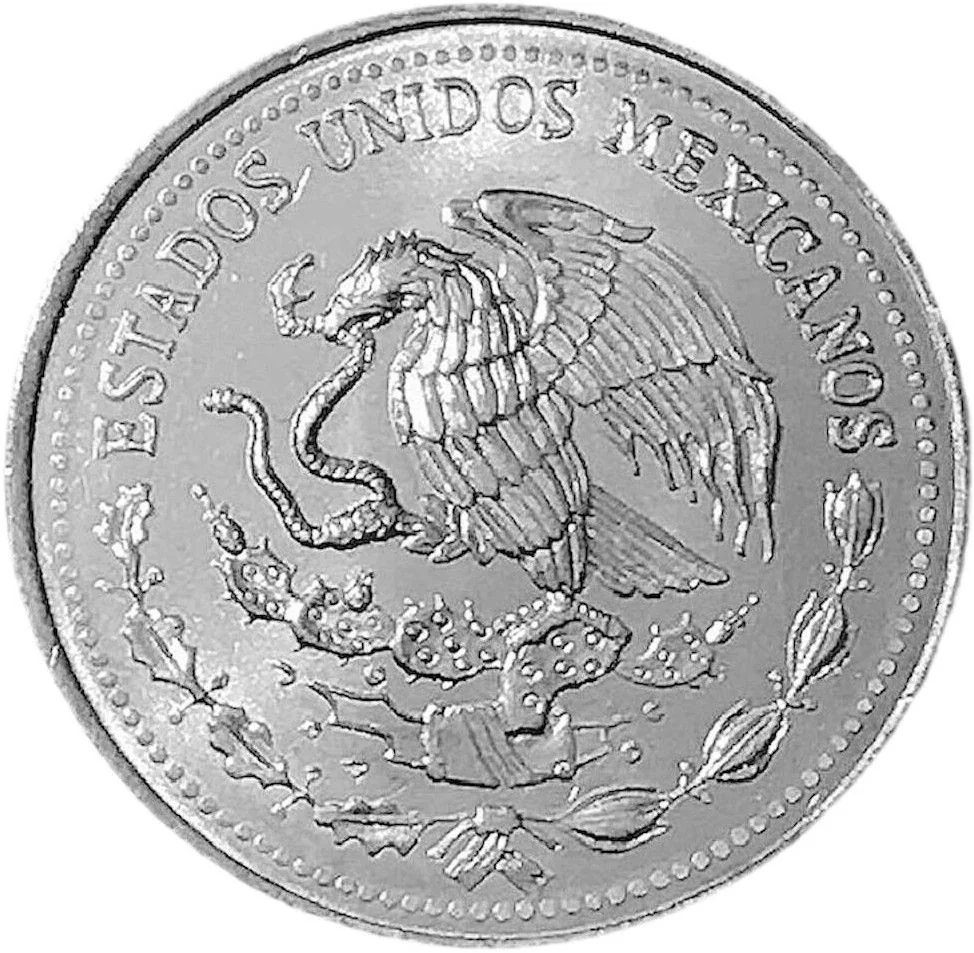
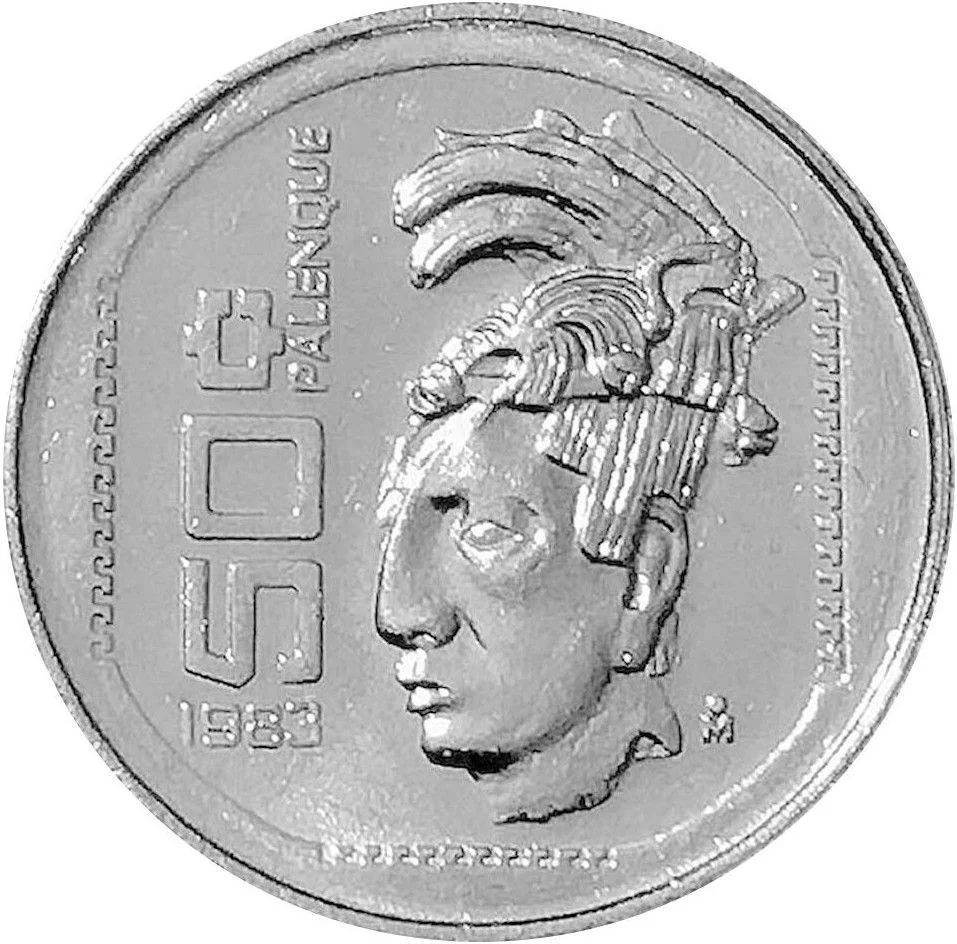
50 centavos – Mexico
Add to wishlist
Mexico
Context
Year: 1983
Issuer: Mexico
Period:
(since 1823)
Currency:
(1863—1992)
Demonetization: 15 November 1995
Total mintage: 99,540,053
Material
Diameter: 22 mm
Weight: 4.1 g
Thickness: 1.5 mm
Shape: Round
Composition: Stainless steel
Technique: Milled
Alignment: Coin alignment
flip
References
KM: #
Numista: #3906
Value
Exchange value: 0.50 MXP
Inflation-adjusted value: 577.88 MXP
Obverse
Reverse
Description:
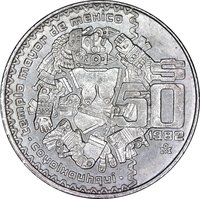
Pakal the Great of Palenque, left-facing bust within decorative borders.
Inscription:
50c 1983 PALENQUE
Script: Latin
Edge
Plain
Mints
| Name | Mark |
|---|---|
| Mexican Mint | (Mo) |
Mintings
| Year | Mint Mark | Mintage | Quality | Collection |
|---|---|---|---|---|
| 1983 | Mo | 99,540,000 | ||
| 1983 | Mo | 53 | Proof |
Historical background
In 1983, Mexico was in the throes of a profound economic crisis, a direct continuation of the debt shock that began in August 1982 when the government declared it could no longer service its massive foreign debt. The year was characterized by severe austerity under an IMF stabilization program, which demanded deep budget cuts, subsidy reductions, and trade liberalization in exchange for emergency loans. This austerity plunged the economy into a deep recession, with GDP contracting sharply, inflation soaring into triple digits, and real wages collapsing, creating widespread social hardship.
The currency situation was central to this turmoil. The Mexican peso, which had been on a managed devaluation for years, was subject to intense pressure. In response to the crisis, a dual-exchange-rate system was implemented: a controlled rate for essential imports and debt servicing, and a free-market rate for all other transactions, which was significantly depreciated. This complex system aimed to conserve scarce foreign reserves but created distortions and a thriving black market. Despite these controls, the peso's value eroded dramatically throughout the year, fueling inflationary spirals as the cost of imported goods skyrocketed.
Ultimately, 1983 was a year of painful adjustment where currency management was less about stability and more about crisis containment. The government's primary focus was on generating trade surpluses to meet foreign debt obligations, which it achieved through a sharp devaluation that made exports cheaper and imports prohibitively expensive. This successful external adjustment came at a tremendous internal cost, setting the stage for a prolonged period of economic stagnation known as the "Lost Decade." The currency instability of 1983 thus symbolized a broader loss of economic sovereignty and the severe social costs of the debt crisis.
The currency situation was central to this turmoil. The Mexican peso, which had been on a managed devaluation for years, was subject to intense pressure. In response to the crisis, a dual-exchange-rate system was implemented: a controlled rate for essential imports and debt servicing, and a free-market rate for all other transactions, which was significantly depreciated. This complex system aimed to conserve scarce foreign reserves but created distortions and a thriving black market. Despite these controls, the peso's value eroded dramatically throughout the year, fueling inflationary spirals as the cost of imported goods skyrocketed.
Ultimately, 1983 was a year of painful adjustment where currency management was less about stability and more about crisis containment. The government's primary focus was on generating trade surpluses to meet foreign debt obligations, which it achieved through a sharp devaluation that made exports cheaper and imports prohibitively expensive. This successful external adjustment came at a tremendous internal cost, setting the stage for a prolonged period of economic stagnation known as the "Lost Decade." The currency instability of 1983 thus symbolized a broader loss of economic sovereignty and the severe social costs of the debt crisis.
Series: Mesoamerican cultures
🌱 Very Common