

2 euro (Flag of the European Union) – Estonia
Add to wishlist
Circulating commemorative coins
Commemoration: 30th Anniversary of the Flag of the European Union
Series: EU Flag
Estonia
Obverse
Description:
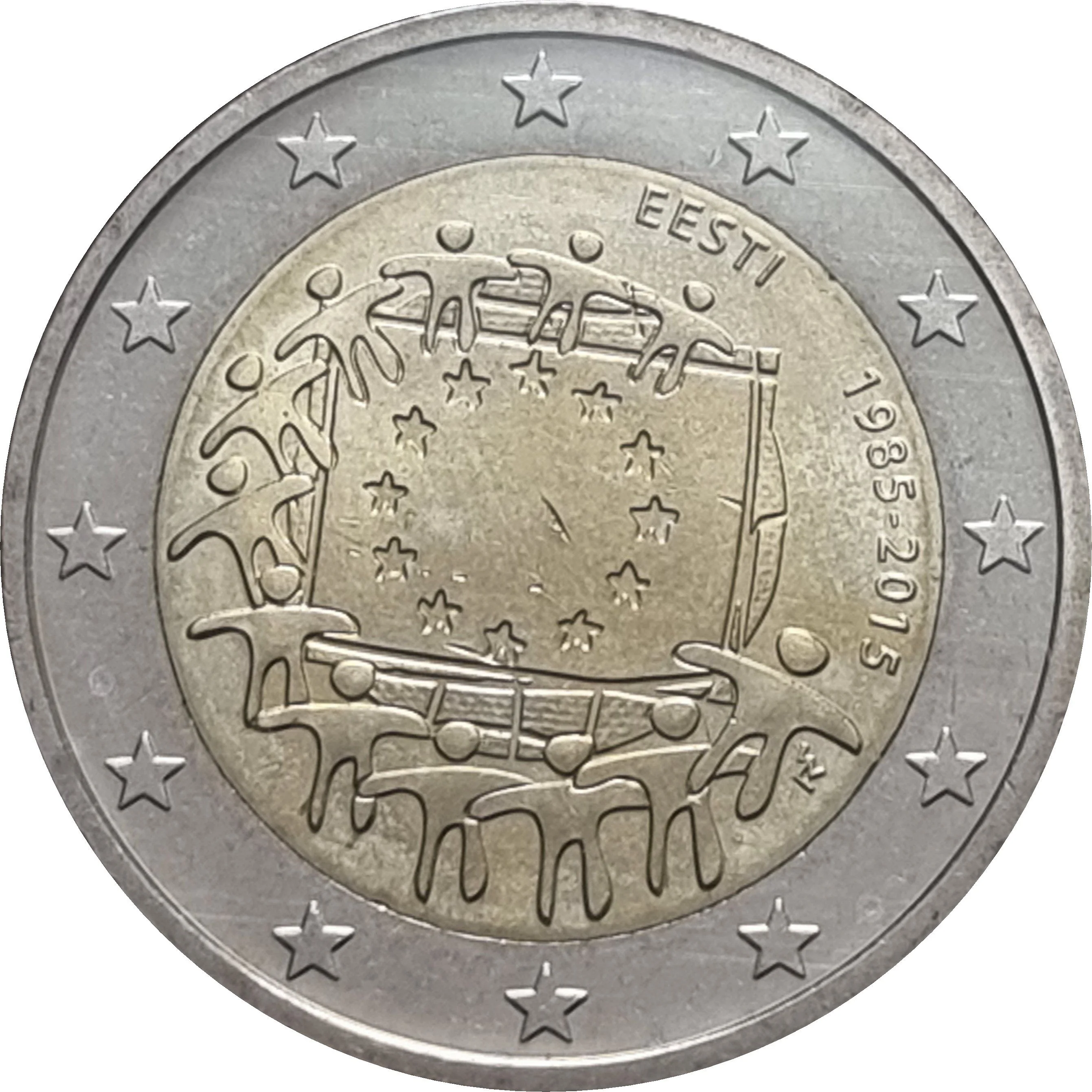
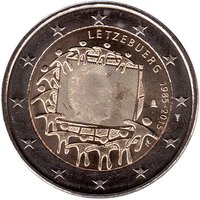
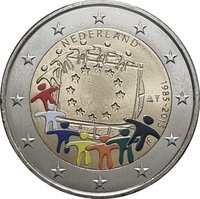
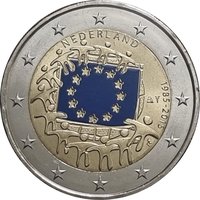
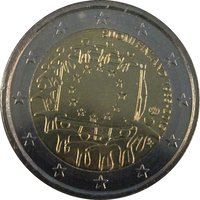
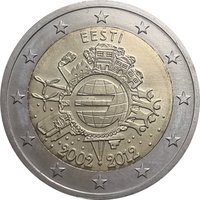
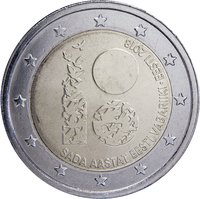
The design transforms the EU flag's twelve stars into embracing figures, symbolizing unity and a shared future. It includes "1985-2015" and the artist's initials (Georgios Stamatopoulos), surrounded by the circle of EU stars.
Inscription:
EESTI
1985-2015
ΓΣ
1985-2015
ΓΣ
Translation:
ESTONIA
1985-2015
GS
1985-2015
GS
Script: Latin
Engraver: Geórgios Stamatópoulos
Reverse
Edge
Reeded with inscription
Legend:
EESTI O EESTI O
Translation:
O Estonia, O Estonia
Language: Estonian
Mintings
| Year | Mint Mark | Mintage | Quality | Collection |
|---|---|---|---|---|
| 2015 | — | 346,500 | ||
| 2015 | — | 3,500 | BU |
Historical background
In 2015, Estonia was a stable member of the Eurozone, having adopted the euro as its official currency on January 1, 2011. This transition marked the culmination of a long-standing policy objective, with the country having pegged its previous currency, the kroon, first to the Deutsche Mark and then to the euro itself. By 2015, the euro was fully integrated into the Estonian economy, providing benefits like eliminated exchange rate risk, enhanced trade with core Eurozone partners, and a symbol of deep European integration and economic credibility.
The broader Eurozone context, however, presented challenges. The year was dominated by the aftermath of the Greek government-debt crisis and heightened fears of a "Grexit" (Greek exit from the euro). While Estonia's own public finances were exceptionally strong—boasting one of the lowest debt-to-GDP ratios in the EU—the situation tested Eurozone solidarity. Estonian policymakers and the public, having undergone strict austerity measures during the 2008-2009 financial crisis, generally advocated for strict conditionality in any further bailouts for Greece, emphasizing fiscal responsibility.
Domestically, the currency situation was calm, but economic pressures emerged from the geopolitical landscape. Following Russia's annexation of Crimea in 2014 and the ongoing conflict in Ukraine, Estonia faced economic sanctions and counter-sanctions that affected trade. While the stability of the euro provided a buffer, these tensions highlighted Estonia's economic vulnerabilities and reinforced its strategic commitment to deeper integration within the Eurozone and the European Union as a whole, viewing the single currency as a cornerstone of its economic and political security.
The broader Eurozone context, however, presented challenges. The year was dominated by the aftermath of the Greek government-debt crisis and heightened fears of a "Grexit" (Greek exit from the euro). While Estonia's own public finances were exceptionally strong—boasting one of the lowest debt-to-GDP ratios in the EU—the situation tested Eurozone solidarity. Estonian policymakers and the public, having undergone strict austerity measures during the 2008-2009 financial crisis, generally advocated for strict conditionality in any further bailouts for Greece, emphasizing fiscal responsibility.
Domestically, the currency situation was calm, but economic pressures emerged from the geopolitical landscape. Following Russia's annexation of Crimea in 2014 and the ongoing conflict in Ukraine, Estonia faced economic sanctions and counter-sanctions that affected trade. While the stability of the euro provided a buffer, these tensions highlighted Estonia's economic vulnerabilities and reinforced its strategic commitment to deeper integration within the Eurozone and the European Union as a whole, viewing the single currency as a cornerstone of its economic and political security.
Series: Estonia 2 euro commemoratives
🌱 Very Common