

2 Euro (Euro Cash) – Estonia
Estonia

Obverse
Description:
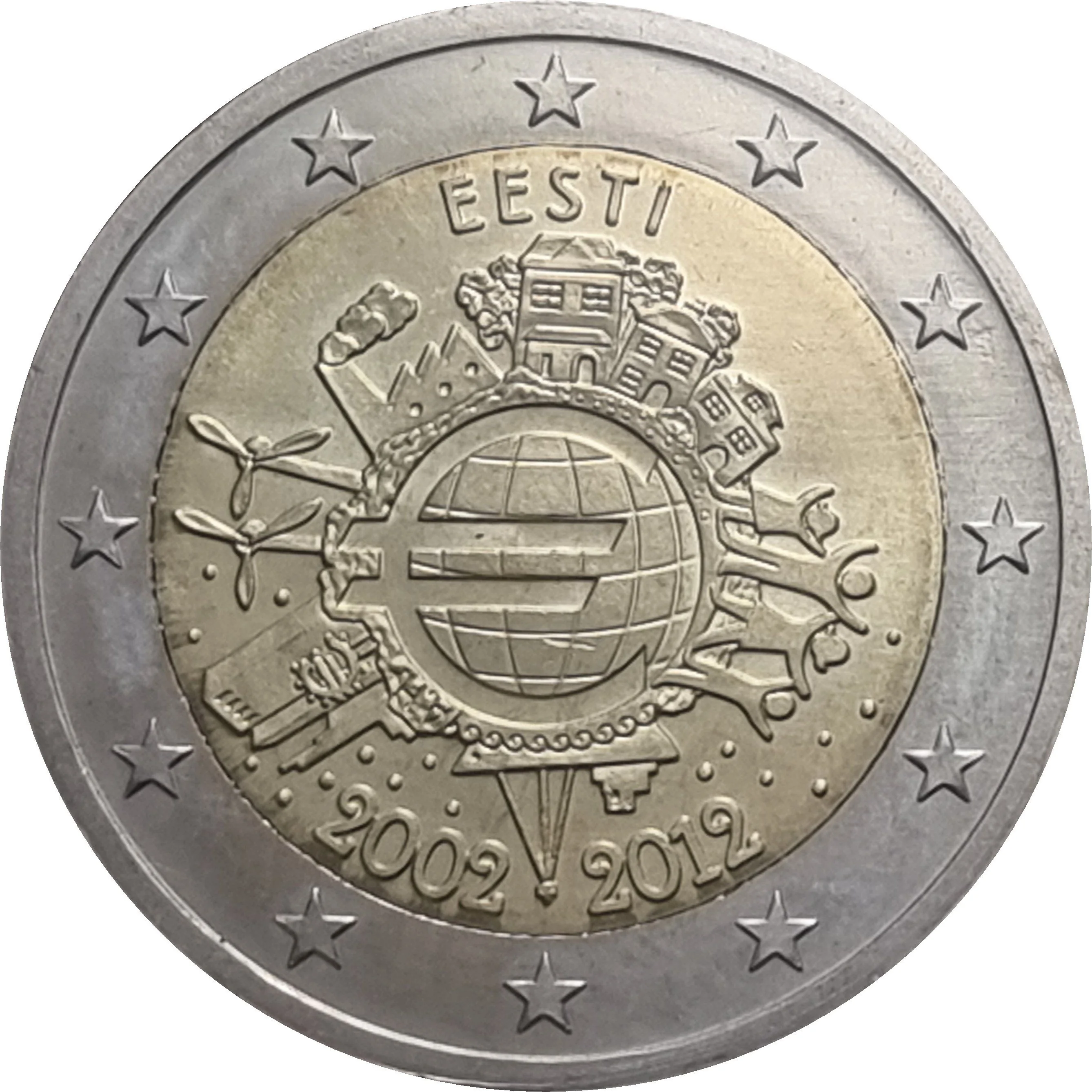
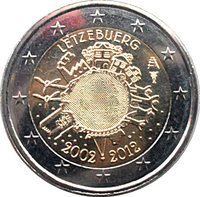
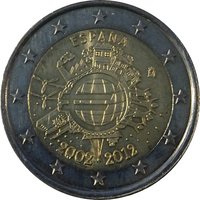
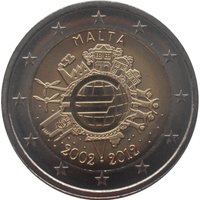
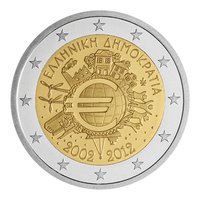
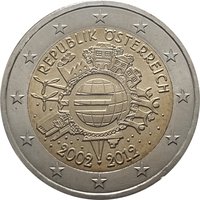
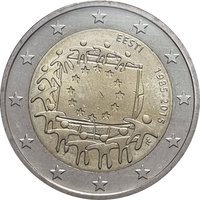
The coin's centre shows the world as a euro symbol, marking its global role. Surrounding elements depict the euro's importance to people (a family), finance (the Eurotower), trade (a ship), industry (a factory), and energy/R&D (wind turbines). The designer's initials "A.H." are between the ship and tower. The inner part bears the issuing country and the years "2002–2012". All euro area countries will issue it. The outer ring features the EU's 12 stars.
Inscription:
EESTI
A.H.
€
2002 2012
A.H.
€
2002 2012
Translation:
ESTONIA
A.H.
€
2002 2012
A.H.
€
2002 2012
Script: Latin
Engraver: Helmut Andexlinger
Reverse
Edge
Reeded with inscription
Legend:
EESTI O EESTI O
Translation:
O Estonia, O Estonia
Language: Estonian
Categories
| Map |
Mintings
| Year | Mint Mark | Mintage | Quality | Collection |
|---|---|---|---|---|
| 2012 | — | 2,000,000 |
Historical background
In 2012, Estonia was in its second year of using the euro, having successfully adopted the common currency on January 1, 2011. This transition marked a significant milestone, solidifying the country's integration into the core of the European Union after joining in 2004. The changeover from the Estonian kroon, which had been pegged to the euro (and previously the Deutsche Mark) for nearly two decades, was executed smoothly and enjoyed broad public support. The euro was seen as a symbol of stability and a final break from the Soviet-era monetary past, providing security for foreign investors and simplifying trade for Estonia's open, export-driven economy.
The broader Eurozone context, however, presented challenges. The year 2012 was the peak of the European sovereign debt crisis, with intense market pressure on countries like Greece, Spain, and Italy. While Estonia itself was not a source of concern—boasting low public debt, a balanced budget, and strong economic growth—the crisis cast a shadow. There were domestic and international debates about the risks and future of the euro itself. For Estonia, a key concern was ensuring that its fiscal discipline and competitiveness were not undermined by the crisis-driven policies and potential bailouts within the currency union.
Despite the external turbulence, Estonia's domestic currency situation remained exceptionally stable. The economy continued to recover robustly from the severe 2008-2009 recession, supported by strong exports. Inflation, at around 4.2% for the year, was elevated but primarily driven by global energy and food prices, along with excise tax hikes, rather than monetary instability. The euro provided a safe harbor during the storm, shielding Estonia from the currency volatility that affected non-euro neighbors. The government, led by Prime Minister Andrus Ansip, remained a staunch advocate of fiscal austerity within the EU, using its own rapid recovery as a model for crisis-stricken member states.
The broader Eurozone context, however, presented challenges. The year 2012 was the peak of the European sovereign debt crisis, with intense market pressure on countries like Greece, Spain, and Italy. While Estonia itself was not a source of concern—boasting low public debt, a balanced budget, and strong economic growth—the crisis cast a shadow. There were domestic and international debates about the risks and future of the euro itself. For Estonia, a key concern was ensuring that its fiscal discipline and competitiveness were not undermined by the crisis-driven policies and potential bailouts within the currency union.
Despite the external turbulence, Estonia's domestic currency situation remained exceptionally stable. The economy continued to recover robustly from the severe 2008-2009 recession, supported by strong exports. Inflation, at around 4.2% for the year, was elevated but primarily driven by global energy and food prices, along with excise tax hikes, rather than monetary instability. The euro provided a safe harbor during the storm, shielding Estonia from the currency volatility that affected non-euro neighbors. The government, led by Prime Minister Andrus Ansip, remained a staunch advocate of fiscal austerity within the EU, using its own rapid recovery as a model for crisis-stricken member states.
Series: 10 years of Euro
Series: Estonia 2 euro commemoratives
🌱 Very Common