

Obverse
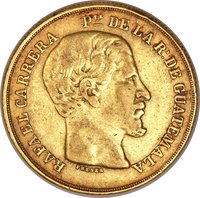
Description:
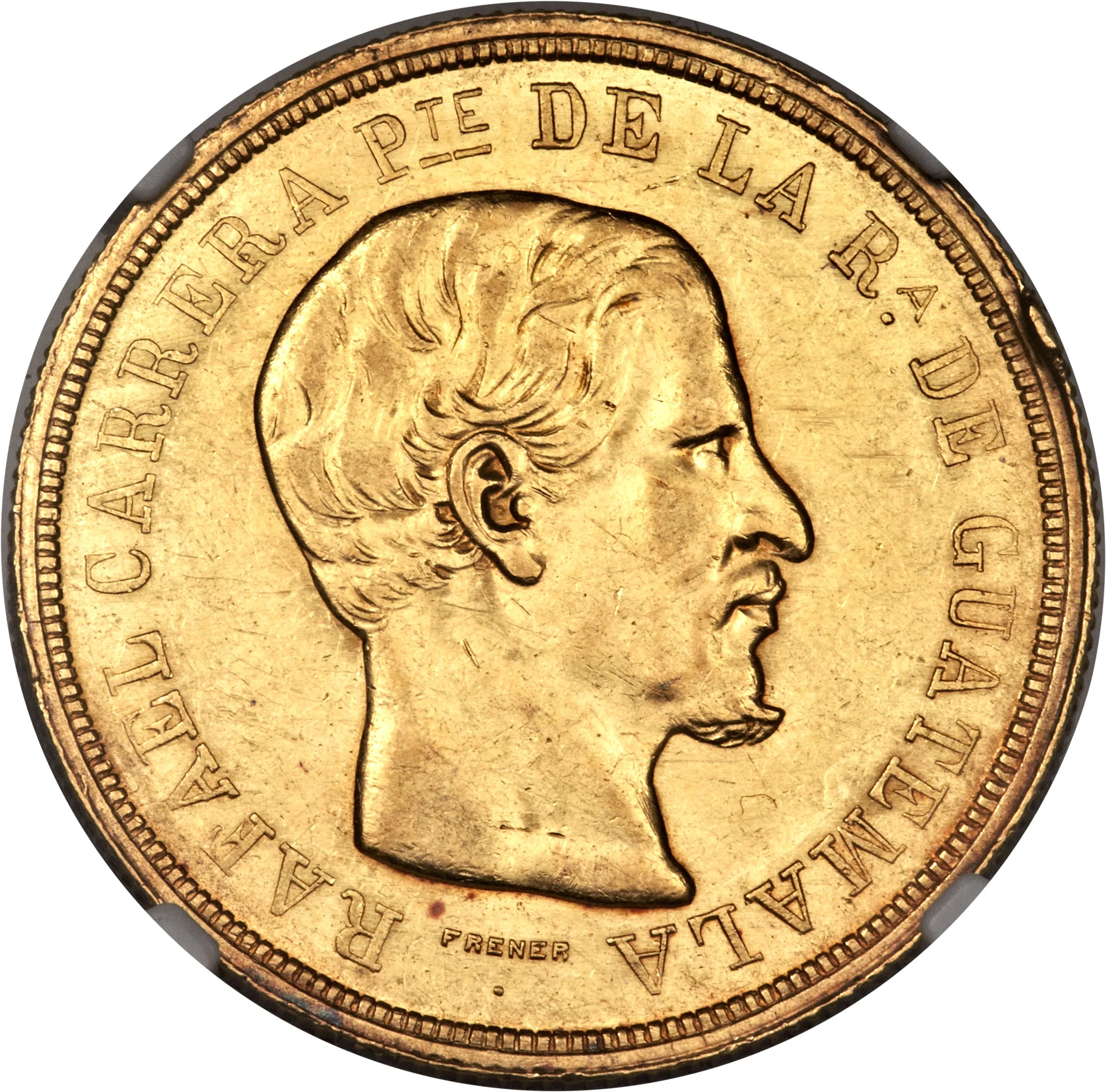
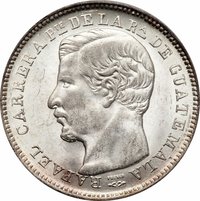
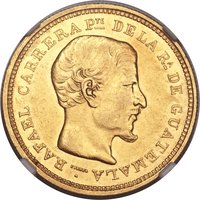
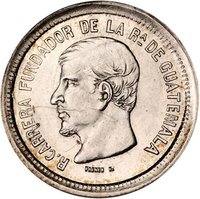
Bust right, legend around, engraver's name at base.
Inscription:
RAFAEL CARRERA PTE DE LA RA. DE GUATEMALA
FRENER F
FRENER F
Translation:
Rafael Carrera President of the Republic of Guatemala
Founder F
Founder F
Script: Latin
Language: Spanish
Engraver: Johann-Baptist Frener
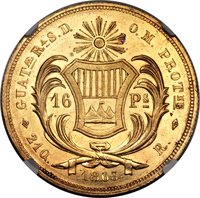
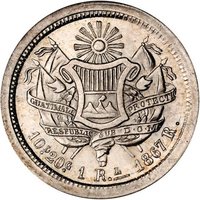
Reverse
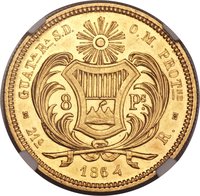
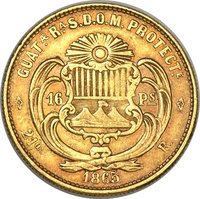
Description:
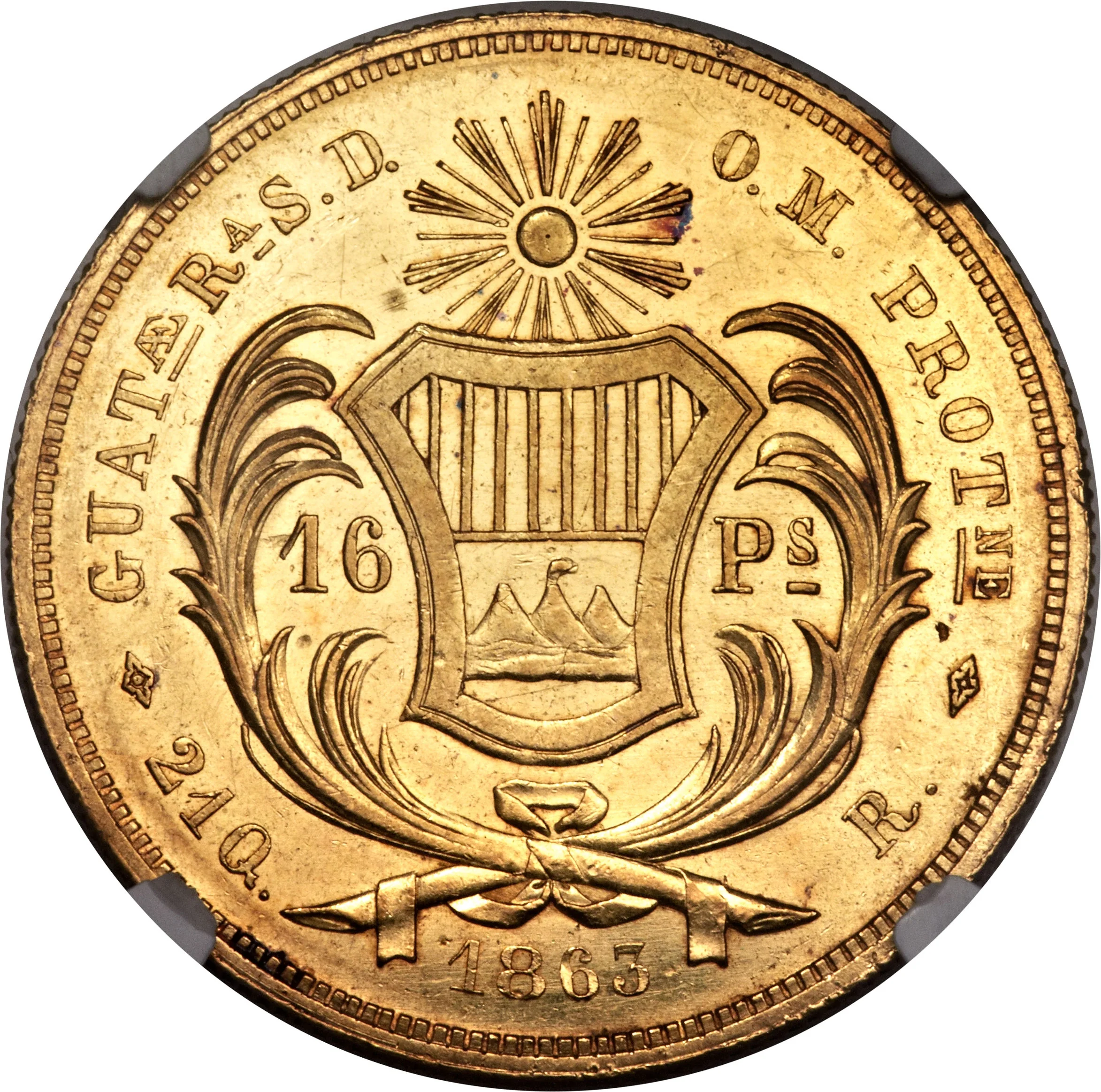
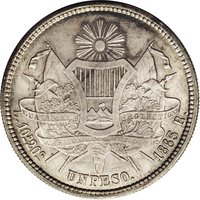
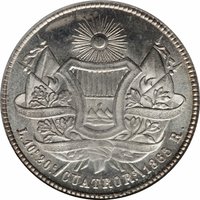
Shield flanked by value, legend around. Fineness, date, and initials below.
Inscription:
GUATÆ RA S.D.O.M. PROTNE
16 Ps
-21Q 1863 R.-
16 Ps
-21Q 1863 R.-
Translation:
By the Grace of God, the Supreme Ruler of the Universe, Protector of the Republic of Guatemala.
16 Pesos
-21Q 1863 R.-
16 Pesos
-21Q 1863 R.-
Script: Latin
Engraver: Johann-Baptist Frener
Edge
Categories
| Symbols> Coat of Arms |
| Person> Politician |
Mints
| Name | Mark |
|---|---|
| Casa de Moneda de Guatemala | — |
Mintings
| Year | Mint Mark | Mintage | Quality | Collection |
|---|---|---|---|---|
| 1863 | — | 459 | ||
| 1864 | — | 190 | ||
| 1865 | — | 476 |
Historical background
In 1863, Guatemala's currency situation was characterized by a complex and often chaotic coexistence of multiple coinage systems, a direct legacy of its colonial past and the turbulent early decades of independence. The primary circulating medium was the silver peso, often called the peso fuerte or real de a ocho, which was subdivided into 8 reales. However, alongside this, the older Spanish colonial coins and various republican issues from Guatemala and other Central American states remained in circulation. Crucially, the British pound sterling and gold coins from other nations, particularly French and Peruvian, also circulated for larger transactions, creating a de facto bimetallic system without a fixed legal ratio, leading to constant valuation issues and instability.
This monetary fragmentation was exacerbated by a chronic shortage of official minted coinage. The Guatemala Mint (Casa de Moneda), while operational, struggled to produce sufficient quantities of coin to meet the needs of the economy, which was primarily based on agricultural exports like coffee, cochineal, and sugar. This scarcity led to the widespread use of fichas (tokens) issued by haciendas, fincas, and merchants to pay laborers, which could only be redeemed at company stores (tiendas de raya). This practice tied workers to their employers and inhibited the development of a unified national currency.
The situation in 1863 existed within a specific political context: the long conservative rule of President Rafael Carrera (who had led the nation since the 1840s and was serving as President for Life from 1854 until his death in 1865). Carrera's government prioritized political stability and the interests of the landed elite over comprehensive monetary reform. While his administration provided a period of relative order, it did not resolve the underlying structural issues of the currency system. The financial disarray would persist until the later liberal reforms of the 1870s, which introduced the peso as a decimalized currency and sought greater monetary centralization.
This monetary fragmentation was exacerbated by a chronic shortage of official minted coinage. The Guatemala Mint (Casa de Moneda), while operational, struggled to produce sufficient quantities of coin to meet the needs of the economy, which was primarily based on agricultural exports like coffee, cochineal, and sugar. This scarcity led to the widespread use of fichas (tokens) issued by haciendas, fincas, and merchants to pay laborers, which could only be redeemed at company stores (tiendas de raya). This practice tied workers to their employers and inhibited the development of a unified national currency.
The situation in 1863 existed within a specific political context: the long conservative rule of President Rafael Carrera (who had led the nation since the 1840s and was serving as President for Life from 1854 until his death in 1865). Carrera's government prioritized political stability and the interests of the landed elite over comprehensive monetary reform. While his administration provided a period of relative order, it did not resolve the underlying structural issues of the currency system. The financial disarray would persist until the later liberal reforms of the 1870s, which introduced the peso as a decimalized currency and sought greater monetary centralization.
Series: System: 1859-1870
✨ Legendary