

10 francs – France
Add to wishlist
France
Context
Years: 1947–1949
Issuer: France
Period:
(1946—1958)
Currency:
(1795—1959)
Demonetization: 1 August 1953
Total mintage: 337,934,500
Material
Diameter: 26 mm
Weight: 7 g
Thickness: 1.74 mm
Shape: Round
Composition: Copper-nickel
Technique: Milled
Alignment: Coin alignment
flip
References
KM: #
Numista: #685
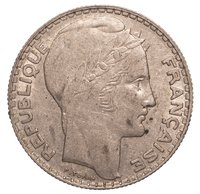
Obverse
Description:
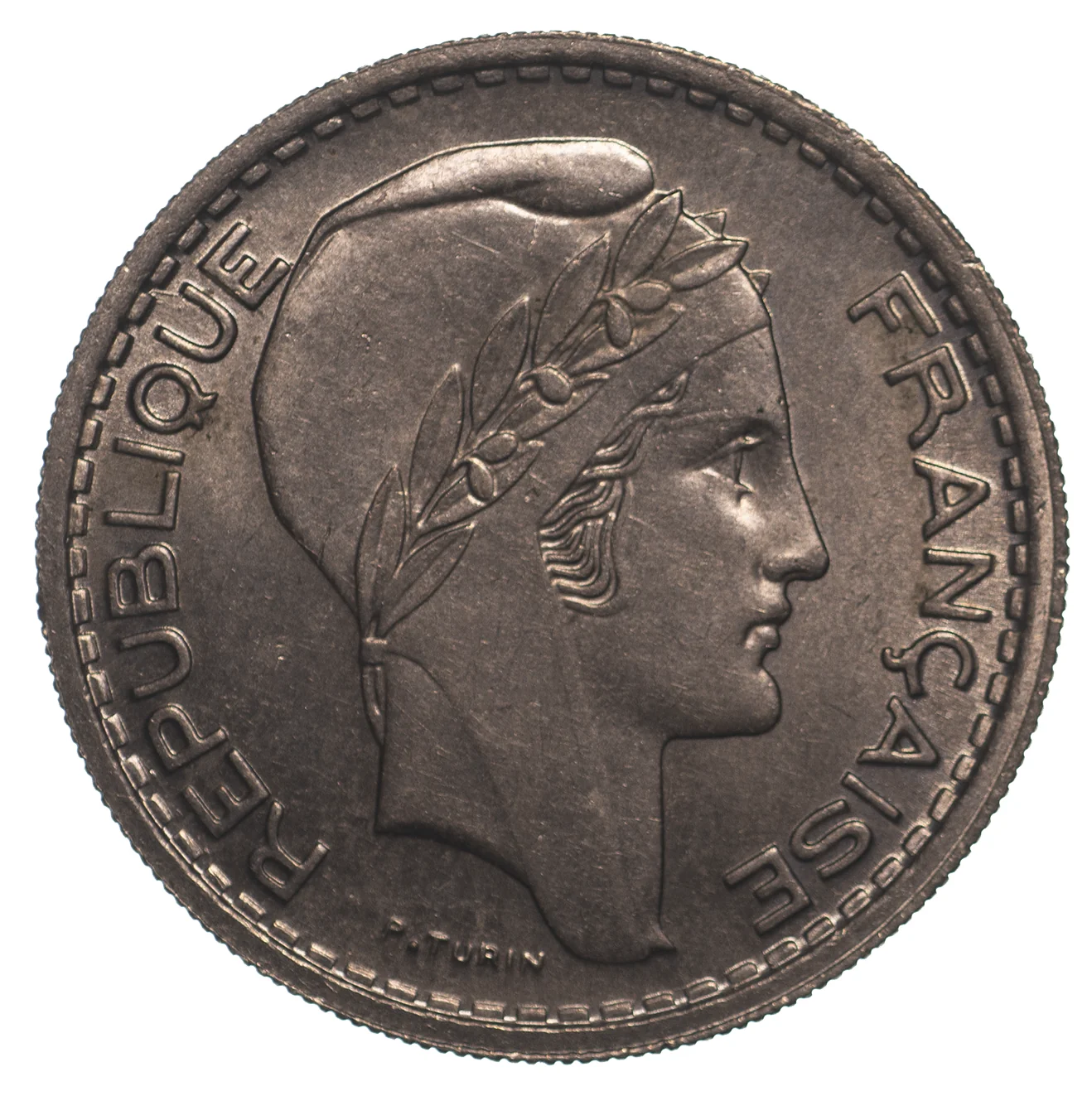
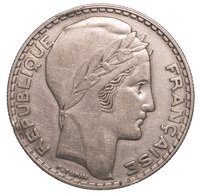
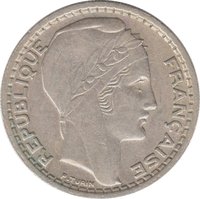
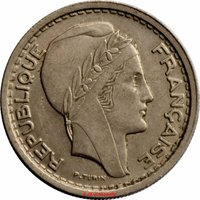
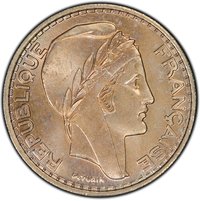
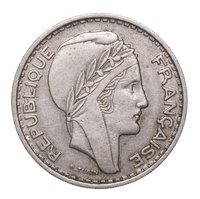
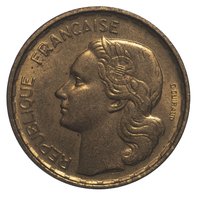
Republic head with Phrygian cap touching denticles. 1947 issues have a smaller obverse head than KM#908.1/908.2.
Inscription:
REPUBLIQUE FRANÇAISE
P.TURIN
P.TURIN
Translation:
FRENCH REPUBLIC
P.TURIN
P.TURIN
Script: Latin
Language: French
Engraver: Pierre Turin
Reverse
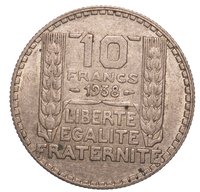
Description:
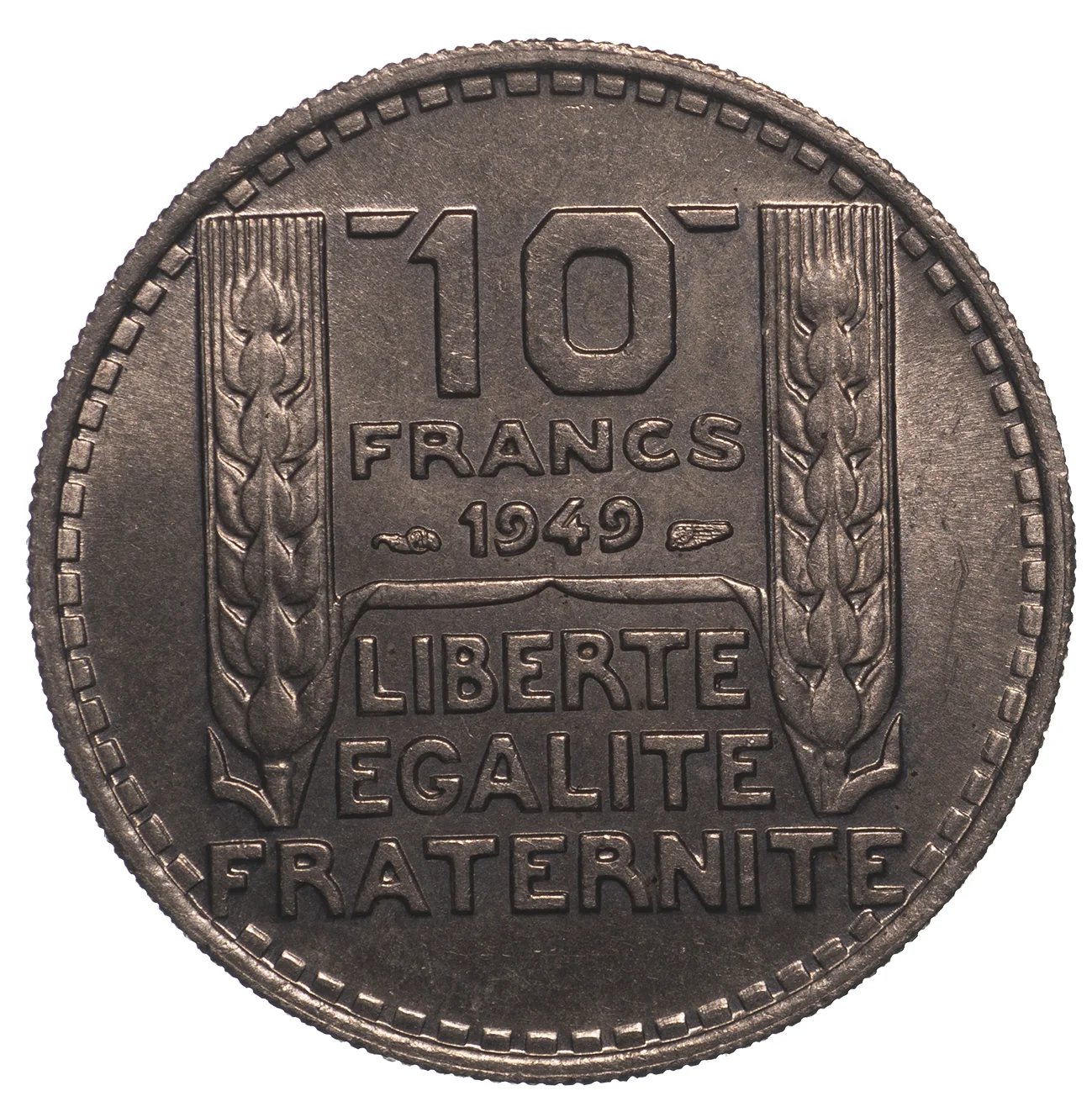
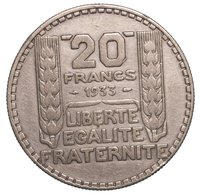
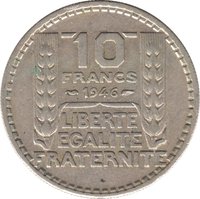
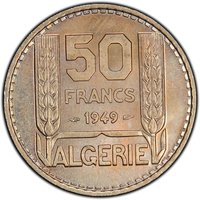
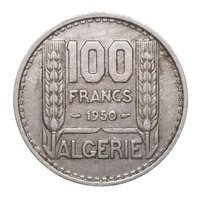
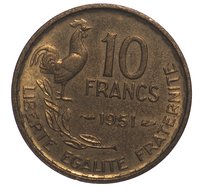
Denomination above date, inscription below, flanked by columns. Mintmark, if present, is below ER in FRATERNITE.
Inscription:
10
FRANCS
1949
LIBERTE
EGALITE
FRATERNITE
FRANCS
1949
LIBERTE
EGALITE
FRATERNITE
Translation:
Ten Francs
1949
Liberty
Equality
Fraternity
1949
Liberty
Equality
Fraternity
Script: Latin
Language: French
Engraver: Pierre Turin
Edge
Reeded
Categories
| Symbol> Phrygian cap |
Mints
| Name | Mark |
|---|---|
| Monnaie de Paris | — |
| Beaumont-le-Roger | B |
Mintings
Historical background
In 1947, France was grappling with a severe and persistent monetary crisis rooted in the economic devastation of World War II. The country's reconstruction, funded by massive government spending and a rapid expansion of the money supply, had led to rampant inflation and a collapsing currency. The franc had been devalued several times since liberation, but prices continued to soar, wages failed to keep pace, and a thriving black market undermined the official economy. This situation eroded public confidence, fueled social unrest, and created a critical imbalance in foreign trade, as imports were desperately needed but became prohibitively expensive.
The political response was fragmented and ineffective for much of the year. A succession of short-lived coalition governments, spanning from the Socialist Paul Ramadier to the MRP Robert Schuman, struggled to implement the stringent austerity measures required for stabilization. Attempts to control prices and freeze wages proved unenforceable and sparked major strike waves in the spring and autumn. The fundamental issue was a lack of political will to curb spending and credit, as leaders feared the social backlash from ending subsidies and tightening fiscal policy. Consequently, the currency continued its downward spiral, with the franc's unofficial value plummeting on parallel markets.
The turning point came in late 1947 and early 1948, setting the stage for the eventual reform. Under the pressure of the looming Marshall Plan, whose aid was contingent on financial discipline, and following the departure of Communist ministers from the government, a more decisive course was charted. The Schuman government, with the crucial backing of the United States, began preparing the radical "Pinay-Rueff" reforms that would be implemented in 1948. These included a new devaluation, the creation of a dual exchange rate, and strict credit controls, which finally began to stabilize the franc and integrate France into the nascent European recovery system. Thus, 1947 was the chaotic climax of the postwar monetary crisis, a year of failure that made subsequent tough medicine politically unavoidable.
The political response was fragmented and ineffective for much of the year. A succession of short-lived coalition governments, spanning from the Socialist Paul Ramadier to the MRP Robert Schuman, struggled to implement the stringent austerity measures required for stabilization. Attempts to control prices and freeze wages proved unenforceable and sparked major strike waves in the spring and autumn. The fundamental issue was a lack of political will to curb spending and credit, as leaders feared the social backlash from ending subsidies and tightening fiscal policy. Consequently, the currency continued its downward spiral, with the franc's unofficial value plummeting on parallel markets.
The turning point came in late 1947 and early 1948, setting the stage for the eventual reform. Under the pressure of the looming Marshall Plan, whose aid was contingent on financial discipline, and following the departure of Communist ministers from the government, a more decisive course was charted. The Schuman government, with the crucial backing of the United States, began preparing the radical "Pinay-Rueff" reforms that would be implemented in 1948. These included a new devaluation, the creation of a dual exchange rate, and strict credit controls, which finally began to stabilize the franc and integrate France into the nascent European recovery system. Thus, 1947 was the chaotic climax of the postwar monetary crisis, a year of failure that made subsequent tough medicine politically unavoidable.
Series: Francs Turin
🌱 Very Common