

100 francs – Algeria
Add to wishlist
Algeria
Context
Years: 1950–1952
Issuer: Algeria
Period:
(1830—1962)
Currency:
(1848—1959)
Demonetization: 15 September 1966
Total mintage: 34,189,000
Material
References
KM: #
Numista: #1755
Obverse
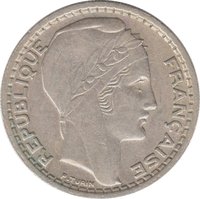
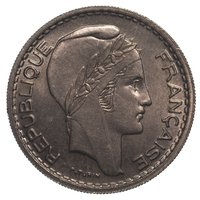
Description:
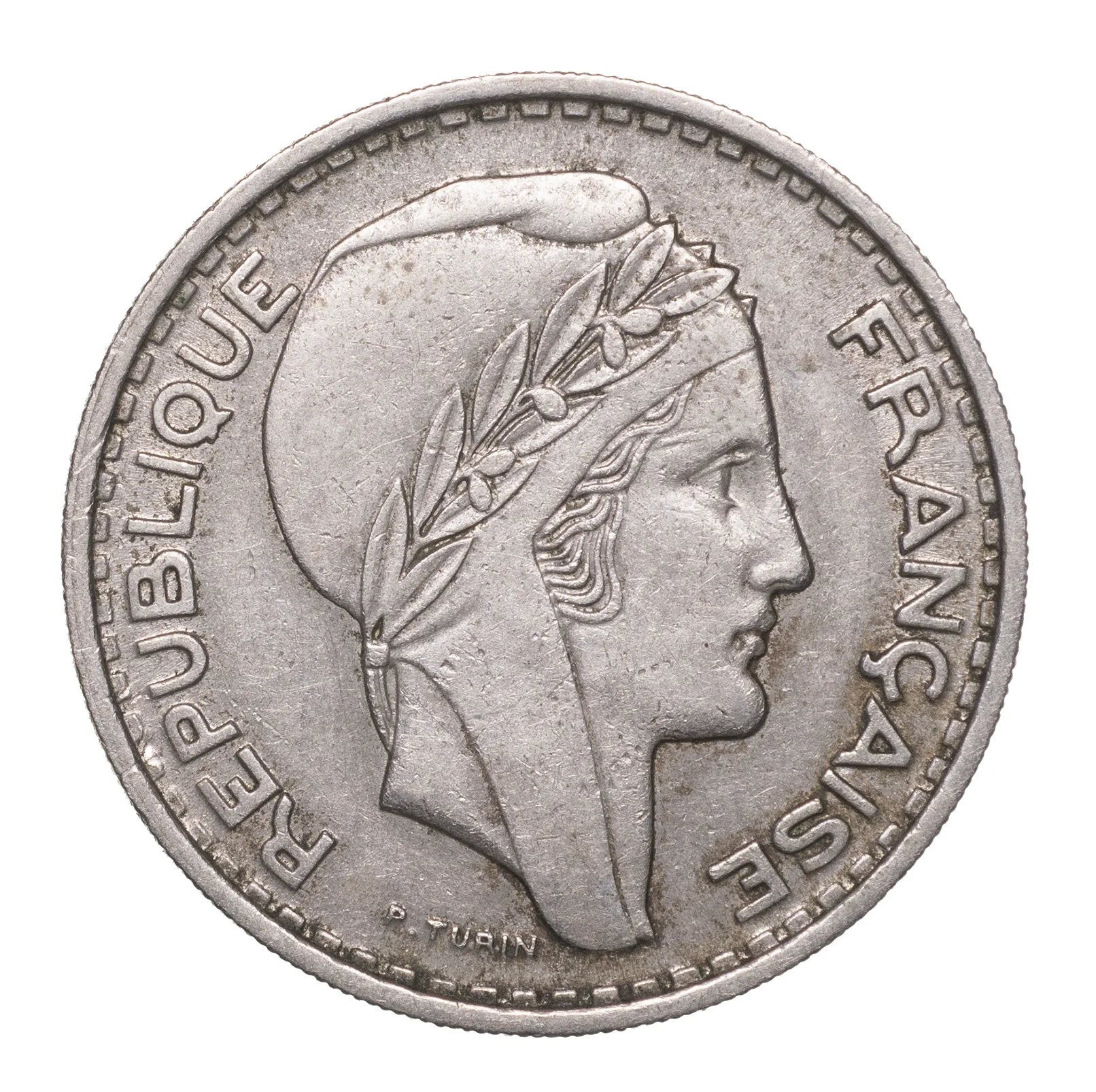
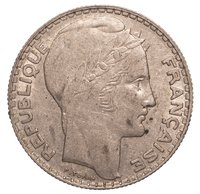
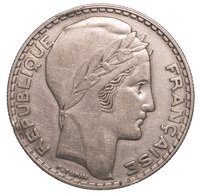
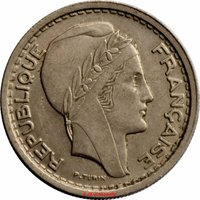
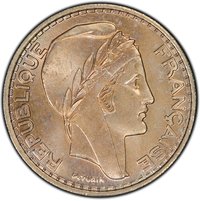
"Marianne" on the right.
Inscription:
REPUBLIQUE FRANÇAISE
P. TURIN
P. TURIN
Translation:
FRENCH REPUBLIC
P. TURIN
P. TURIN
Script: Latin
Language: French
Engraver: Pierre Turin
Reverse
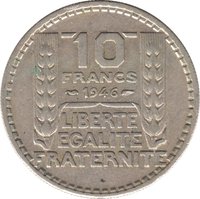
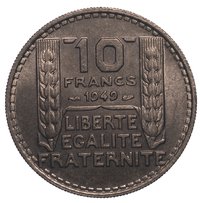
Description:
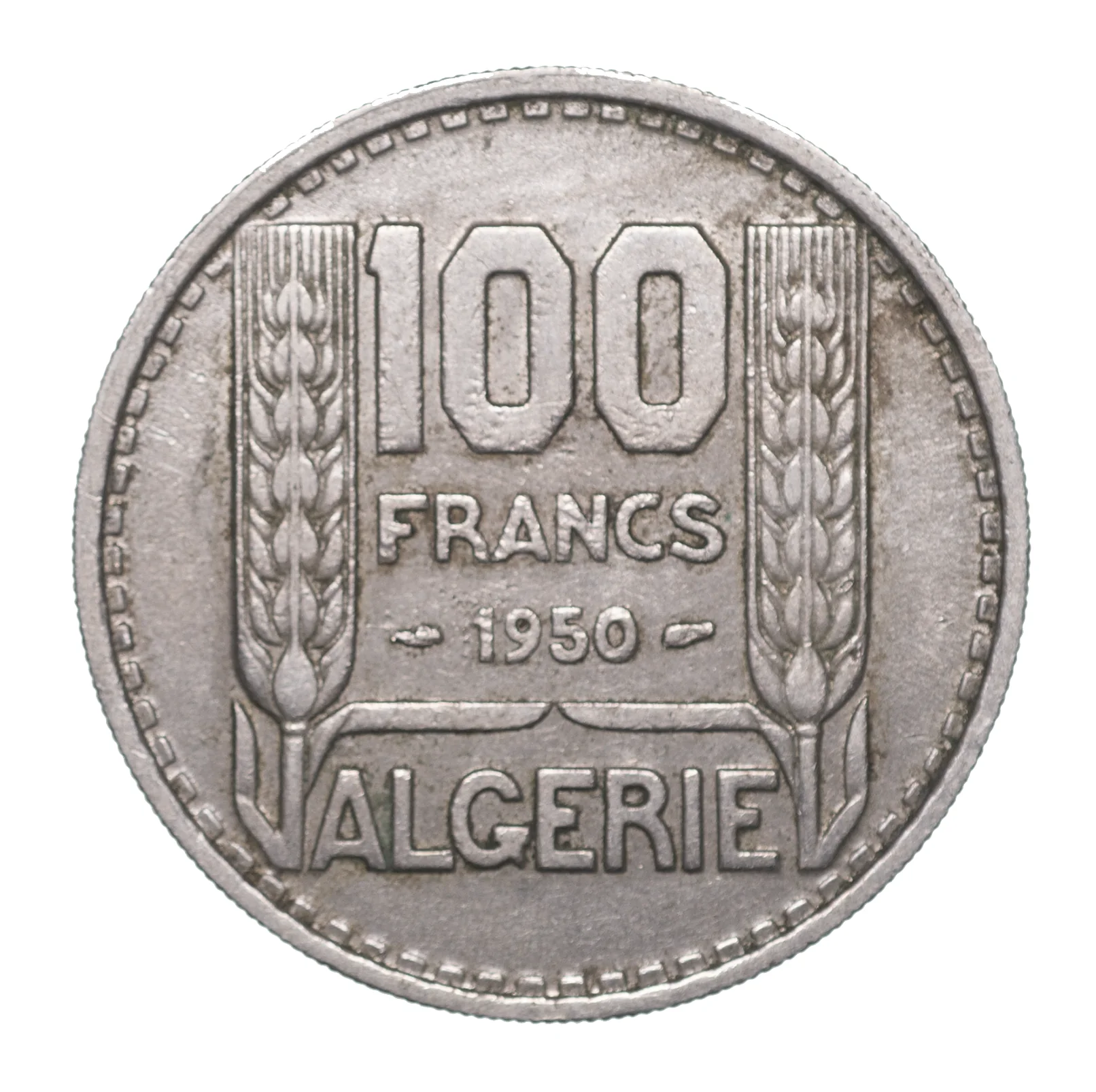
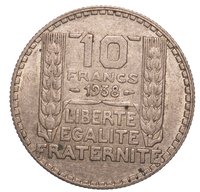
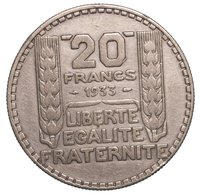
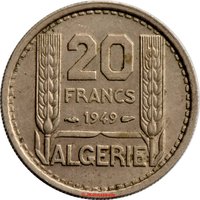
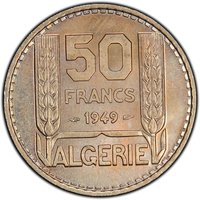
Value above date, wheat ears flank, country below.
Inscription:
100
FRANCS
1950
ALGERIE
FRANCS
1950
ALGERIE
Translation:
One Hundred Francs
1950
Algeria
1950
Algeria
Script: Latin
Language: French
Engraver: Pierre Turin
Edge
Reeded
Categories
| Symbol> Allegory |
| Symbol> Phrygian cap |
Mints
| Name | Mark |
|---|---|
| Monnaie de Paris | — |
Mintings
| Year | Mint Mark | Mintage | Quality | Collection |
|---|---|---|---|---|
| 1950 | — | 22,189,000 | ||
| 1952 | — | 12,000,000 |
Historical background
In 1950, Algeria's currency situation was a direct reflection of its political status as an integral part of France, organized into three départements. The official currency was the Algerian franc, which was not an independent monetary unit but was pegged at par with the French metropolitan franc. This meant that the Bank of Algeria, which issued the notes, operated under the strict control of the French Treasury, ensuring monetary policy was aligned with that of mainland France. The system facilitated seamless trade and financial integration with the metropole, treating Algeria as part of a single economic zone.
This monetary integration served French colonial economic interests, prioritizing the stability of the franc and the flow of capital and goods between Algeria and France. It tied Algeria's economy tightly to the French market, making it a supplier of agricultural products (like wine and wheat) and a consumer of French manufactured goods. While this provided a degree of price stability and familiar currency for European settlers (colons), it also meant Algeria had no autonomous monetary tools to address local economic needs or development disparities. The economy was largely shaped to benefit the settler population and French industries.
Beneath this surface of imposed stability, however, lay significant economic and social inequalities that would fuel the growing nationalist movement. The majority Algerian Muslim population experienced widespread poverty and limited economic opportunity, conditions that the rigid currency system did nothing to alleviate. The monetary union symbolized the broader lack of political and economic self-determination. Within a few years, these tensions would erupt into the Algerian War of Independence (1954-1962), after which the country would establish its own central bank and introduce the Algerian dinar in 1964, severing the direct monetary link to France.
This monetary integration served French colonial economic interests, prioritizing the stability of the franc and the flow of capital and goods between Algeria and France. It tied Algeria's economy tightly to the French market, making it a supplier of agricultural products (like wine and wheat) and a consumer of French manufactured goods. While this provided a degree of price stability and familiar currency for European settlers (colons), it also meant Algeria had no autonomous monetary tools to address local economic needs or development disparities. The economy was largely shaped to benefit the settler population and French industries.
Beneath this surface of imposed stability, however, lay significant economic and social inequalities that would fuel the growing nationalist movement. The majority Algerian Muslim population experienced widespread poverty and limited economic opportunity, conditions that the rigid currency system did nothing to alleviate. The monetary union symbolized the broader lack of political and economic self-determination. Within a few years, these tensions would erupt into the Algerian War of Independence (1954-1962), after which the country would establish its own central bank and introduce the Algerian dinar in 1964, severing the direct monetary link to France.
Series: Francs Turin
🌱 Very Common