

1 Lats – Latvia
Non-circulating coins
Series: Hansa Cities
Latvia
Context

Material
Diameter: 38.61 mm
Weight: 31.47 g
Silver weight: 29.11 g
Shape: Round
Composition: 92.5% Silver
Standard: Silver ounce
Magnetic: No
Technique: Milled
Alignment: Medal alignment
flip
References
KM: #Click to copy to clipboard49
Numista: #51593
Value
Exchange value: 1 LVL
Bullion value: $84.44
Inflation-adjusted value: 2.66 LVL
Obverse
Description:
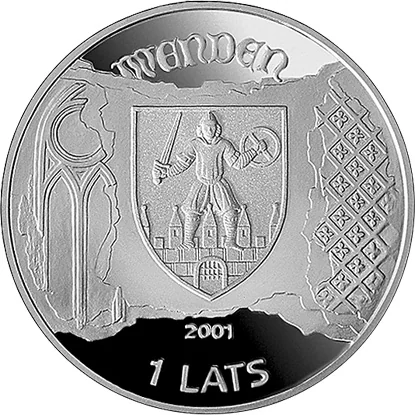
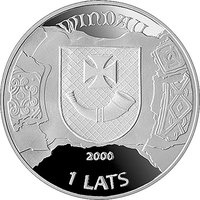
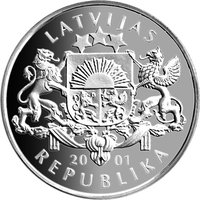
The central Hanseatic coat of arms of Cesis is flanked by Gothic ornaments on the right and a pointed arch on the left. The year 2001 is below the coat of arms, with "WENDEN" above and "1 LATS" below, each in a semicircle.
Inscription:
WENDEN
2001
1
LATS
2001
1
LATS
Script: Latin
Engraver: Jānis Strupulis
Designer: Gunārs Krollis
Reverse
Description:
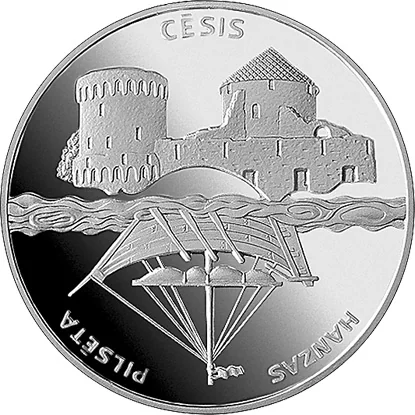
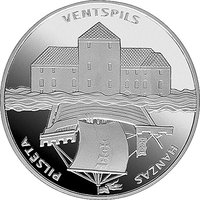
Sea waves divide the coin, with Cesis Castle above and a Hanseatic ship's reflection below. The inscription "HANZAS PILSETA" curves beneath.
Inscription:
CĒSIS
HANZAS PILSĒTA
HANZAS PILSĒTA
Translation:
Cēsis
Hansa City
Hansa City
Script: Latin
Engraver: Jānis Strupulis
Designer: Gunārs Krollis
Edge
Legend:
LATVIJAS REPUBLIKA ● LATVIJAS BANKA ●
Translation:
REPUBLIC OF LATVIA ● BANK OF LATVIA ●
Language: Latvian
Categories
| Transportation> Watercraft |
Mints
| Name | Mark |
|---|---|
| Mint of Finland | — |
Mintings
| Year | Mint Mark | Mintage | Quality | Collection |
|---|---|---|---|---|
| 2001 | — | 15,000 | Proof |
Historical background
In 2001, Latvia was in a period of macroeconomic stabilization and active preparation for European Union accession, with its currency, the lats (LVL), serving as a cornerstone of stability. Following the tumultuous collapse of the Soviet Union and a severe banking crisis in 1995, Latvia had pegged the lats to the IMF's Special Drawing Rights (SDR) basket in 1994. This fixed exchange rate regime, strictly maintained by the Bank of Latvia, was crucial for taming inflation, restoring public confidence, and providing a predictable environment for foreign investment. By 2001, this policy had largely succeeded, with inflation reduced to a moderate level and the lats widely seen as a symbol of national pride and economic resilience.
The year was marked by a significant strategic shift in Latvia's monetary policy framework. In preparation for eventual Eurozone membership, Latvia changed its currency peg on January 1st, 2001. It abandoned the SDR basket and instead pegged the lats solely to the euro (then still in its accounting form as the ECU), at a rate of 0.702804 LVL to 1 EUR. This move was a clear political and economic signal of Latvia's alignment with Europe and a deliberate step in its EU integration roadmap. The fixed parity to the euro was intended to further stabilize the economy and lock in the low-inflation gains of the previous years.
Economically, 2001 saw Latvia continuing its strong post-1998 Russian crisis recovery, with GDP growth exceeding 6%. The stable lats, underpinned by substantial foreign exchange reserves, supported this growth by facilitating trade and investment, primarily with the EU. However, the fixed exchange rate also meant that Latvia had relinquished independent monetary policy, relying on fiscal discipline and structural reforms to maintain competitiveness. This framework set the stage for the challenges and boom years of the mid-2000s, ultimately leading to Latvia's entry into the Eurozone in 2014.
The year was marked by a significant strategic shift in Latvia's monetary policy framework. In preparation for eventual Eurozone membership, Latvia changed its currency peg on January 1st, 2001. It abandoned the SDR basket and instead pegged the lats solely to the euro (then still in its accounting form as the ECU), at a rate of 0.702804 LVL to 1 EUR. This move was a clear political and economic signal of Latvia's alignment with Europe and a deliberate step in its EU integration roadmap. The fixed parity to the euro was intended to further stabilize the economy and lock in the low-inflation gains of the previous years.
Economically, 2001 saw Latvia continuing its strong post-1998 Russian crisis recovery, with GDP growth exceeding 6%. The stable lats, underpinned by substantial foreign exchange reserves, supported this growth by facilitating trade and investment, primarily with the EU. However, the fixed exchange rate also meant that Latvia had relinquished independent monetary policy, relying on fiscal discipline and structural reforms to maintain competitiveness. This framework set the stage for the challenges and boom years of the mid-2000s, ultimately leading to Latvia's entry into the Eurozone in 2014.
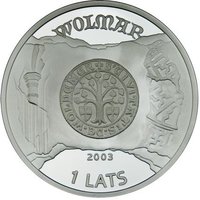
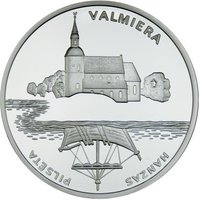
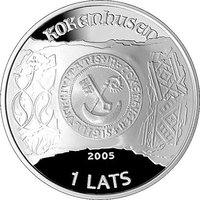
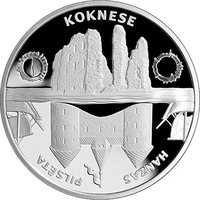
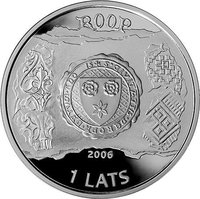
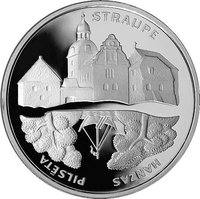
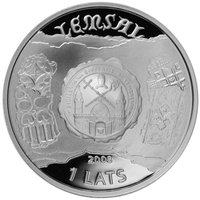
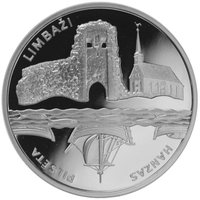
Series: Hansa Cities

💎 Very Rare