

10 pesos – Philippines
Add to wishlist
Philippines
Context
Years: 2000–2017
Issuer: Philippines
Issuing organization: Central Bank of the Philippines
Period:
(since 1946)
Currency:
(since 1967)
Material
References
KM: #
Numista: #4519
Value
Exchange value: 10 PHP
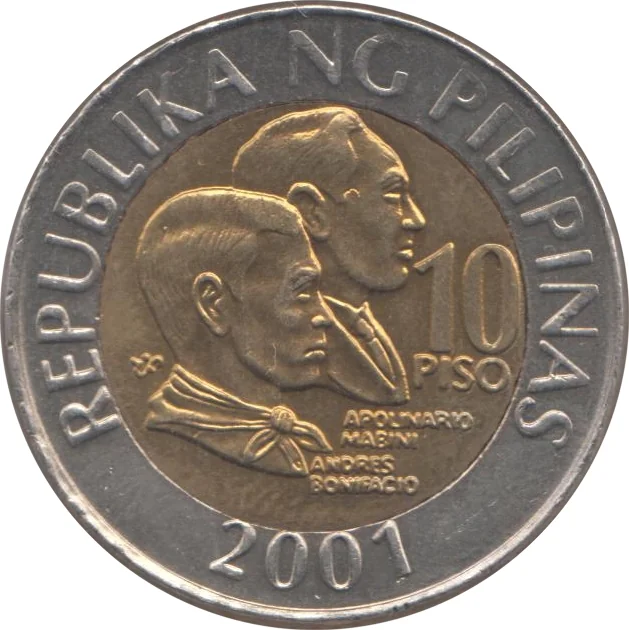
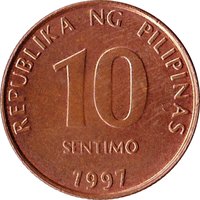
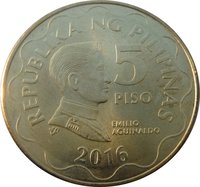
Obverse
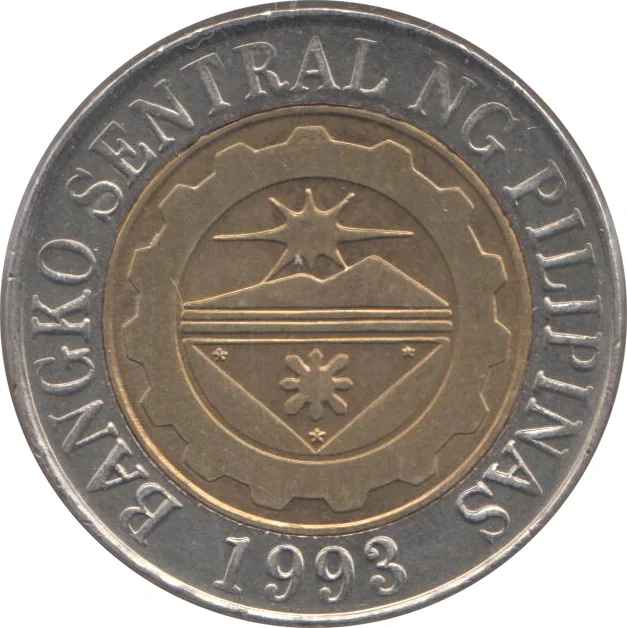
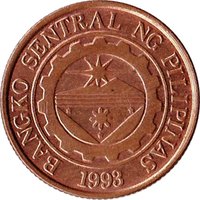
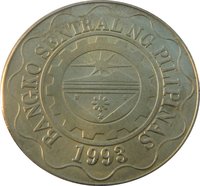
Reverse
Edge
Segmented reeding
Mints
| Name | Mark |
|---|---|
| BSP Security Plant Complex | (PI) |
Mintings
| Year | Mint Mark | Mintage | Quality | Collection |
|---|---|---|---|---|
| 2000 | PI | — | ||
| 2001 | PI | — | ||
| 2002 | PI | — | ||
| 2003 | PI | — | ||
| 2004 | PI | — | ||
| 2005 | PI | — | ||
| 2006 | PI | — | ||
| 2007 | PI | — | ||
| 2008 | PI | — | ||
| 2009 | PI | — | ||
| 2010 | PI | — | ||
| 2011 | PI | — | ||
| 2012 | PI | — | ||
| 2013 | PI | — | ||
| 2014 | PI | — | ||
| 2015 | PI | — | ||
| 2016 | PI | — | ||
| 2017 | PI | — |
Historical background
The currency situation in the Philippines in the year 2000 was one of significant volatility and pressure, primarily a lingering effect of the 1997 Asian Financial Crisis. The Philippine peso, which had been pegged to the US dollar, was forced to float in July 1997 and subsequently lost over half its value. By 2000, the currency remained fragile, trading in a weak range of approximately 40 to 55 pesos to the US dollar. This period was characterized by a "boom-bust cycle" where the economy and the peso were highly sensitive to shifts in investor confidence, domestic political stability, and external regional shocks.
The year presented specific challenges that tested the peso. Political instability, notably the impeachment trial of President Joseph Estrada, which began in late 2000, created uncertainty that spooked financial markets and led to capital flight. Furthermore, the country was grappling with fiscal deficits and a high level of external debt, which required careful management to avoid a loss of creditor confidence. The Bangko Sentral ng Pilipinas (BSP) was actively engaged in defending the peso through intermittent interventions in the foreign exchange market, often by selling dollar reserves to curb excessive depreciation, though this was a costly measure that depleted reserves.
Ultimately, the currency turbulence of 2000 underscored the Philippines' vulnerability to global capital flows and the profound impact of domestic governance on economic stability. The weak peso contributed to higher inflation through increased costs of imported goods and servicing foreign debt, squeezing consumers and businesses. This difficult environment set the stage for subsequent reforms and a focus on achieving greater macroeconomic stability in the following decade, highlighting the long and challenging recovery from the regional crisis.
The year presented specific challenges that tested the peso. Political instability, notably the impeachment trial of President Joseph Estrada, which began in late 2000, created uncertainty that spooked financial markets and led to capital flight. Furthermore, the country was grappling with fiscal deficits and a high level of external debt, which required careful management to avoid a loss of creditor confidence. The Bangko Sentral ng Pilipinas (BSP) was actively engaged in defending the peso through intermittent interventions in the foreign exchange market, often by selling dollar reserves to curb excessive depreciation, though this was a costly measure that depleted reserves.
Ultimately, the currency turbulence of 2000 underscored the Philippines' vulnerability to global capital flows and the profound impact of domestic governance on economic stability. The weak peso contributed to higher inflation through increased costs of imported goods and servicing foreign debt, squeezing consumers and businesses. This difficult environment set the stage for subsequent reforms and a focus on achieving greater macroeconomic stability in the following decade, highlighting the long and challenging recovery from the regional crisis.
Series: New Design Series
🌱 Very Common