

1 peso – Philippines
Add to wishlist
Philippines
Context
Years: 2003–2017
Issuer: Philippines
Issuing organization: Central Bank of the Philippines
Period:
(since 1946)
Currency:
(since 1967)
Material
References
KM: #
Numista: #17107
Value
Exchange value: 1 PHP
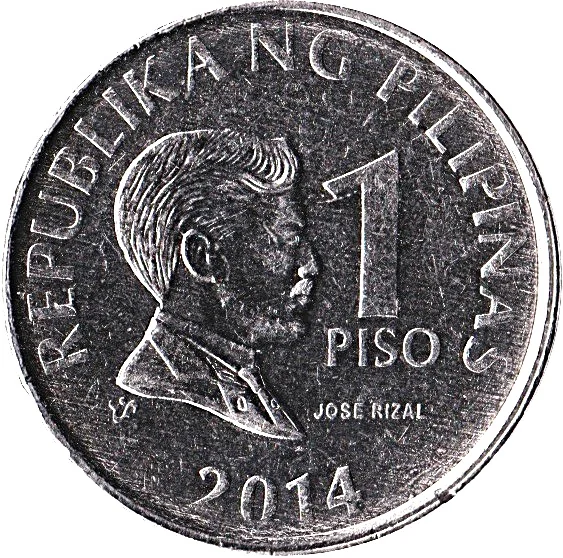
Obverse
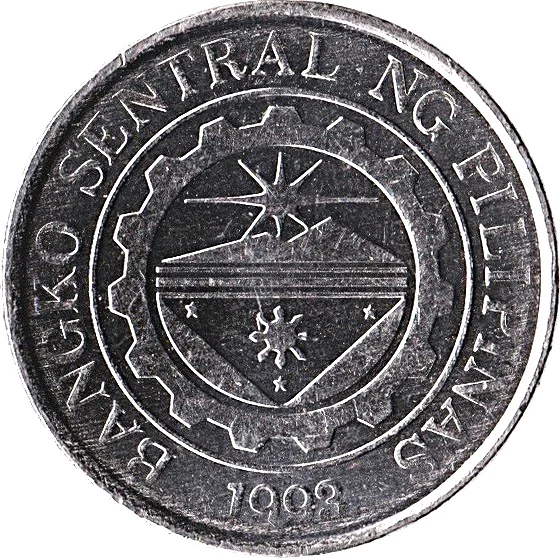
Reverse
Edge
Reeded
Mints
| Name | Mark |
|---|---|
| BSP Security Plant Complex | (PI) |
Mintings
| Year | Mint Mark | Mintage | Quality | Collection |
|---|---|---|---|---|
| 2003 | PI | — | ||
| 2004 | PI | — | ||
| 2005 | PI | — | ||
| 2006 | PI | — | ||
| 2007 | PI | — | ||
| 2008 | PI | — | ||
| 2009 | PI | — | ||
| 2010 | PI | — | ||
| 2011 | PI | — | ||
| 2012 | PI | — | ||
| 2013 | PI | — | ||
| 2014 | PI | — | ||
| 2015 | PI | — | ||
| 2016 | PI | — | ||
| 2017 | PI | — |
Historical background
In 2003, the Philippine peso faced significant pressure, continuing a period of volatility that began with the 1997 Asian Financial Crisis. The currency opened the year at around 53.5 pesos to the US dollar but weakened considerably, breaching the 55-peso mark by mid-year. This depreciation was driven by a combination of external and internal factors, including a general weakness in regional currencies, rising global oil prices, and lingering investor concerns over the Philippines' large fiscal deficit and substantial public debt. These elements fueled uncertainty and dampened confidence in the nation's economic management.
Domestically, the administration of President Gloria Macapagal Arroyo grappled with the challenging task of fiscal consolidation. The government's budget deficit remained persistently high, prompting credit rating agencies to issue downgrade warnings. Furthermore, political instability, including a failed military mutiny in July 2003, exacerbated perceptions of risk and contributed to capital outflows. The Bangko Sentral ng Pilipinas (BSP) intervened in the foreign exchange market to smooth volatility but largely allowed the peso to find its market level, prioritizing the preservation of international reserves over defending a specific exchange rate peg.
By the end of 2003, the peso had stabilized somewhat but closed the year significantly weaker at approximately 56 pesos to the dollar. The year highlighted the economy's vulnerability to external shocks and the critical need for structural reforms. The currency's performance underscored the imperative for the government to address its fiscal imbalances, a lesson that paved the way for the eventual passage of crucial revenue-enhancing measures, like the Expanded Value-Added Tax (E-VAT) law in 2005, to restore long-term macroeconomic stability.
Domestically, the administration of President Gloria Macapagal Arroyo grappled with the challenging task of fiscal consolidation. The government's budget deficit remained persistently high, prompting credit rating agencies to issue downgrade warnings. Furthermore, political instability, including a failed military mutiny in July 2003, exacerbated perceptions of risk and contributed to capital outflows. The Bangko Sentral ng Pilipinas (BSP) intervened in the foreign exchange market to smooth volatility but largely allowed the peso to find its market level, prioritizing the preservation of international reserves over defending a specific exchange rate peg.
By the end of 2003, the peso had stabilized somewhat but closed the year significantly weaker at approximately 56 pesos to the dollar. The year highlighted the economy's vulnerability to external shocks and the critical need for structural reforms. The currency's performance underscored the imperative for the government to address its fiscal imbalances, a lesson that paved the way for the eventual passage of crucial revenue-enhancing measures, like the Expanded Value-Added Tax (E-VAT) law in 2005, to restore long-term macroeconomic stability.
Series: New Design Series
🌱 Very Common