

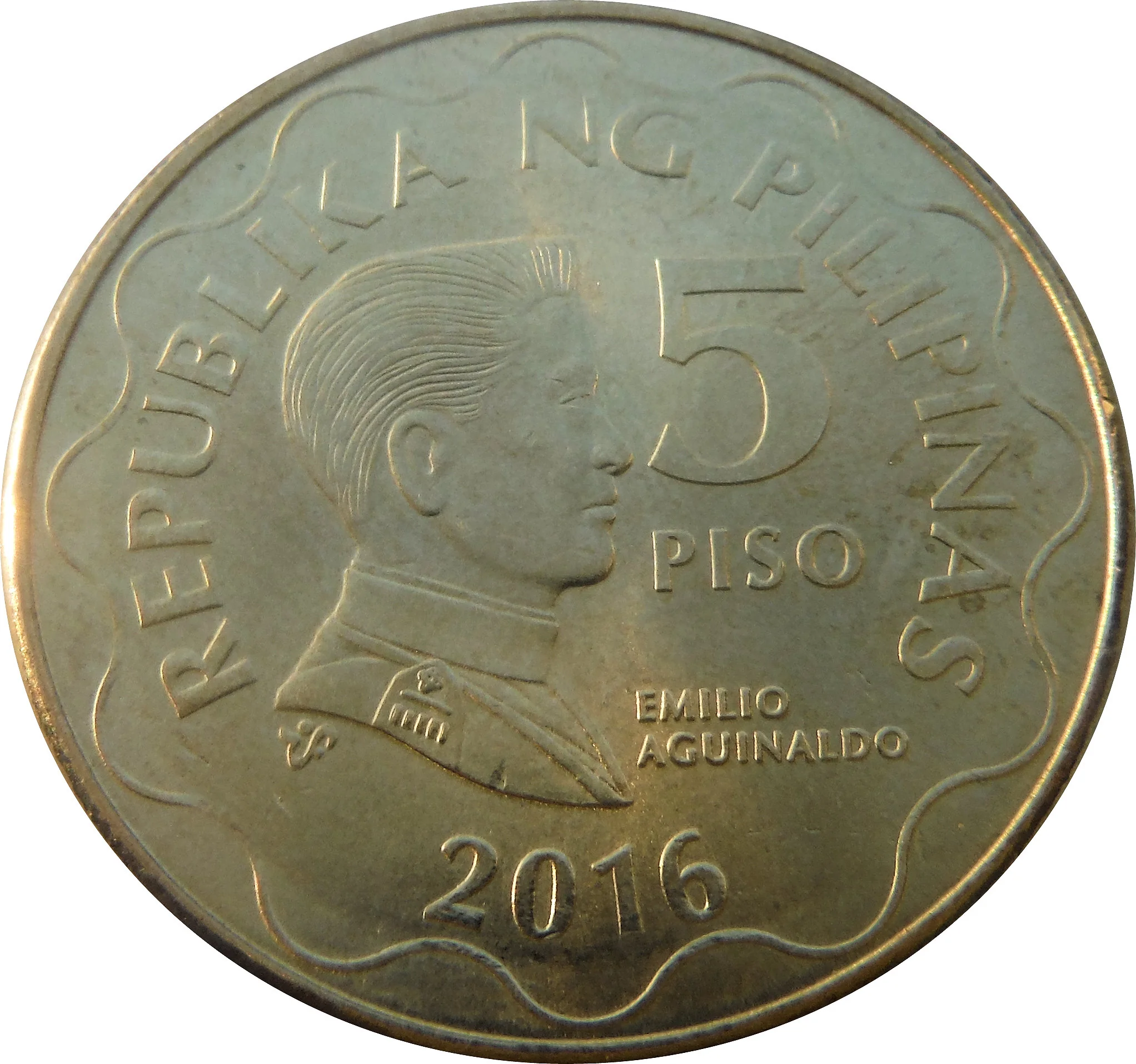
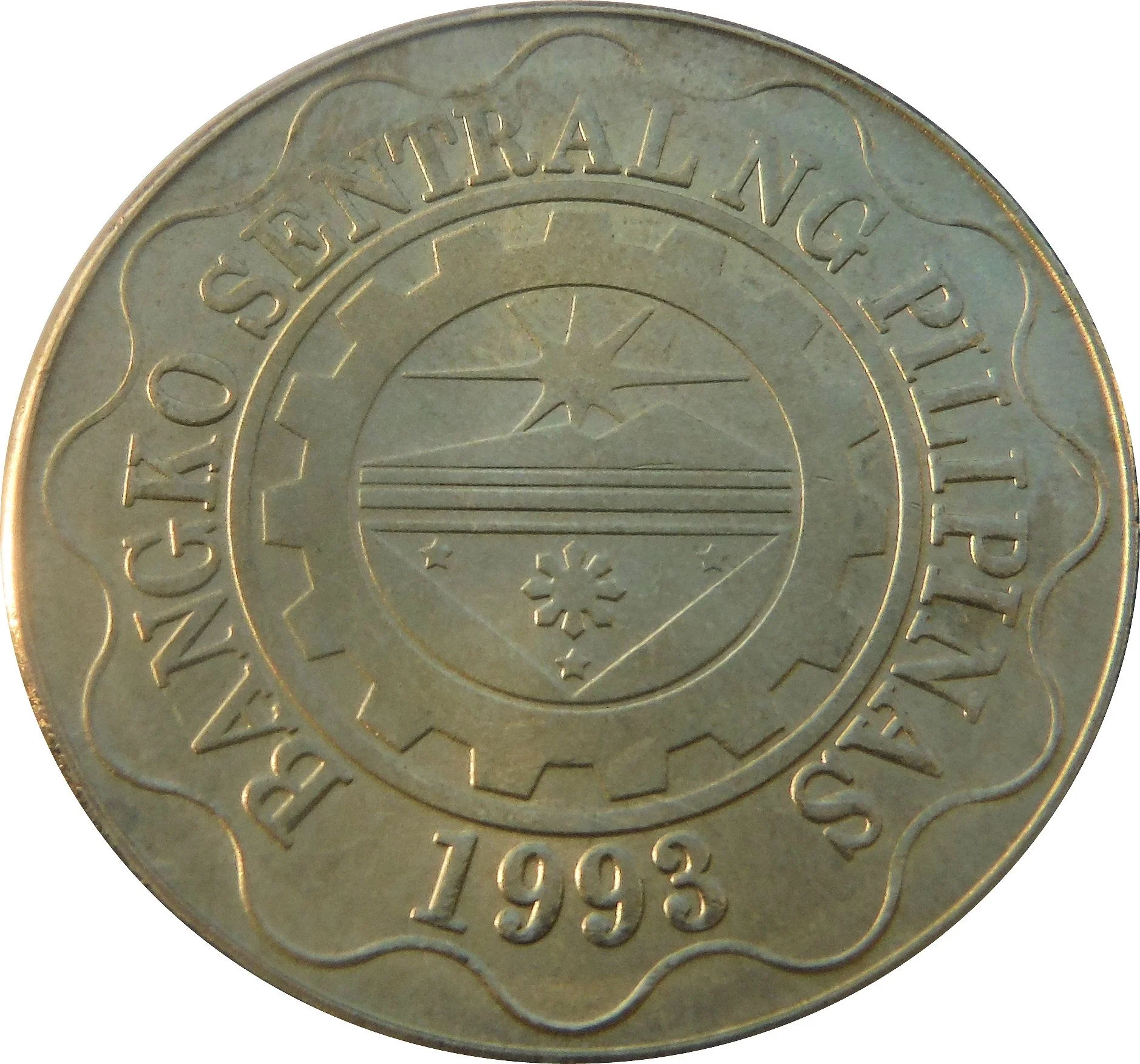
5 pesos – Philippines
Add to wishlist
Philippines
Context
Years: 1995–2017
Issuer: Philippines
Issuing organization: Central Bank of the Philippines
Period:
(since 1946)
Currency:
(since 1967)
Material
Diameter: 27 mm
Weight: 7.7 g
Thickness: 1.87 mm
Shape: Round
Composition: Nickel brass
Standard: Silver quarter ounce
Magnetic: No
Technique: Milled
Alignment: Medal alignment
flip
References
KM: #
Numista: #1680
Value
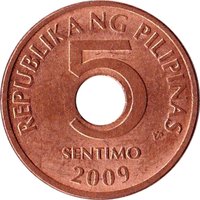
Exchange value: 5 PHP
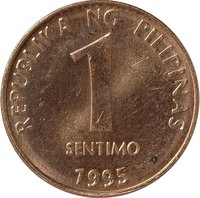
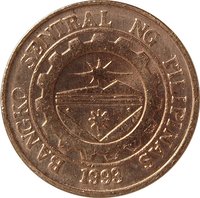
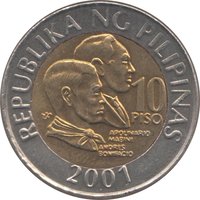
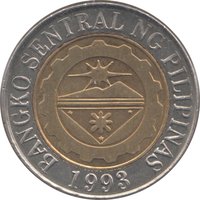
Obverse
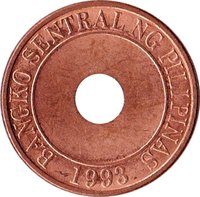
Reverse
Edge
Plain
Categories
| Person> Politician |
Mints
| Name | Mark |
|---|---|
| Royal Canadian Mint of Winnipeg | — |
| BSP Security Plant Complex | (PI) |
Mintings
| Year | Mint Mark | Mintage | Quality | Collection |
|---|---|---|---|---|
| 1995 | — | — | ||
| 1996 | PI | — | ||
| 1997 | — | — | ||
| 1997 | PI | — | ||
| 1998 | — | — | ||
| 1998 | PI | — | ||
| 1999 | PI | — | ||
| 2000 | PI | — | ||
| 2001 | PI | — | ||
| 2002 | PI | — | ||
| 2003 | PI | — | ||
| 2004 | PI | — | ||
| 2005 | PI | — | ||
| 2006 | PI | — | ||
| 2009 | PI | — | ||
| 2010 | PI | — | ||
| 2011 | PI | — | ||
| 2012 | PI | — | ||
| 2013 | PI | — | ||
| 2014 | PI | — | ||
| 2015 | PI | — | ||
| 2016 | PI | — | ||
| 2017 | PI | — |
Historical background
In 1995, the Philippine economy was navigating a period of cautious optimism and underlying vulnerability. The country was in the midst of a post-Marcos era recovery, buoyed by structural reforms and liberalization policies initiated under President Fidel Ramos, who took office in 1992. The year saw solid GDP growth of approximately 4.7%, driven by a surge in foreign direct investment and a booming services sector. The Philippine peso, however, operated under a managed float system, where the Bangko Sentral ng Pilipinas (BSP) intervened to smooth out excessive volatility rather than target a specific exchange rate. Throughout most of the year, the peso was relatively stable, trading in a band of around 24 to 26 pesos per US dollar, reflecting improved investor confidence compared to the turbulent 1980s.
Despite the stable facade, significant pressures were building beneath the surface. The country was running a persistent and widening current account deficit, fueled by strong import growth for capital goods and consumer demand that outpaced export earnings. This deficit made the economy reliant on short-term foreign capital inflows ("hot money") to maintain balance, a situation that left the peso exposed to sudden shifts in investor sentiment. Furthermore, the specter of the 1994 Mexican peso crisis ("Tequila Crisis") loomed large in emerging markets, reminding investors and policymakers of the risks associated with large deficits and volatile capital flows.
Consequently, 1995 ended as a transitional year that set the stage for future turbulence. While the peso did not collapse, the BSP was forced to spend significant foreign reserves to defend the currency against speculative pressures, particularly in the latter half of the year as regional concerns grew. This defensive action highlighted the currency's underlying fragility. The mounting pressures from the current account deficit and the region's growing financial instability would culminate just two years later, making the Philippines one of the economies severely impacted by the 1997 Asian Financial Crisis, during which the peso would depreciate sharply beyond 40 to the dollar.
Despite the stable facade, significant pressures were building beneath the surface. The country was running a persistent and widening current account deficit, fueled by strong import growth for capital goods and consumer demand that outpaced export earnings. This deficit made the economy reliant on short-term foreign capital inflows ("hot money") to maintain balance, a situation that left the peso exposed to sudden shifts in investor sentiment. Furthermore, the specter of the 1994 Mexican peso crisis ("Tequila Crisis") loomed large in emerging markets, reminding investors and policymakers of the risks associated with large deficits and volatile capital flows.
Consequently, 1995 ended as a transitional year that set the stage for future turbulence. While the peso did not collapse, the BSP was forced to spend significant foreign reserves to defend the currency against speculative pressures, particularly in the latter half of the year as regional concerns grew. This defensive action highlighted the currency's underlying fragility. The mounting pressures from the current account deficit and the region's growing financial instability would culminate just two years later, making the Philippines one of the economies severely impacted by the 1997 Asian Financial Crisis, during which the peso would depreciate sharply beyond 40 to the dollar.
Series: New Design Series
🌱 Very Common