

25 Cents – British Honduras
Belize
Context
Years: 1955–1973
Country: Belize 
Issuer: British Honduras
Ruler: Elizabeth II
Currency:
(1885—1973)
Total mintage: 1,075,000
Material
References
KM: #Click to copy to clipboard29
Numista: #4295
Obverse
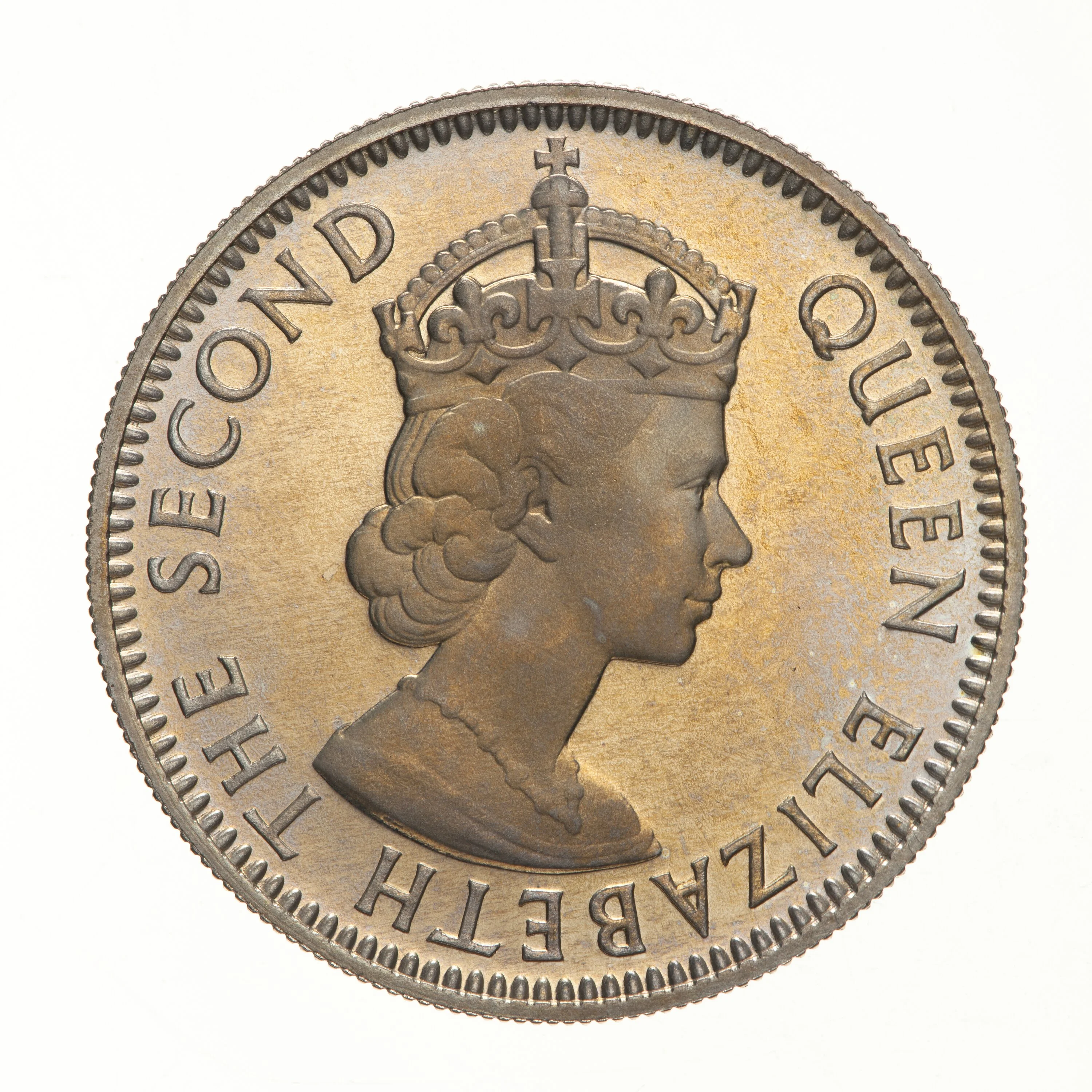
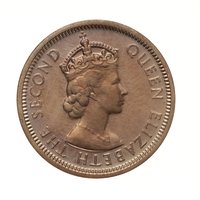
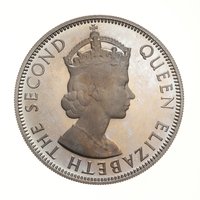
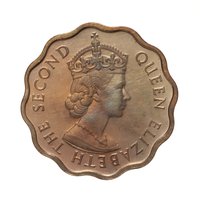
Description:
Crowned right-facing portrait of Elizabeth II, toothed rim.
Inscription:
QUEEN ELIZABETH THE SECOND
Script: Latin
Engraver: Cecil Thomas
Reverse
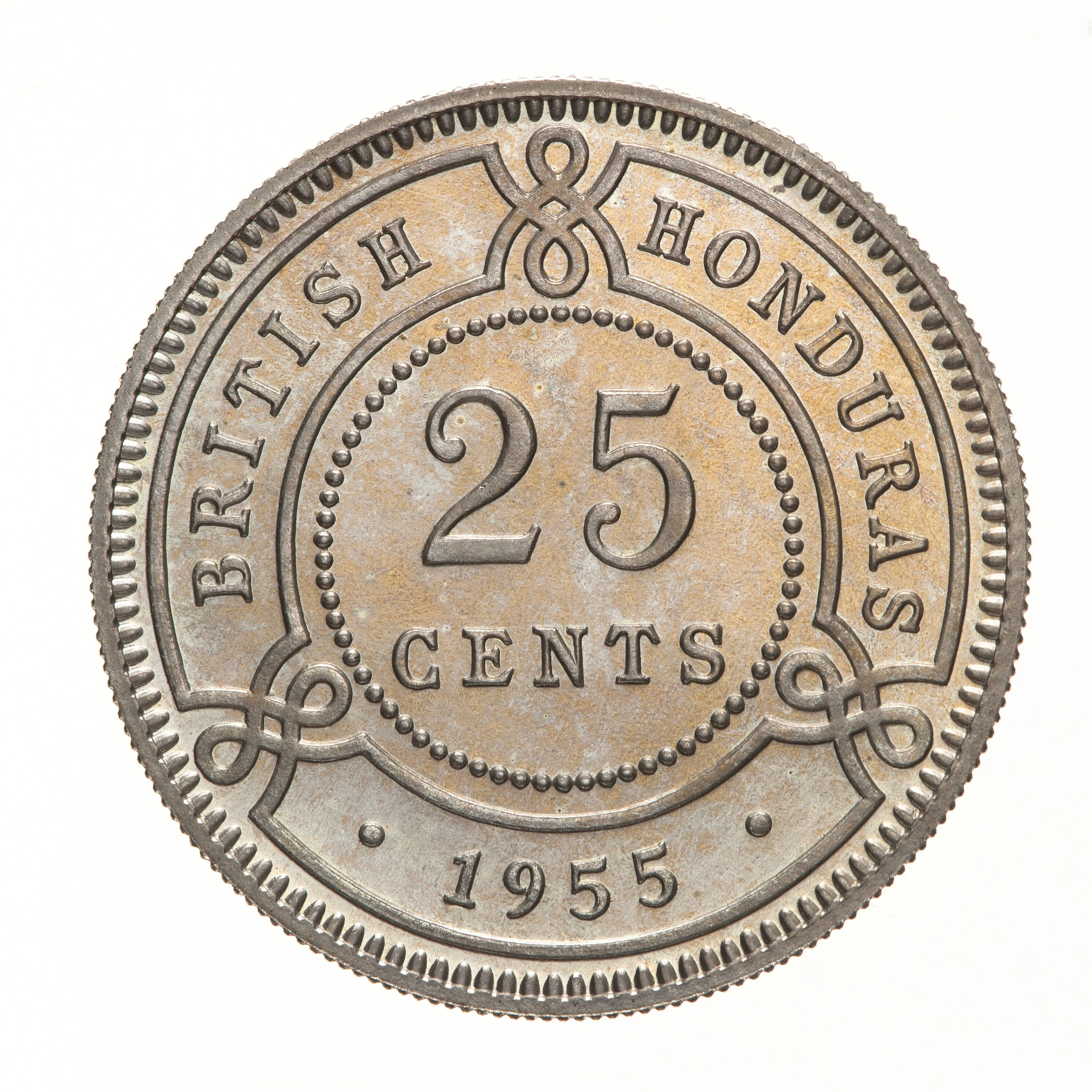
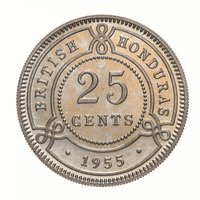
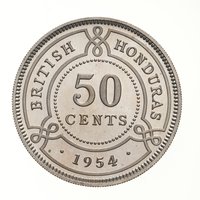
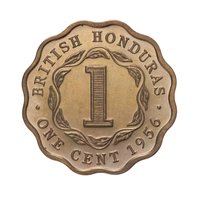
Description:
Central beaded circle, toothed rim.
Inscription:
BRITISH HONDURAS
25
CENTS
· 1973 ·
25
CENTS
· 1973 ·
Script: Latin
Edge
Reeded
Mints
| Name | Mark |
|---|---|
| Royal Mint (Tower Hill) | — |
Mintings
| Year | Mint Mark | Mintage | Quality | Collection |
|---|---|---|---|---|
| 1955 | — | 75,000 | ||
| 1955 | — | — | Proof | |
| 1960 | — | — | Proof | |
| 1960 | — | 75,000 | ||
| 1962 | — | 50,000 | ||
| 1962 | — | — | Proof | |
| 1963 | — | 50,000 | ||
| 1963 | — | — | Proof | |
| 1964 | — | 100,000 | ||
| 1965 | — | 75,000 | ||
| 1966 | — | 75,000 | ||
| 1968 | — | 125,000 | ||
| 1970 | — | — | ||
| 1971 | — | 150,000 | ||
| 1972 | — | 200,000 | ||
| 1973 | — | 100,000 |
Historical background
In 1955, the currency situation in British Honduras (modern-day Belize) was defined by its continued use of the British Honduras dollar (BHD), which was pegged at a fixed and distinctive rate to the British pound sterling. Unlike many other British colonies that used a sterling-based shilling system or a dollar pegged at 4.80 to the pound, the British Honduras dollar had been set at a unique parity of BHD$4 = £1 since 1949. This peg created a currency that was stronger in value than the U.S. dollar, with an exchange rate of approximately BHD$1 = US$0.70.
The economy underpinning this currency was small, narrowly based, and heavily dependent on the export of primary resources, particularly timber (mahogany and cedar) and, increasingly, sugar. This limited economic base made the colony vulnerable to external shocks, such as hurricanes and commodity price fluctuations. The currency's stability was therefore managed and guaranteed by the British Honduras Currency Board in London, which held full sterling reserves to back the local currency in circulation, ensuring strict convertibility but also tying the colony's monetary policy entirely to the United Kingdom.
This period represented the calm before a significant monetary change. The fixed 4-to-1 peg to sterling remained stable throughout 1955, but economic pressures and a desire for modernization would soon lead to reform. Within a few years, in 1964, the government would introduce a new decimalized currency, the Belize dollar, and adjust the sterling peg to a more conventional rate of BHD$1 = 4s 2d (or BHD$4.80 = £1), aligning it with the broader British West Indian currency system and devaluing the currency in the process to better reflect economic realities.
The economy underpinning this currency was small, narrowly based, and heavily dependent on the export of primary resources, particularly timber (mahogany and cedar) and, increasingly, sugar. This limited economic base made the colony vulnerable to external shocks, such as hurricanes and commodity price fluctuations. The currency's stability was therefore managed and guaranteed by the British Honduras Currency Board in London, which held full sterling reserves to back the local currency in circulation, ensuring strict convertibility but also tying the colony's monetary policy entirely to the United Kingdom.
This period represented the calm before a significant monetary change. The fixed 4-to-1 peg to sterling remained stable throughout 1955, but economic pressures and a desire for modernization would soon lead to reform. Within a few years, in 1964, the government would introduce a new decimalized currency, the Belize dollar, and adjust the sterling peg to a more conventional rate of BHD$1 = 4s 2d (or BHD$4.80 = £1), aligning it with the broader British West Indian currency system and devaluing the currency in the process to better reflect economic realities.
🌱 Common