

1 Cent – British Honduras
Belize
Context
Years: 1956–1973
Country: Belize 
Issuer: British Honduras
Ruler: Elizabeth II
Currency:
(1885—1973)
Total mintage: 5,640,000
Material
References
KM: #Click to copy to clipboard30
Numista: #6414
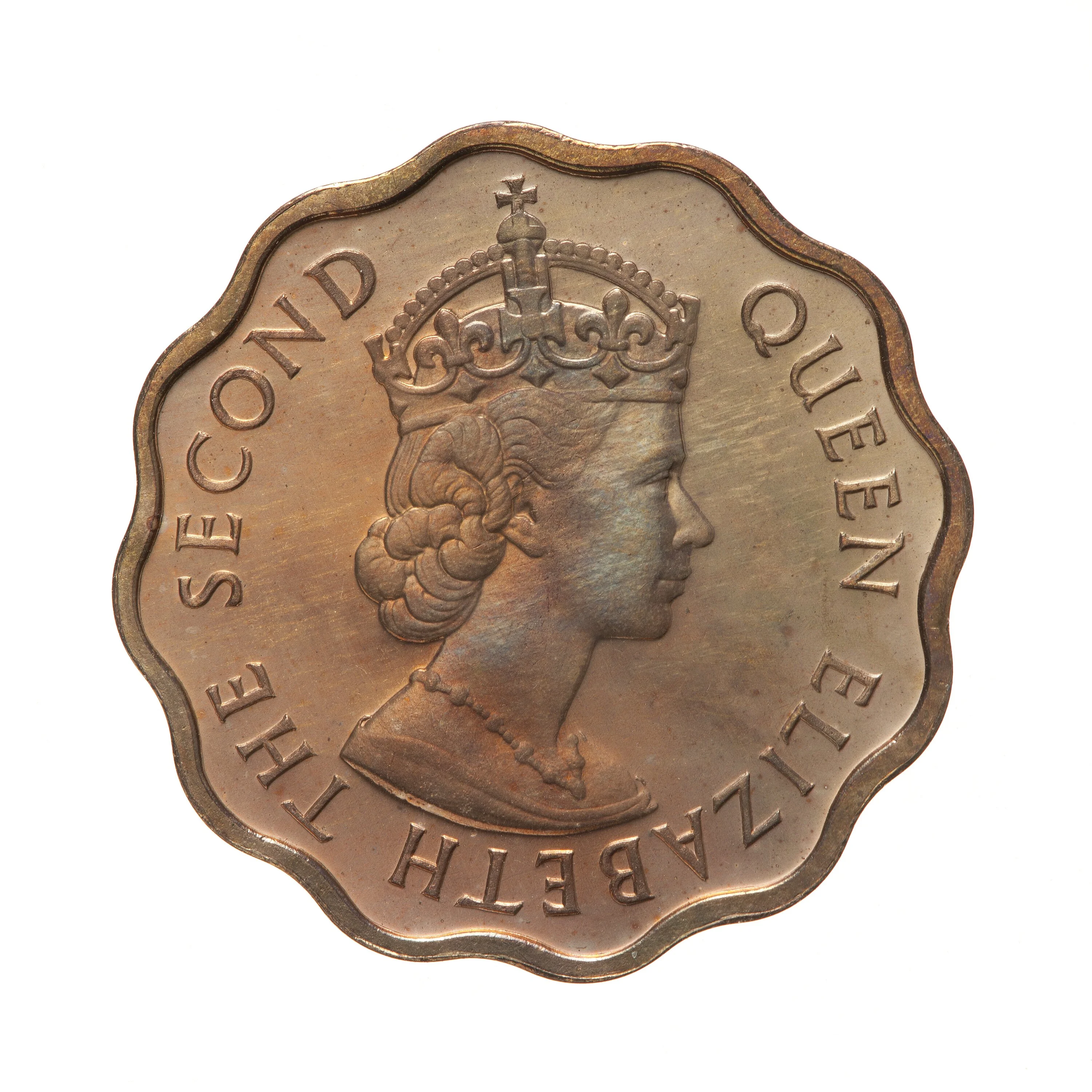
Obverse
Description:
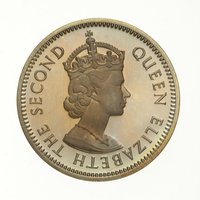
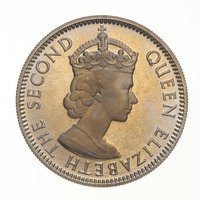
Portrait of Elizabeth II facing right, crowned.
Inscription:
QUEEN ELIZABETH THE SECOND
Script: Latin
Engraver: Cecil Thomas
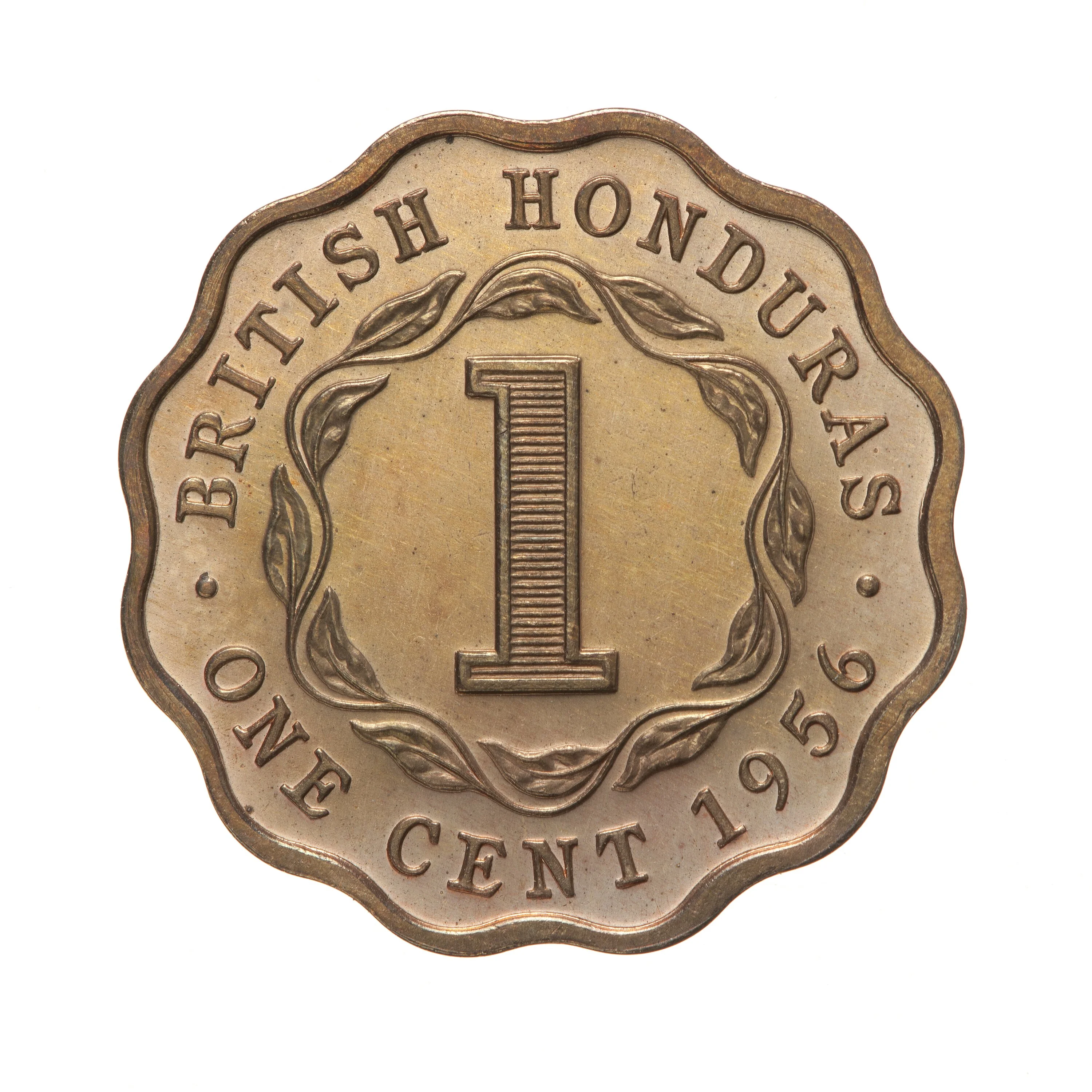
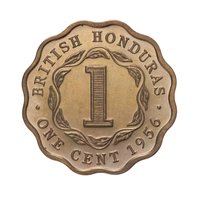
Reverse
Edge
Plain
Mints
| Name | Mark |
|---|---|
| Royal Mint (Tower Hill) | — |
Mintings
| Year | Mint Mark | Mintage | Quality | Collection |
|---|---|---|---|---|
| 1956 | — | 200,000 | ||
| 1956 | — | — | Proof | |
| 1958 | — | — | Proof | |
| 1958 | — | 400,000 | ||
| 1959 | — | 200,000 | ||
| 1959 | — | — | Proof | |
| 1961 | — | 800,000 | ||
| 1961 | — | — | Proof | |
| 1964 | — | 300,000 | ||
| 1965 | — | 400,000 | ||
| 1966 | — | 100,000 | ||
| 1967 | — | 400,000 | ||
| 1968 | — | 200,000 | ||
| 1969 | — | 520,000 | ||
| 1970 | — | 120,000 | ||
| 1971 | — | 800,000 | ||
| 1972 | — | 800,000 | ||
| 1973 | — | 400,000 |
Historical background
In 1956, the currency situation in British Honduras (modern-day Belize) was defined by its continued use of the British Honduras dollar, which had been pegged to sterling at the fixed rate of 4 shillings 2 pence (or 4s 2d) since 1949. This peg, established under the Bretton Woods system, provided monetary stability and firmly tied the colony's economy to that of the United Kingdom. The currency itself was issued by the Board of Commissioners of Currency, British Honduras, and its value was directly backed by sterling reserves held in London, ensuring full convertibility.
Economically, this arrangement facilitated predictable trade, particularly for the colony's key exports like timber, mahogany, and citrus. However, it also meant that British Honduras had no independent monetary policy and was vulnerable to economic conditions and decisions made in Britain. The mid-1950s was a period of modest development, and the stable currency supported public works projects and a growing wage economy, but the territory remained one of the lesser-developed in the region, with a heavy reliance on primary commodities.
This sterling-based system would remain largely unchanged until the early 1970s. The 1956 period thus represents a point of colonial monetary continuity, shortly before the winds of political change—including the renaming to "Belize" in 1973 and eventual independence in 1981—would eventually lead to a re-evaluation of the currency peg and the establishment of a central bank.
Economically, this arrangement facilitated predictable trade, particularly for the colony's key exports like timber, mahogany, and citrus. However, it also meant that British Honduras had no independent monetary policy and was vulnerable to economic conditions and decisions made in Britain. The mid-1950s was a period of modest development, and the stable currency supported public works projects and a growing wage economy, but the territory remained one of the lesser-developed in the region, with a heavy reliance on primary commodities.
This sterling-based system would remain largely unchanged until the early 1970s. The 1956 period thus represents a point of colonial monetary continuity, shortly before the winds of political change—including the renaming to "Belize" in 1973 and eventual independence in 1981—would eventually lead to a re-evaluation of the currency peg and the establishment of a central bank.
🌱 Very Common