

1 Peso – Dominican Republic
Circulating commemorative coins
Commemoration: Christopher Columbus
Dominican Republic
Context
Year: 1992
Issuer: Dominican Republic 
Period:
(since 1966)
Currency:
(since 1937)
Total mintage: 50,000
Material
References
KM: #Click to copy to clipboard82
Numista: #14467
Value
Exchange value: 1 DOP
Obverse
Description:
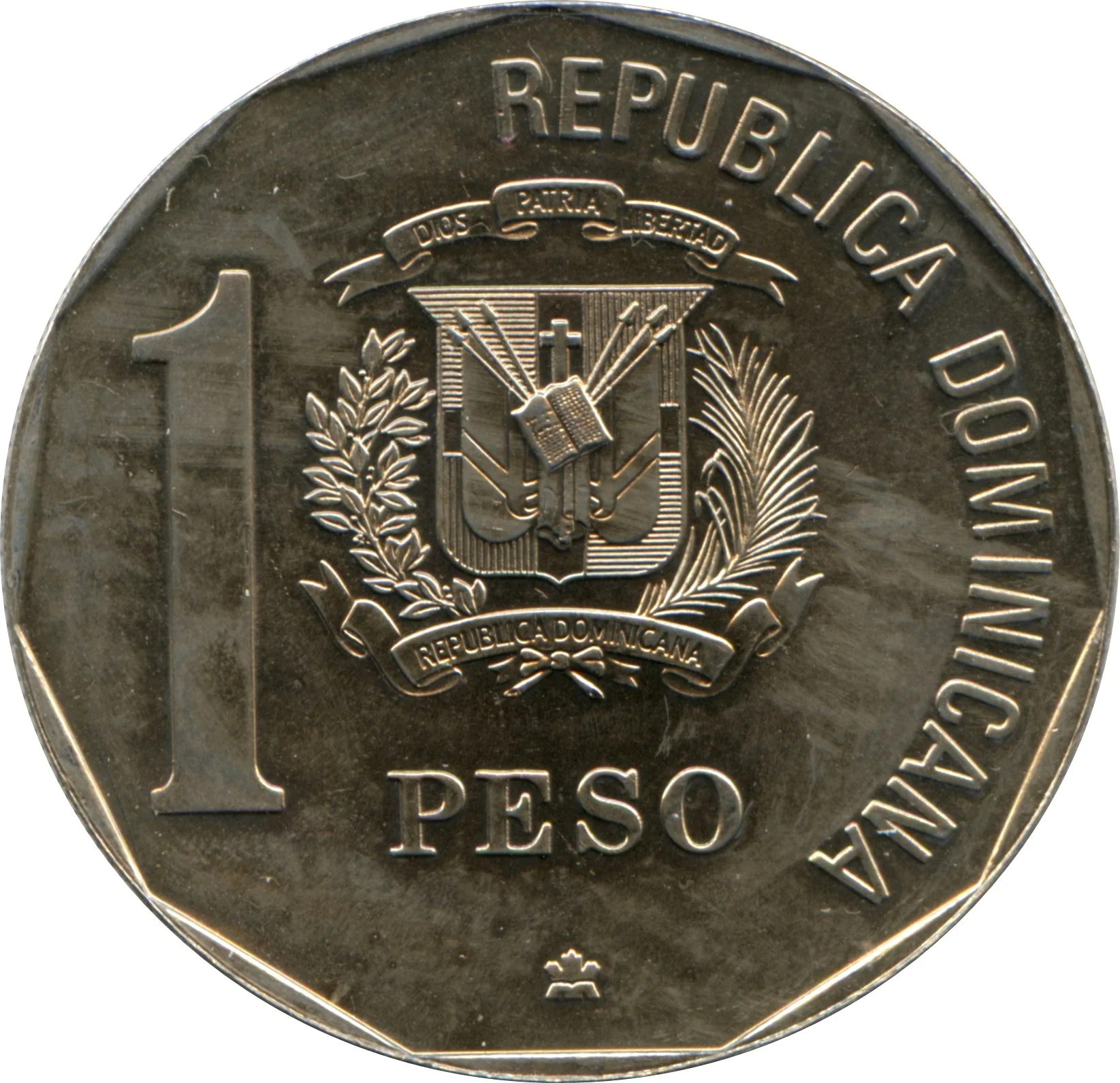
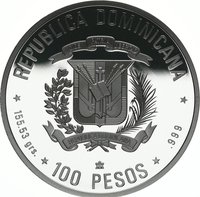
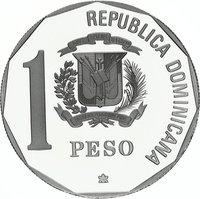
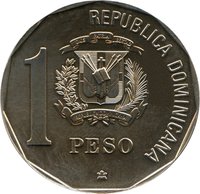
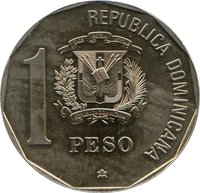
National coat of arms.
Inscription:
REPUBLICA DOMINICANA
1
PESO
1
PESO
Translation:
DOMINICAN REPUBLIC
1
PESO
1
PESO
Script: Latin
Language: Spanish
Designer: Juan Medina
Reverse
Description:
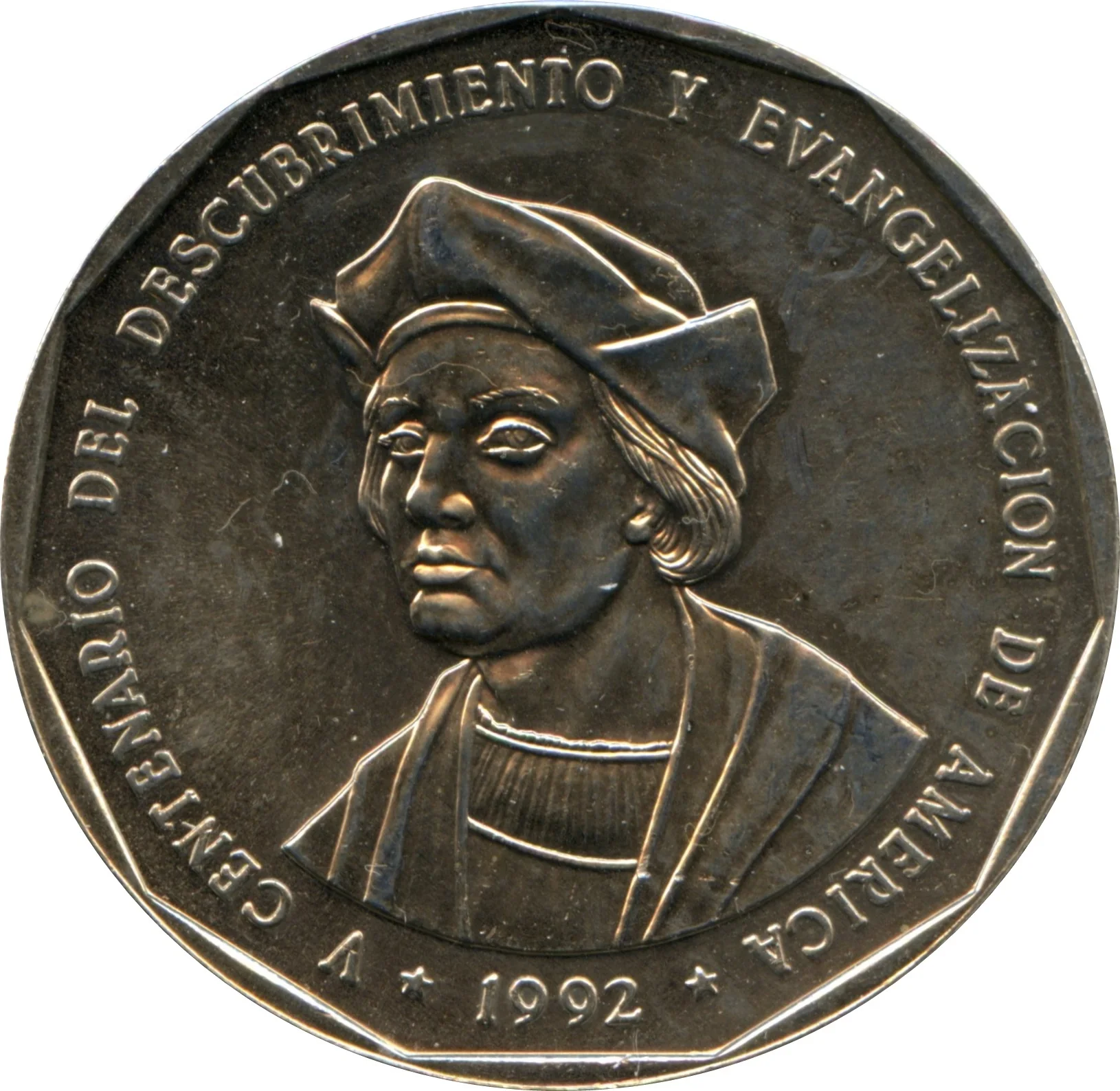
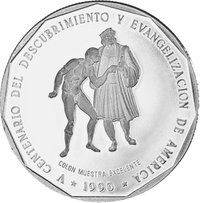
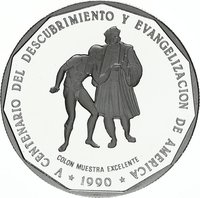
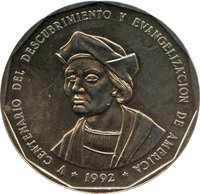
Columbus bust, 3/4 left view, dated below.
Inscription:
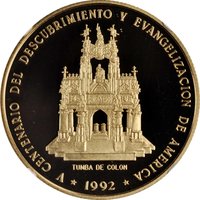
V CENTENARIO DEL DESCUBRIMIENTO Y EVANGELIZACION DE AMERICA
1992
1992
Script: Latin
Edge
Reeded
Categories
| Symbols> Coat of Arms |
| Person> Explorer |
Mints
| Name | Mark |
|---|---|
| Royal Canadian Mint of Winnipeg | — |
Mintings
| Year | Mint Mark | Mintage | Quality | Collection |
|---|---|---|---|---|
| 1992 | — | 50,000 |
Historical background
In 1992, the Dominican Republic was navigating a period of relative macroeconomic stabilization following a tumultuous decade marked by debt crisis and austerity. The country operated under a managed floating exchange rate system, where the Central Bank (Banco Central de la República Dominicana) intervened to control volatility rather than targeting a fixed parity. The primary currency was the Dominican Peso (DOP), often symbolized as "RD$", and its value was influenced by a combination of central bank policy, remittance inflows from the large diaspora, and the performance of key export sectors like tourism, free trade zones, and agricultural commodities such as sugar, coffee, and tobacco.
Economically, the early 1990s were a time of cautious optimism. The government of President Joaquín Balaguer, who returned to power in 1986, had implemented orthodox adjustment programs under IMF guidance. These measures, including fiscal tightening and trade liberalization, had succeeded in taming the hyperinflation of the 1980s, bringing it down to more manageable, though still significant, single-digit annual rates by 1992. This stability was fragile and dependent on continued discipline. The peso experienced gradual depreciation against the US dollar, a trend accepted by authorities to maintain export competitiveness, but the central bank utilized its reserves to prevent abrupt, destabilizing swings.
The currency situation was fundamentally linked to the country's balance of payments. Robust growth in tourism and a steady flow of remittances provided crucial foreign exchange, helping to support the peso's value and finance imports. However, the economy remained vulnerable to external shocks, particularly fluctuations in global oil prices, as the country was a net importer of petroleum. Furthermore, the commercial banking sector's stability was a point of concern, with periodic liquidity issues. Thus, while 1992 did not feature a currency crisis, the monetary landscape was characterized by a hard-won but delicate stability, managed through active intervention and heavily reliant on the inflow of US dollars from key foreign exchange-earning sectors.
Economically, the early 1990s were a time of cautious optimism. The government of President Joaquín Balaguer, who returned to power in 1986, had implemented orthodox adjustment programs under IMF guidance. These measures, including fiscal tightening and trade liberalization, had succeeded in taming the hyperinflation of the 1980s, bringing it down to more manageable, though still significant, single-digit annual rates by 1992. This stability was fragile and dependent on continued discipline. The peso experienced gradual depreciation against the US dollar, a trend accepted by authorities to maintain export competitiveness, but the central bank utilized its reserves to prevent abrupt, destabilizing swings.
The currency situation was fundamentally linked to the country's balance of payments. Robust growth in tourism and a steady flow of remittances provided crucial foreign exchange, helping to support the peso's value and finance imports. However, the economy remained vulnerable to external shocks, particularly fluctuations in global oil prices, as the country was a net importer of petroleum. Furthermore, the commercial banking sector's stability was a point of concern, with periodic liquidity issues. Thus, while 1992 did not feature a currency crisis, the monetary landscape was characterized by a hard-won but delicate stability, managed through active intervention and heavily reliant on the inflow of US dollars from key foreign exchange-earning sectors.
🌟 Uncommon