

1 Peça – Portugal
Standard circulation coins
Series: Bust
Portugal
Context

Material
References
KM: #Click to copy to clipboard336
Numista: #40458
Value
Bullion value: $2196.91
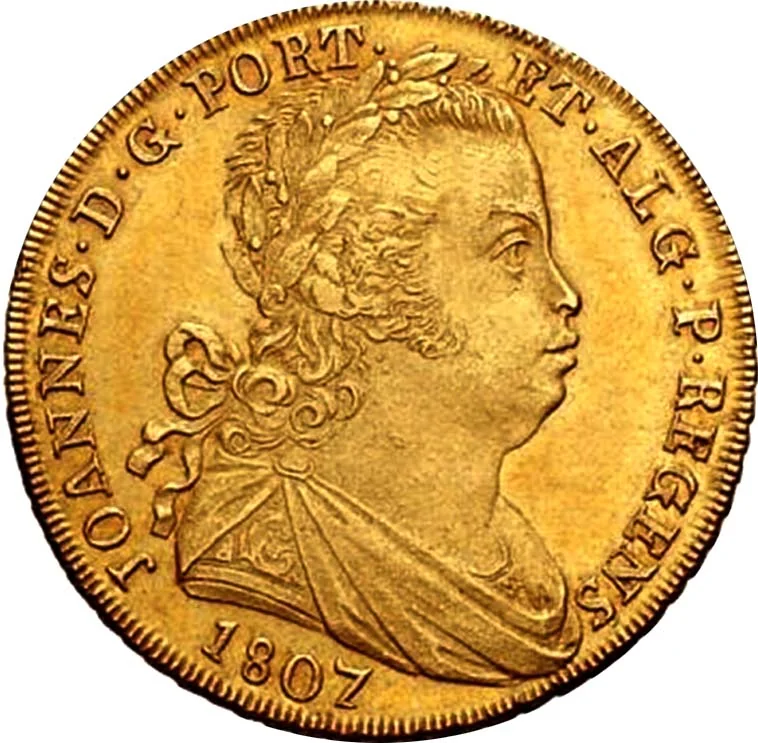
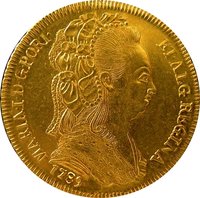
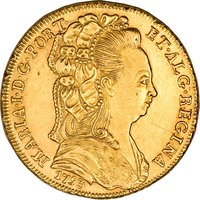
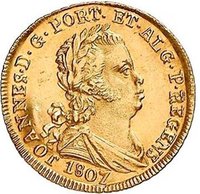
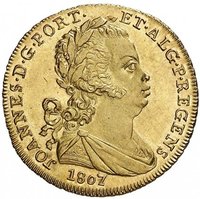
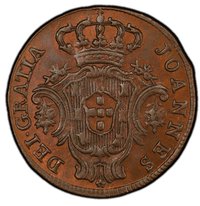
Obverse
Inscription:
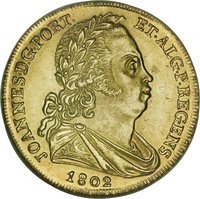
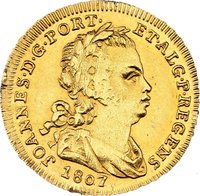
JOANNES·D·G·PORT·ET·ALG·P·REGENS
1807
1807
Translation:
John, by the Grace of God, Prince Regent of Portugal and the Algarves
1807
1807
Script: Latin
Languages: Portuguese, Latin
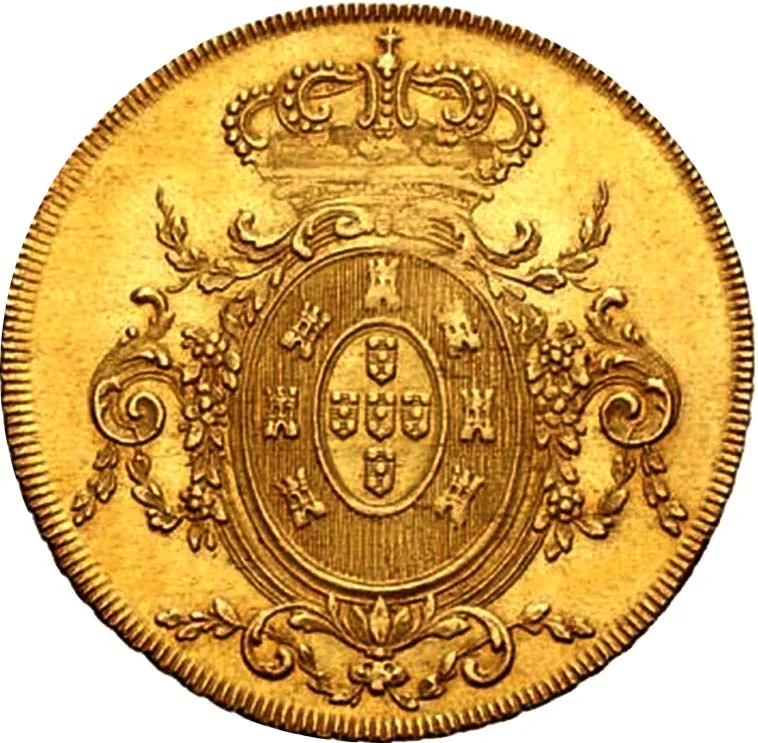
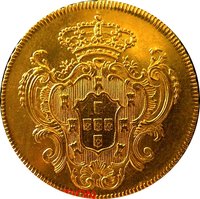
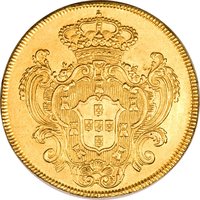
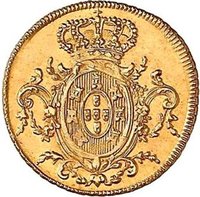
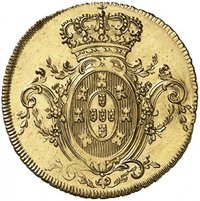
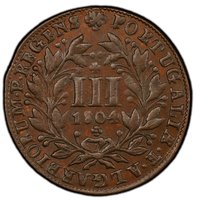
Reverse
Edge
String shape
Mints
| Name | Mark |
|---|---|
| Imprensa Nacional - Casa da Moeda | — |
| Casa da Moeda do Brasil | R |
Mintings
| Year | Mint Mark | Mintage | Quality | Collection |
|---|---|---|---|---|
| 1804 | — | 476 | ||
| 1805 | — | 27,275 | ||
| 1805 | R | — | ||
| 1806 | — | 40,825 | ||
| 1806 | R | 95,530 | ||
| 1807 | — | 35,969 | ||
| 1807 | R | — | ||
| 1808 | R | 133,312 | ||
| 1808 | — | 26,570 | ||
| 1809 | — | 12,957 | ||
| 1809 | R | 187,941 | ||
| 1810 | R | 158,607 | ||
| 1811 | R | 82,222 | ||
| 1812 | — | 25,185 | ||
| 1812 | R | 63,967 | ||
| 1813 | — | 5,590 | ||
| 1813 | R | 53,151 | ||
| 1814 | — | 21 | ||
| 1814 | R | 42,227 | ||
| 1815 | — | 305 | ||
| 1815 | R | 40,290 | ||
| 1816 | — | 620 | ||
| 1816 | R | 38,843 | ||
| 1817 | R | 31,885 |
Historical background
In 1804, Portugal's currency situation was defined by a complex and strained monetary system, heavily influenced by its colonial empire and the looming threat of the Napoleonic Wars. The standard unit was the Portuguese real (plural: réis), with values often expressed in milréis (1,000 réis). However, the system was plagued by a chronic shortage of specie, especially gold and silver coinage, due to longstanding trade imbalances. Much of the precious metal flowing in from Brazil, particularly gold, was quickly exported to pay for manufactured goods from Britain, leaving the domestic economy with a circulation heavy in low-value copper coins and paper notes.
The primary paper currency was the vales reais (royal notes), first issued in 1797 by the Royal Treasury to address fiscal deficits and the scarcity of metal. By 1804, these notes were in significant circulation but were steadily depreciating due to over-issuance and a lack of public confidence. This created a dual system where transactions were often negotiated in both metal and paper, with a variable discount on the paper vales. The situation was a source of economic instability, complicating trade and public finance.
Furthermore, Portugal's monetary policy was inextricably linked to its alliance with Britain. The Treaty of Methuen (1703) cemented a commercial relationship that drained gold to Britain, while the ongoing French Revolutionary Wars and the impending Peninsular War (which would begin in 1807) placed immense pressure on the Portuguese treasury. In 1804, the country was in a precarious peace, attempting to balance between British maritime power and French continental demands. The currency instability of this period thus reflected not only domestic fiscal weakness but also Portugal's vulnerable position as a European power caught between two empires on the brink of renewed conflict.
The primary paper currency was the vales reais (royal notes), first issued in 1797 by the Royal Treasury to address fiscal deficits and the scarcity of metal. By 1804, these notes were in significant circulation but were steadily depreciating due to over-issuance and a lack of public confidence. This created a dual system where transactions were often negotiated in both metal and paper, with a variable discount on the paper vales. The situation was a source of economic instability, complicating trade and public finance.
Furthermore, Portugal's monetary policy was inextricably linked to its alliance with Britain. The Treaty of Methuen (1703) cemented a commercial relationship that drained gold to Britain, while the ongoing French Revolutionary Wars and the impending Peninsular War (which would begin in 1807) placed immense pressure on the Portuguese treasury. In 1804, the country was in a precarious peace, attempting to balance between British maritime power and French continental demands. The currency instability of this period thus reflected not only domestic fiscal weakness but also Portugal's vulnerable position as a European power caught between two empires on the brink of renewed conflict.
Series: Bust
✨ Legendary