

peça – Portugal
Add to wishlist
Standard circulation coins
Series: Bust
Portugal
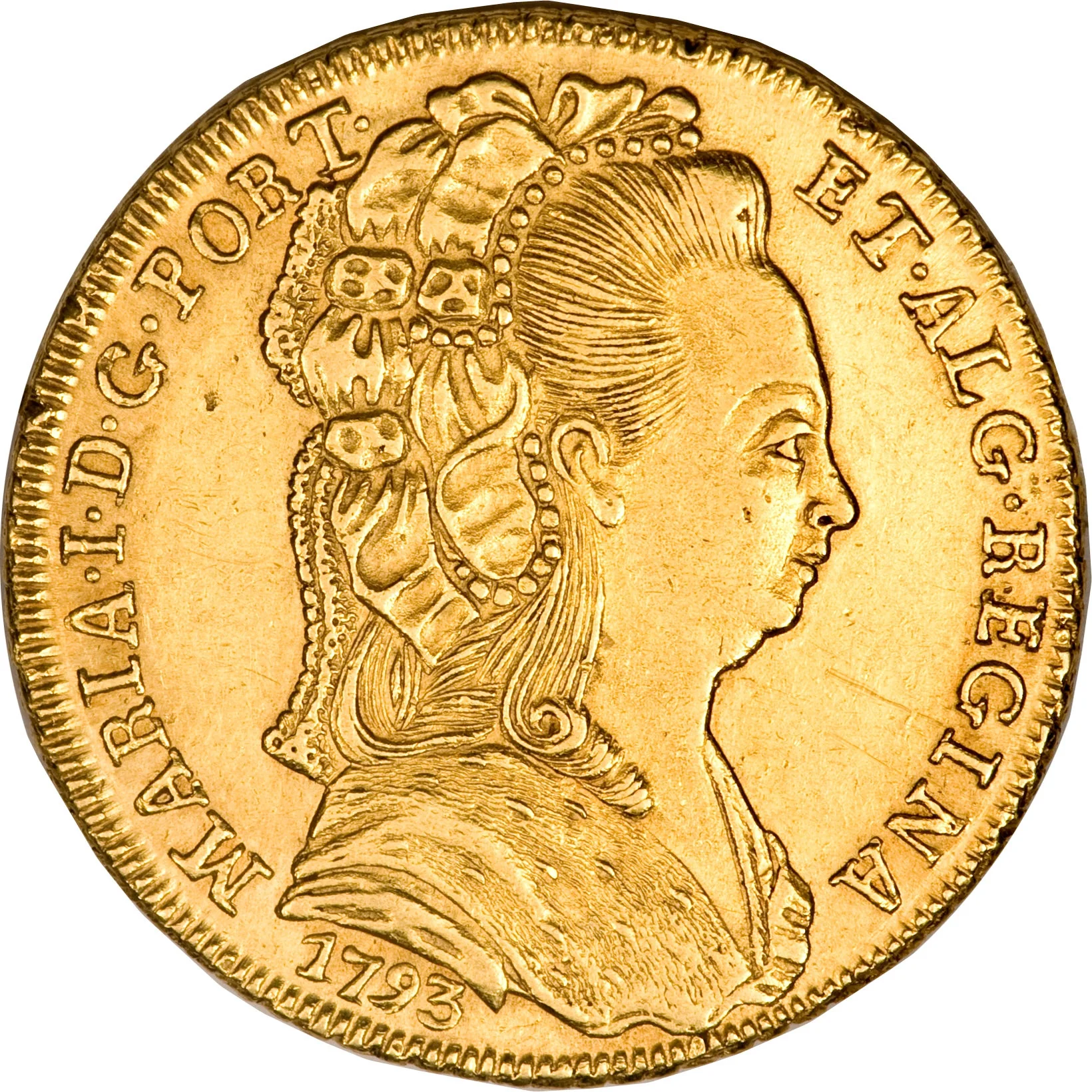
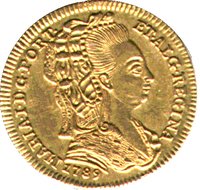
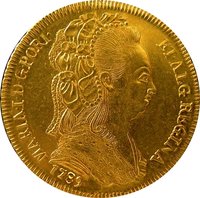
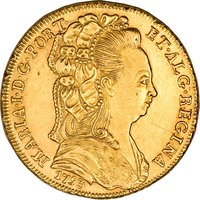
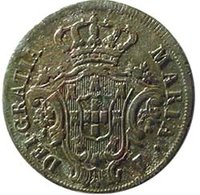
Obverse
Inscription:
MARIA·I·D·G·PORT· ET·ALG·REGINA
1793
1793
Script: Latin
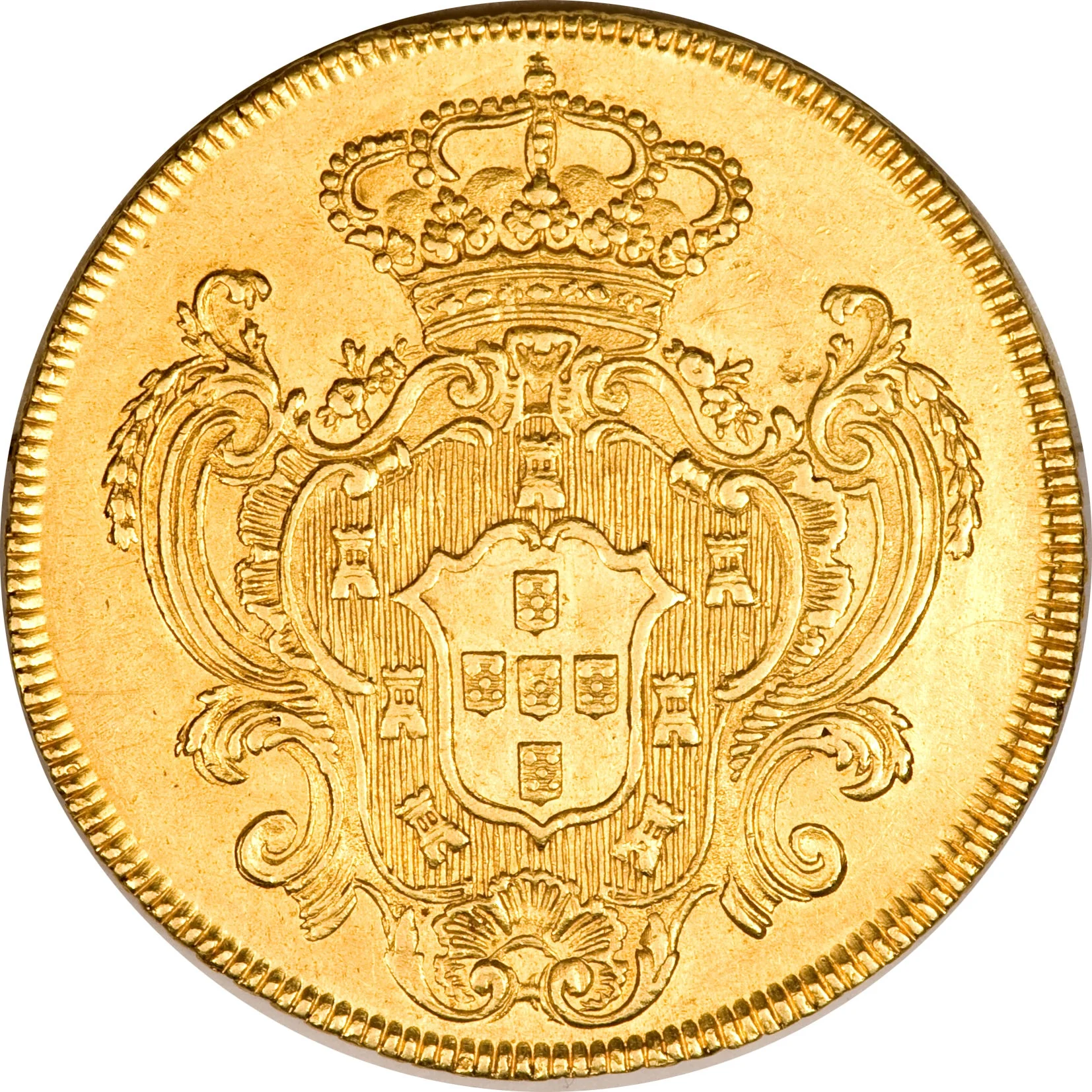
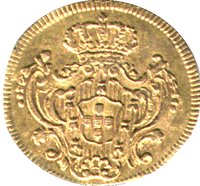
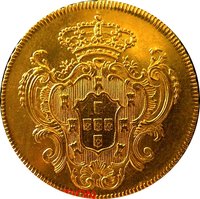
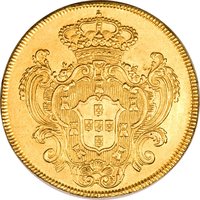
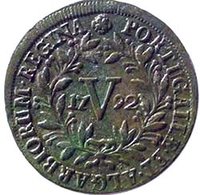
Reverse
Script: Latin
Edge
Rope shaped
Categories
| Symbols> Coat of Arms |
Mints
| Name | Mark |
|---|---|
| Imprensa Nacional - Casa da Moeda | — |
| Bahia | B |
| Casa da Moeda do Brasil | R |
Mintings
| Year | Mint Mark | Mintage | Quality | Collection |
|---|---|---|---|---|
| 1789 | — | 24,607 | ||
| 1789 | R | — | ||
| 1790 | B | — | ||
| 1790 | R | 210,968 | ||
| 1791 | — | 19,534 | ||
| 1791 | B | 14,869 | ||
| 1791 | R | 230,746 | ||
| 1792 | — | 46,930 | ||
| 1792 | B | 23,514 | ||
| 1792 | R | 230,428 | ||
| 1793 | — | 5,138 | ||
| 1793 | B | 15,019 | ||
| 1793 | R | 237,086 | ||
| 1794 | B | 14,030 | ||
| 1794 | R | 246,442 | ||
| 1795 | B | 15,651 | ||
| 1795 | R | 225,809 | ||
| 1796 | — | 56,894 | ||
| 1796 | B | 10,528 | ||
| 1796 | R | 218,564 | ||
| 1797 | — | 435 | ||
| 1797 | B | 9,775 | ||
| 1797 | R | 213,824 | ||
| 1798 | — | 2,545 | ||
| 1798 | B | 7,864 | ||
| 1798 | R | 204,430 | ||
| 1799 | B | 11,935 | ||
| 1799 | R | 189,326 | ||
| 1799 | — | 106,740 | ||
| 1800 | B | 9,567 | ||
| 1800 | R | 213,666 | ||
| 1801 | B | 12,037 | ||
| 1801 | R | 185,081 | ||
| 1802 | B | 3,324 | ||
| 1802 | R | 167,813 | ||
| 1803 | B | 3,743 | ||
| 1803 | R | 176,439 | ||
| 1804 | B | 3,539 | ||
| 1804 | R | 176,439 | ||
| 1805 | R | 127,652 |
Historical background
In 1789, Portugal's currency system was a complex and strained reflection of the broader economic challenges facing the late-18th century Portuguese Empire. The monetary landscape was dominated by the real (plural: réis), a currency of very low unit value that necessitated transactions often being counted in the thousands (milréis). The system was bimetallic, relying on both gold and silver coins, but it suffered from chronic instability. A significant problem was the recurring shortage of small-denomination coinage for everyday commerce, a situation exacerbated by the outflow of gold, particularly Brazilian gold, to pay for manufactured goods from more industrialized nations like Britain, leading to trade imbalances.
This monetary instability was actively managed, though not entirely resolved, by the Marquis of Pombal’s earlier reforms and the ongoing policies of Queen Maria I's government. The state attempted to control the value and supply of currency through royal decrees, but these were often reactive measures. A key feature was the practice of "enhancement" (benefício), where the royal mint would periodically recall circulating coins, re-mint them with a higher face value, and extract seigniorage profit. While this raised short-term revenue for the Crown, it eroded public trust in the currency's value and contributed to inflationary pressures, confusing domestic trade.
Furthermore, the currency situation was inextricably linked to Portugal's colonial economy, particularly its dependence on Brazilian gold and diamonds. By 1789, the peak of Brazilian gold production had passed, diminishing a vital source of wealth. The economy remained largely agrarian and burdened by feudal vestiges, while the treasury was strained by reconstruction costs following the devastating 1755 Lisbon earthquake. Consequently, Portugal’s monetary system in 1789 was fragile, caught between the diminishing returns of colonial extraction, dependence on foreign imports, and internal structural weaknesses that left it vulnerable to the economic and political tremors that would soon arrive from revolutionary France.
This monetary instability was actively managed, though not entirely resolved, by the Marquis of Pombal’s earlier reforms and the ongoing policies of Queen Maria I's government. The state attempted to control the value and supply of currency through royal decrees, but these were often reactive measures. A key feature was the practice of "enhancement" (benefício), where the royal mint would periodically recall circulating coins, re-mint them with a higher face value, and extract seigniorage profit. While this raised short-term revenue for the Crown, it eroded public trust in the currency's value and contributed to inflationary pressures, confusing domestic trade.
Furthermore, the currency situation was inextricably linked to Portugal's colonial economy, particularly its dependence on Brazilian gold and diamonds. By 1789, the peak of Brazilian gold production had passed, diminishing a vital source of wealth. The economy remained largely agrarian and burdened by feudal vestiges, while the treasury was strained by reconstruction costs following the devastating 1755 Lisbon earthquake. Consequently, Portugal’s monetary system in 1789 was fragile, caught between the diminishing returns of colonial extraction, dependence on foreign imports, and internal structural weaknesses that left it vulnerable to the economic and political tremors that would soon arrive from revolutionary France.
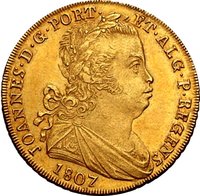
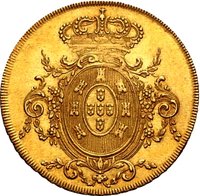
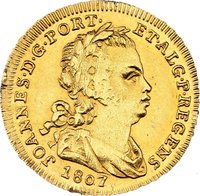
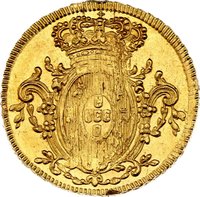
Series: Bust
💎 Extremely Rare