

100 pounds – Egypt
Add to wishlist
Non-circulating coins
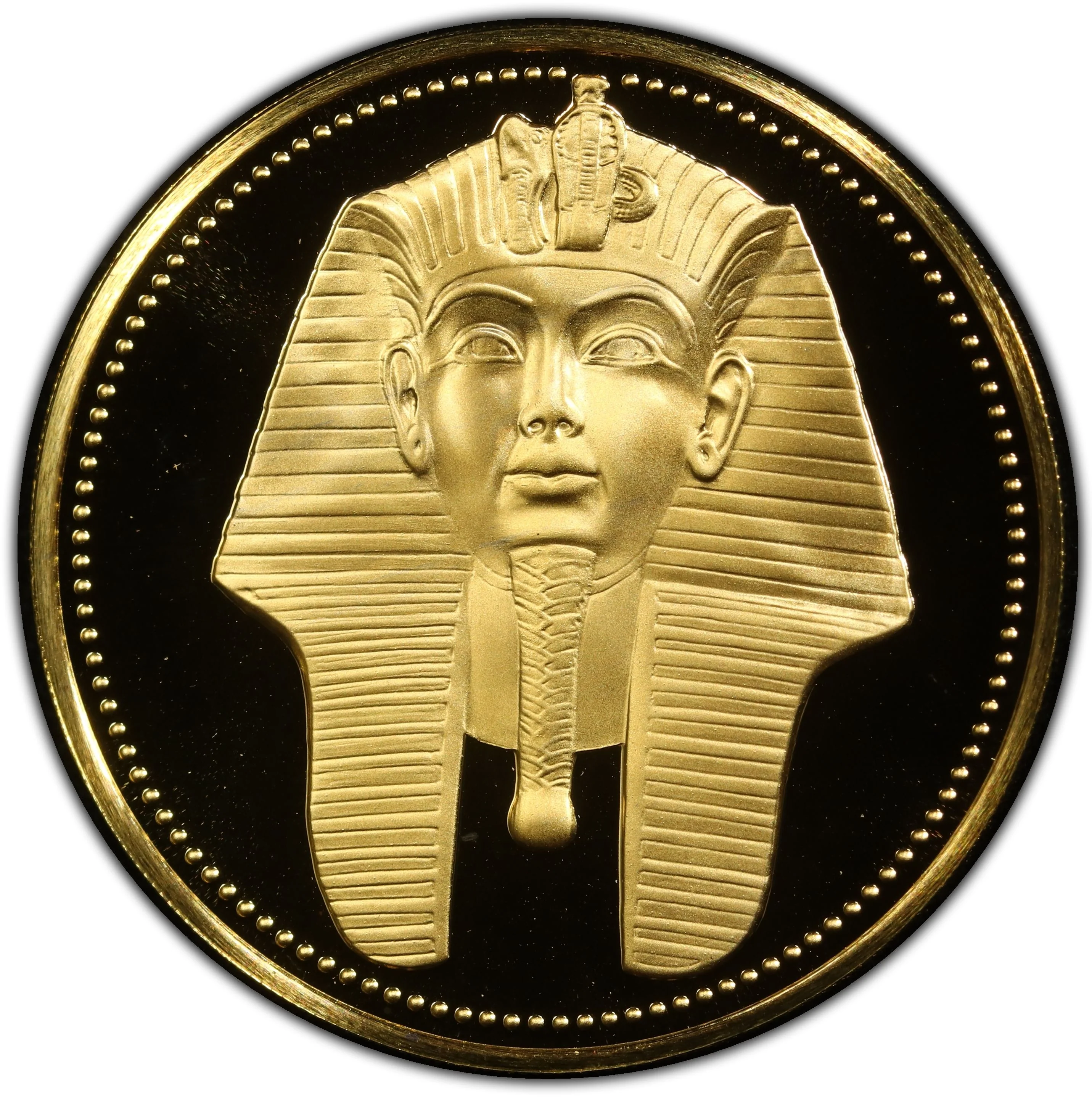
Commemoration: The golden Mask of Tutankhamen
Series: Ancient Egyptian Treasures
Egypt
Obverse
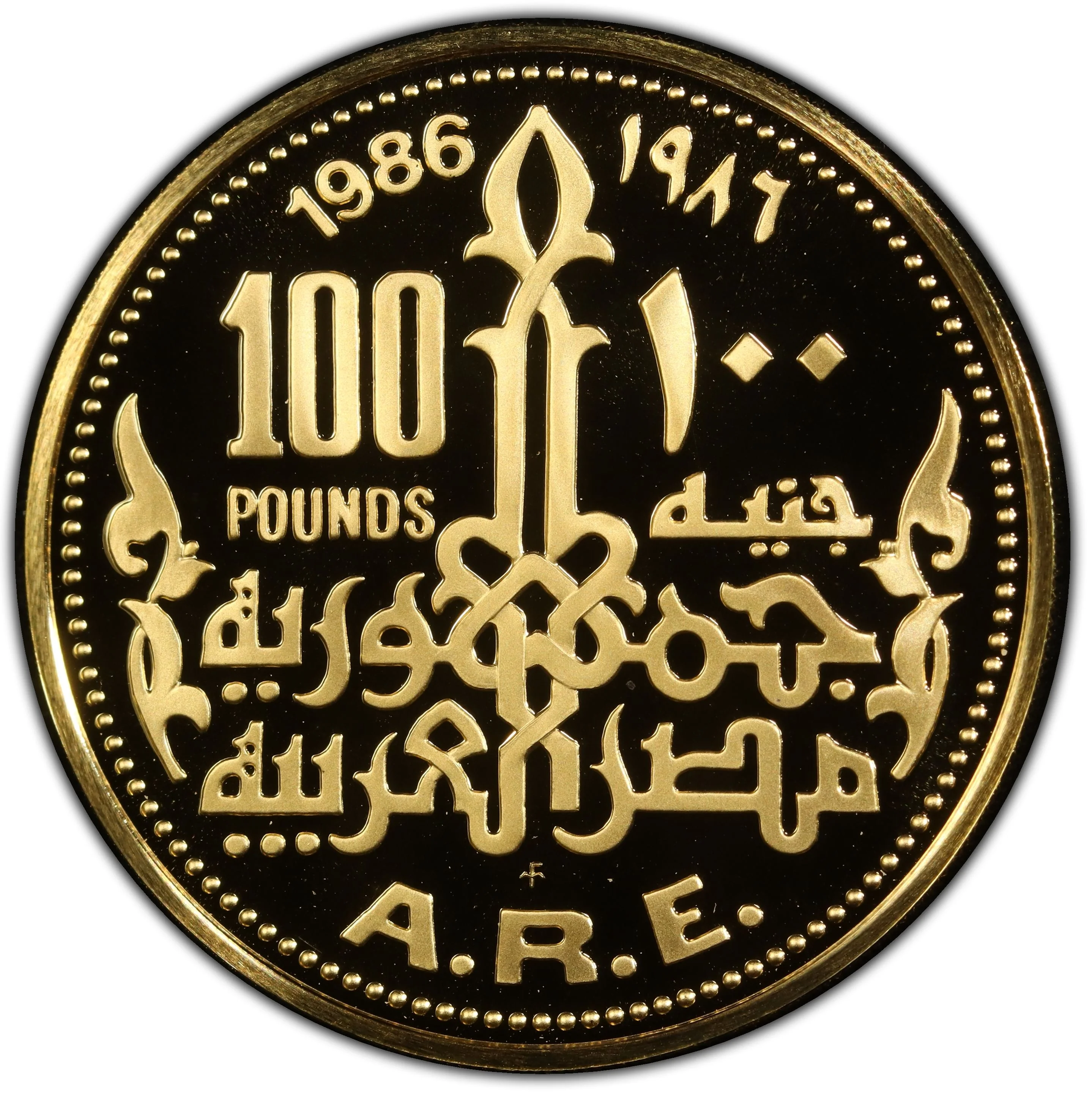
Description:
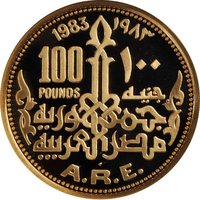
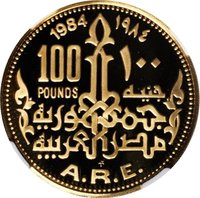
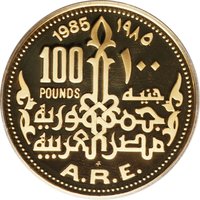
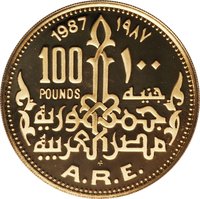
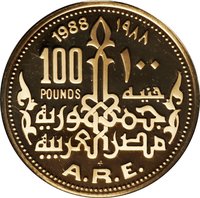
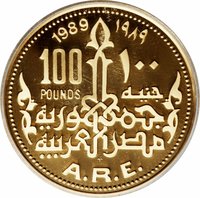
Denomination, date.
Script: Arabic
Reverse
Description:
Gold funerary mask of Pharaoh Tutankhamun.
Edge
Reeded
Mints
| Name | Mark |
|---|---|
| Franklin Mint | — |
Mintings
| Year | Mint Mark | Mintage | Quality | Collection |
|---|---|---|---|---|
| 1986 | — | 2,560 | Proof |
Historical background
In 1986, Egypt's currency situation was characterized by a severe economic crisis rooted in structural imbalances and external shocks. The country operated under a complex multi-tier exchange rate system, with an official rate fixed by the Central Bank of Egypt and a more depreciated parallel (black) market rate. This duality created significant distortions, encouraging capital flight and corruption as the Egyptian pound was vastly overvalued officially. The crisis was exacerbated by a sharp decline in key revenue sources: oil prices had collapsed, remittances from Egyptian workers in the Gulf dwindled, and tourism revenue fell sharply following terrorist incidents and the 1985 Achille Lauro affair.
The government of President Hosni Mubarak, under pressure from the International Monetary Fund (IMF), had begun implementing economic reforms, but fiscal and monetary policies remained unsustainable. Heavy subsidies on basic goods strained the budget, while money supply growth fueled inflation. A critical moment arrived in early 1986 when a proposed cut to food subsidies was leaked, sparking the "Central Security Forces" riots. This social unrest forced the government to reverse course, highlighting the painful political trade-offs between economic adjustment and social stability, and further undermining investor confidence.
Consequently, the gap between the official and black-market exchange rates widened dramatically throughout the year, with the pound losing over half its value on the parallel market. This currency instability reflected a deeper crisis of confidence and a lack of foreign currency reserves. The situation laid bare the urgent need for a unified, devalued exchange rate, setting the stage for the more comprehensive economic reform program, including a significant devaluation, that would be pursued with the IMF in the following years to stabilize the economy.
The government of President Hosni Mubarak, under pressure from the International Monetary Fund (IMF), had begun implementing economic reforms, but fiscal and monetary policies remained unsustainable. Heavy subsidies on basic goods strained the budget, while money supply growth fueled inflation. A critical moment arrived in early 1986 when a proposed cut to food subsidies was leaked, sparking the "Central Security Forces" riots. This social unrest forced the government to reverse course, highlighting the painful political trade-offs between economic adjustment and social stability, and further undermining investor confidence.
Consequently, the gap between the official and black-market exchange rates widened dramatically throughout the year, with the pound losing over half its value on the parallel market. This currency instability reflected a deeper crisis of confidence and a lack of foreign currency reserves. The situation laid bare the urgent need for a unified, devalued exchange rate, setting the stage for the more comprehensive economic reform program, including a significant devaluation, that would be pursued with the IMF in the following years to stabilize the economy.
Series: Ancient Egyptian Treasures
✨ Legendary