

100 escudos – Portugal
Add to wishlist
Portugal
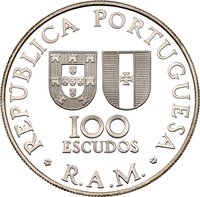
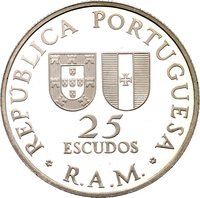
Obverse
Description:
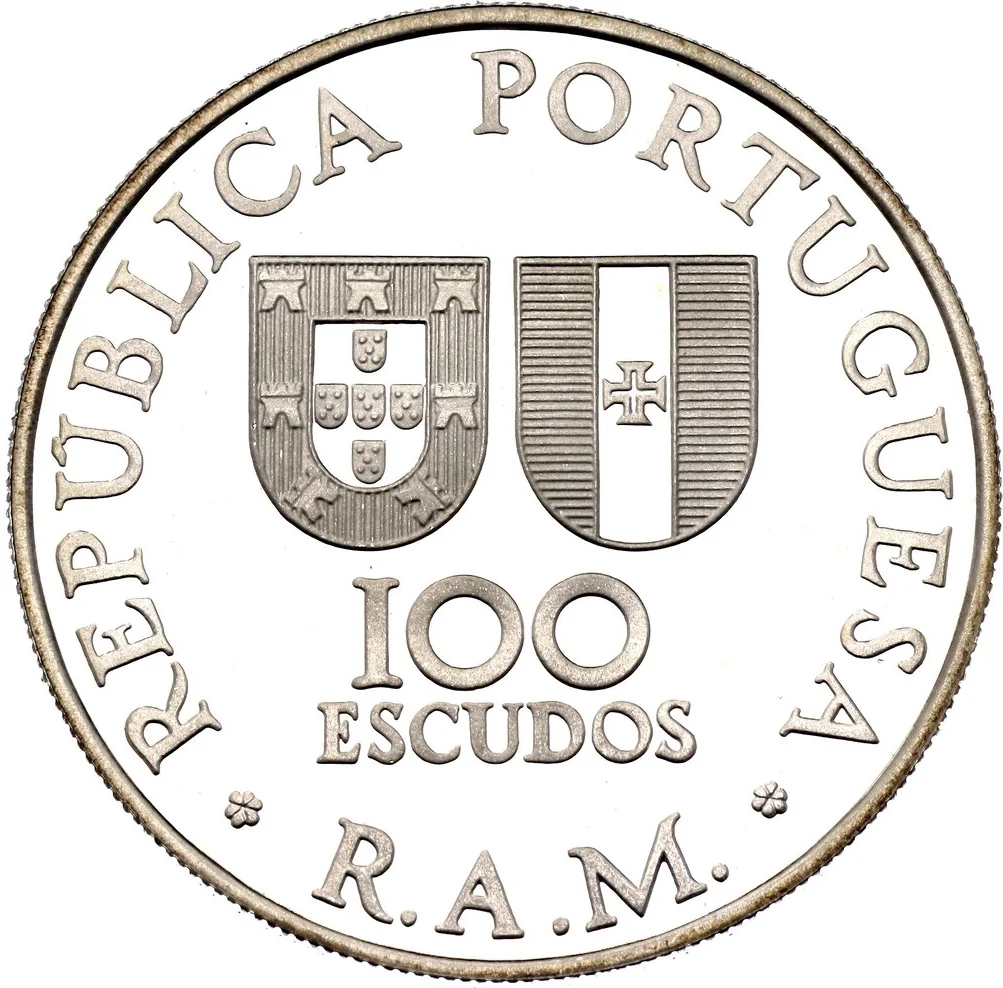
Country: Portugal (left shield) and Madeira (right shield). Value: R.A.M. (Região Autónoma da Madeira).
Inscription:
REPÚBLICA PORTUGUESA
100 ESCUDOS
R.A.M.
100 ESCUDOS
R.A.M.
Translation:
Portuguese Republic
100 EscUDOS
R.A.M.
100 EscUDOS
R.A.M.
Script: Latin
Language: Portuguese
Engraver: Manuela Aranha
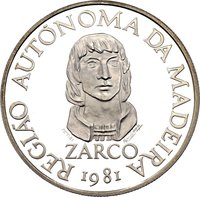
Reverse
Description:
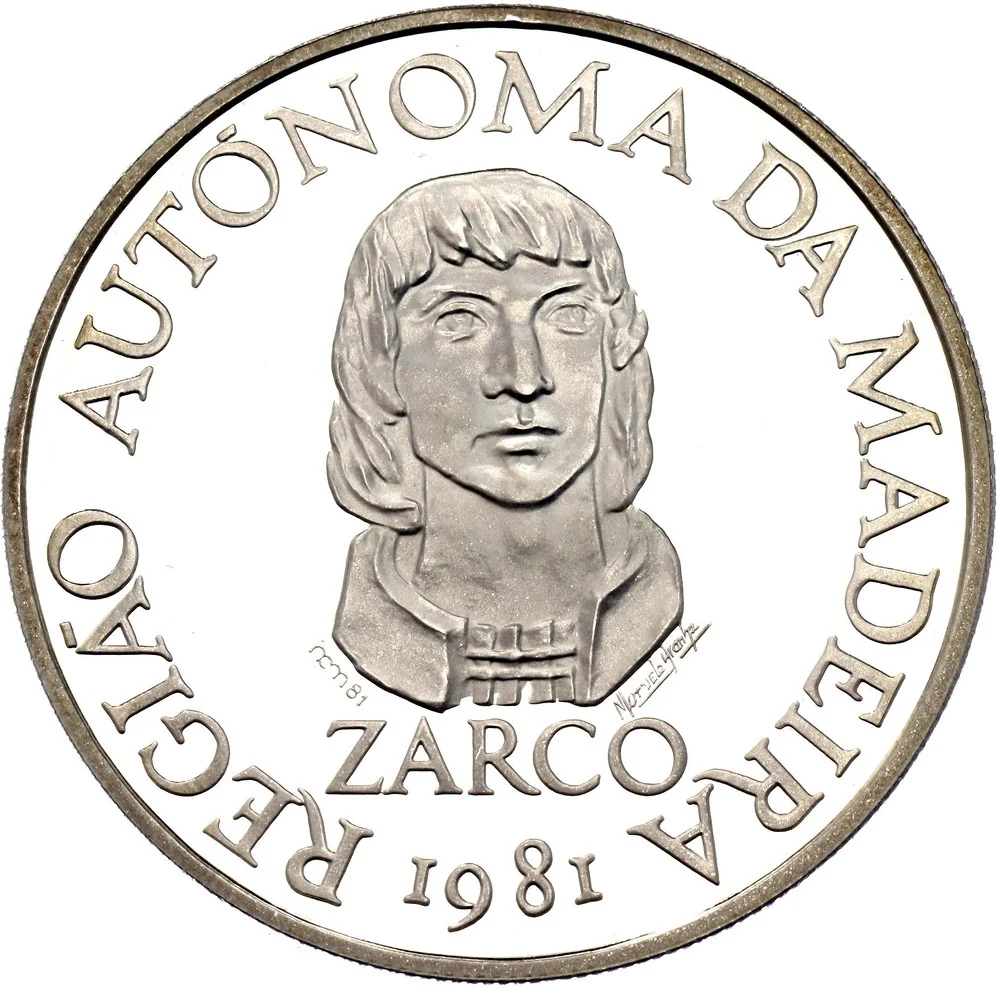
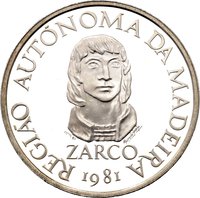
Madeira Autonomous Region.
Zarco image.
Name.
Date.
Zarco image.
Name.
Date.
Inscription:
REGIÃO AUTÓNOMA DA MADEIRA
ZARCO
incm Manuela Aranha
1981
ZARCO
incm Manuela Aranha
1981
Translation:
Autonomous Region of Madeira
Zarco
incm Manuela Aranha
1981
Zarco
incm Manuela Aranha
1981
Script: Latin
Language: Portuguese
Edge
Reeded
Mints
| Name | Mark |
|---|---|
| Imprensa Nacional - Casa da Moeda | incm |
Mintings
| Year | Mint Mark | Mintage | Quality | Collection |
|---|---|---|---|---|
| 1981 | incm | 20,000 | Proof |
Historical background
In 1981, Portugal was navigating a turbulent economic transition following the 1974 Carnation Revolution, which had ended decades of dictatorship. The immediate post-revolutionary period was marked by political instability, nationalizations, and expansive fiscal policies, leading to high inflation, large public deficits, and a growing external debt. The country's currency, the Portuguese escudo (PTE), was under significant pressure, operating within a managed float but frequently requiring defensive interventions by the Banco de Portugal to maintain its value amidst capital flight and low foreign exchange reserves.
The currency situation was intrinsically linked to Portugal's broader economic challenges and its political aspirations. Having applied for membership in the European Economic Community (EEC) in 1977, the government was under domestic and international pressure to implement stabilization and liberalization programs. In 1978 and 1983, Portugal entered into agreements with the International Monetary Fund (IMF), which imposed strict austerity measures, including escudo devaluations, to restore competitiveness and curb the twin deficits. The 1981 period was thus a precarious prelude to a major escudo devaluation in 1983, as stopgap measures struggled to correct deep structural imbalances.
Consequently, the escudo in 1981 represented a weak and vulnerable currency, symbolizing an economy caught between its revolutionary past and a European future. The persistent economic crises of the early 1980s ultimately paved the way for profound reforms, setting the stage for Portugal's eventual EEC accession in 1986 and the later integration of the escudo into the European Exchange Rate Mechanism (ERM) in 1992, a stepping stone toward adopting the euro.
The currency situation was intrinsically linked to Portugal's broader economic challenges and its political aspirations. Having applied for membership in the European Economic Community (EEC) in 1977, the government was under domestic and international pressure to implement stabilization and liberalization programs. In 1978 and 1983, Portugal entered into agreements with the International Monetary Fund (IMF), which imposed strict austerity measures, including escudo devaluations, to restore competitiveness and curb the twin deficits. The 1981 period was thus a precarious prelude to a major escudo devaluation in 1983, as stopgap measures struggled to correct deep structural imbalances.
Consequently, the escudo in 1981 represented a weak and vulnerable currency, symbolizing an economy caught between its revolutionary past and a European future. The persistent economic crises of the early 1980s ultimately paved the way for profound reforms, setting the stage for Portugal's eventual EEC accession in 1986 and the later integration of the escudo into the European Exchange Rate Mechanism (ERM) in 1992, a stepping stone toward adopting the euro.
Series: System 1981-2001
⭐ Rare