

1 Farthing – Jamaica
Jamaica
Context
Years: 1904–1910
Issuer: Jamaica 
Ruler: Edward VII
Currency:
(1655—1969)
Demonetized: Yes
Total mintage: 1,296,000
Material
Diameter: 20.2 mm
Weight: 2.8 g
Thickness: 1 mm
Shape: Round
Composition: Copper-nickel
Technique: Milled
Alignment: Medal alignment
flip
References
KM: #Click to copy to clipboard21
Numista: #10944
Obverse
Description:
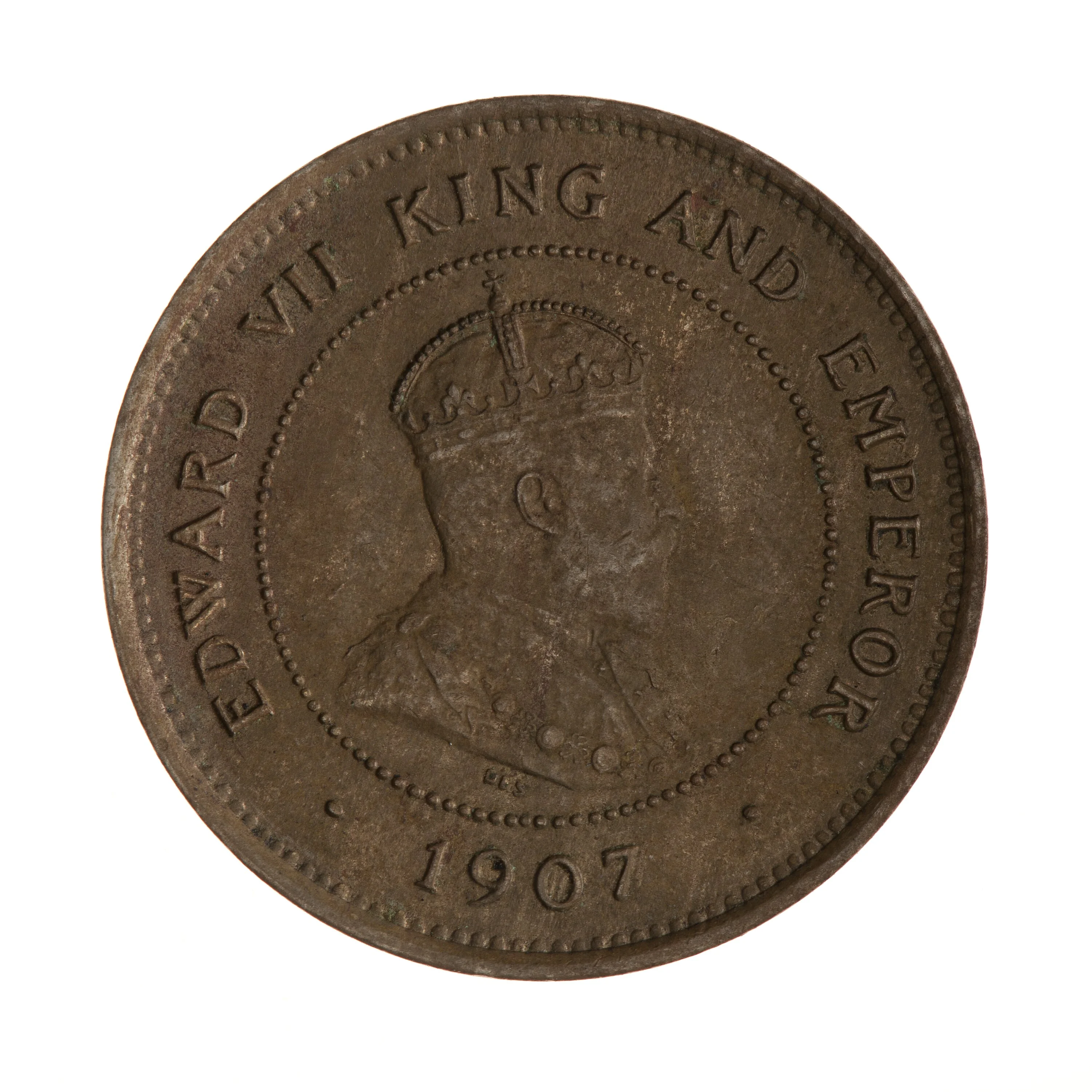
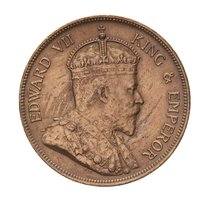
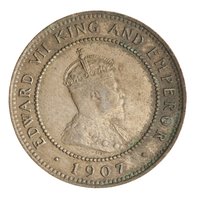
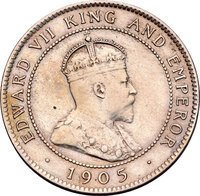
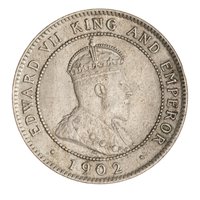
Edward VII's right-facing bust in a beaded circle, surrounded by legend.
Inscription:
EDWARD VII KING AND EMPEROR
DES
· 1905 ·
DES
· 1905 ·
Translation:
EDWARD VII KING AND EMPEROR
BY THE GRACE OF GOD
· 1905 ·
BY THE GRACE OF GOD
· 1905 ·
Script: Latin
Engraver: George William de Saulles
Reverse
Description:
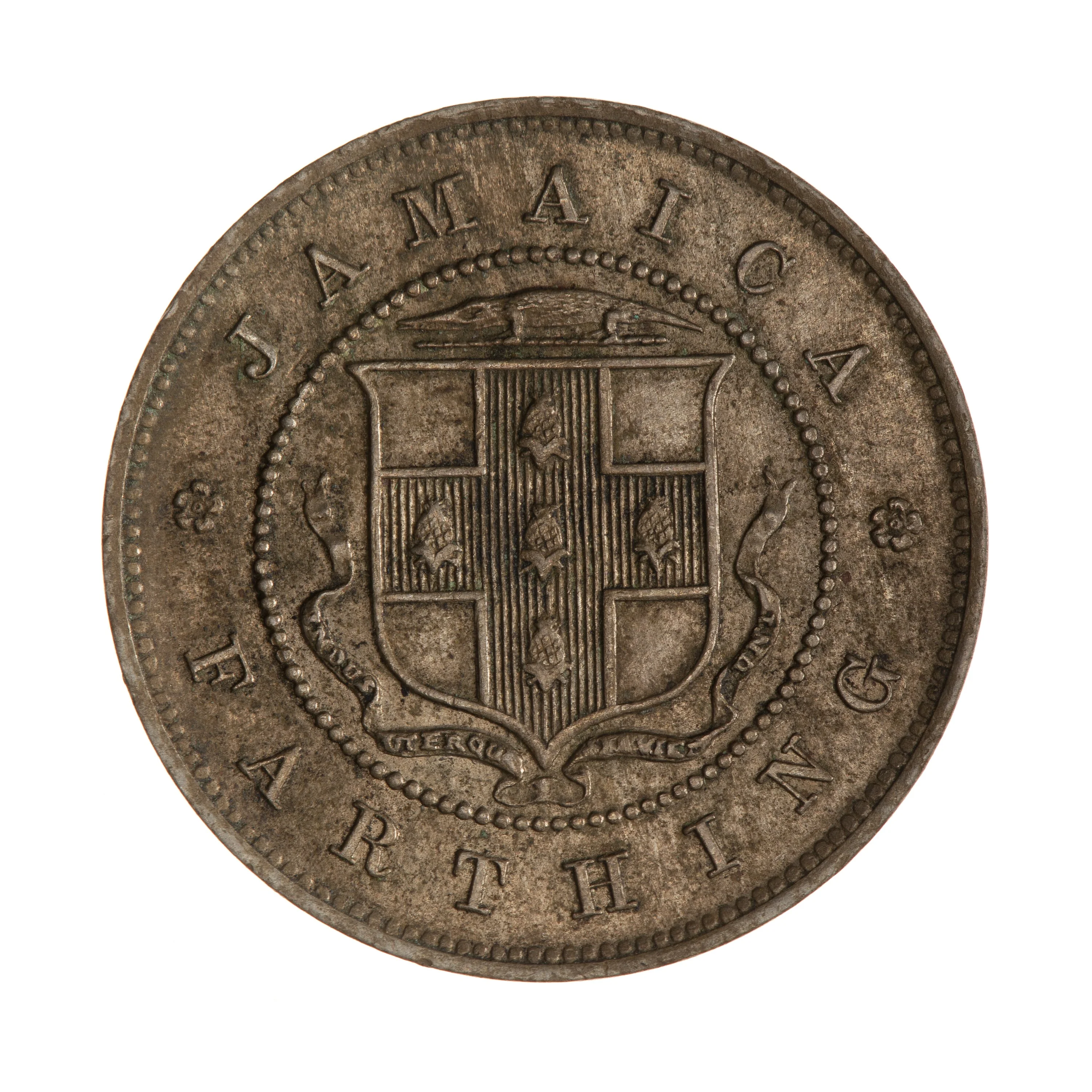
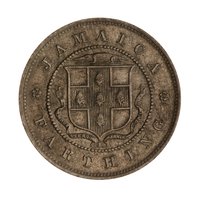
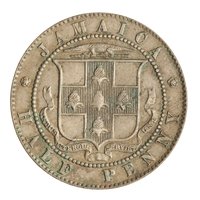
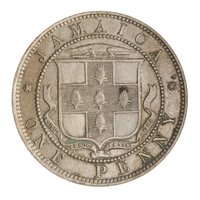
Jamaican coat of arms, vertically shaded, encircled by beads.
Inscription:
JAMAICA
🏵 FARTHING 🏵
INDUS UTERQUE SERVIET UNI
🏵 FARTHING 🏵
INDUS UTERQUE SERVIET UNI
Translation:
JAMAICA
FARTHING
BOTH INDS WILL SERVE ONE
FARTHING
BOTH INDS WILL SERVE ONE
Script: Latin
Engraver: George William de Saulles
Edge
Plain
Mints
| Name | Mark |
|---|---|
| Royal Mint (Tower Hill) | — |
Mintings
| Year | Mint Mark | Mintage | Quality | Collection |
|---|---|---|---|---|
| 1904 | — | 192,000 | ||
| 1904 | — | — | Proof | |
| 1905 | — | 192,000 | ||
| 1906 | — | 528,000 | ||
| 1907 | — | 192,000 | ||
| 1909 | — | 144,000 | ||
| 1910 | — | 48,000 |
Historical background
In 1904, Jamaica's currency situation was a complex colonial system in transition. The island operated on a sterling-based currency, but not with British coinage alone. The official medium of exchange was a hybrid system of British gold sovereigns and silver coins, alongside Jamaican government-issued notes and fractional currency. These local notes, denominated in pounds, shillings, and pence, were not legal tender in Britain but were fully convertible with sterling, creating a dependent colonial monetary structure.
A significant feature was the widespread use of the "anchor coin," a distinctive Jamaican silver fourpence (4d) or groat, first introduced in the 1750s. By 1904, these coins remained vital for everyday small transactions, especially among the working population, as British silver coinage was often in short supply. This created a practical, two-tiered system where high-value trade and government accounts were conducted in sterling, while the local economy relied heavily on these familiar Jamaican subsidiary coins and notes.
This period also saw Jamaica on the cusp of formalizing its currency system within the broader British Empire. The year 1904 fell just before the establishment of the West Indian Currency Board in 1912, which would eventually standardize currency across several British Caribbean territories. Therefore, the situation in 1904 represented the final phase of a distinct, island-specific system, managing the daily challenges of maintaining parity with sterling while facilitating local commerce with its own unique coinage, all under the ultimate financial control of the British Crown.
A significant feature was the widespread use of the "anchor coin," a distinctive Jamaican silver fourpence (4d) or groat, first introduced in the 1750s. By 1904, these coins remained vital for everyday small transactions, especially among the working population, as British silver coinage was often in short supply. This created a practical, two-tiered system where high-value trade and government accounts were conducted in sterling, while the local economy relied heavily on these familiar Jamaican subsidiary coins and notes.
This period also saw Jamaica on the cusp of formalizing its currency system within the broader British Empire. The year 1904 fell just before the establishment of the West Indian Currency Board in 1912, which would eventually standardize currency across several British Caribbean territories. Therefore, the situation in 1904 represented the final phase of a distinct, island-specific system, managing the daily challenges of maintaining parity with sterling while facilitating local commerce with its own unique coinage, all under the ultimate financial control of the British Crown.
Series: 1904 series
🌟 Uncommon