

Obverse
Description:
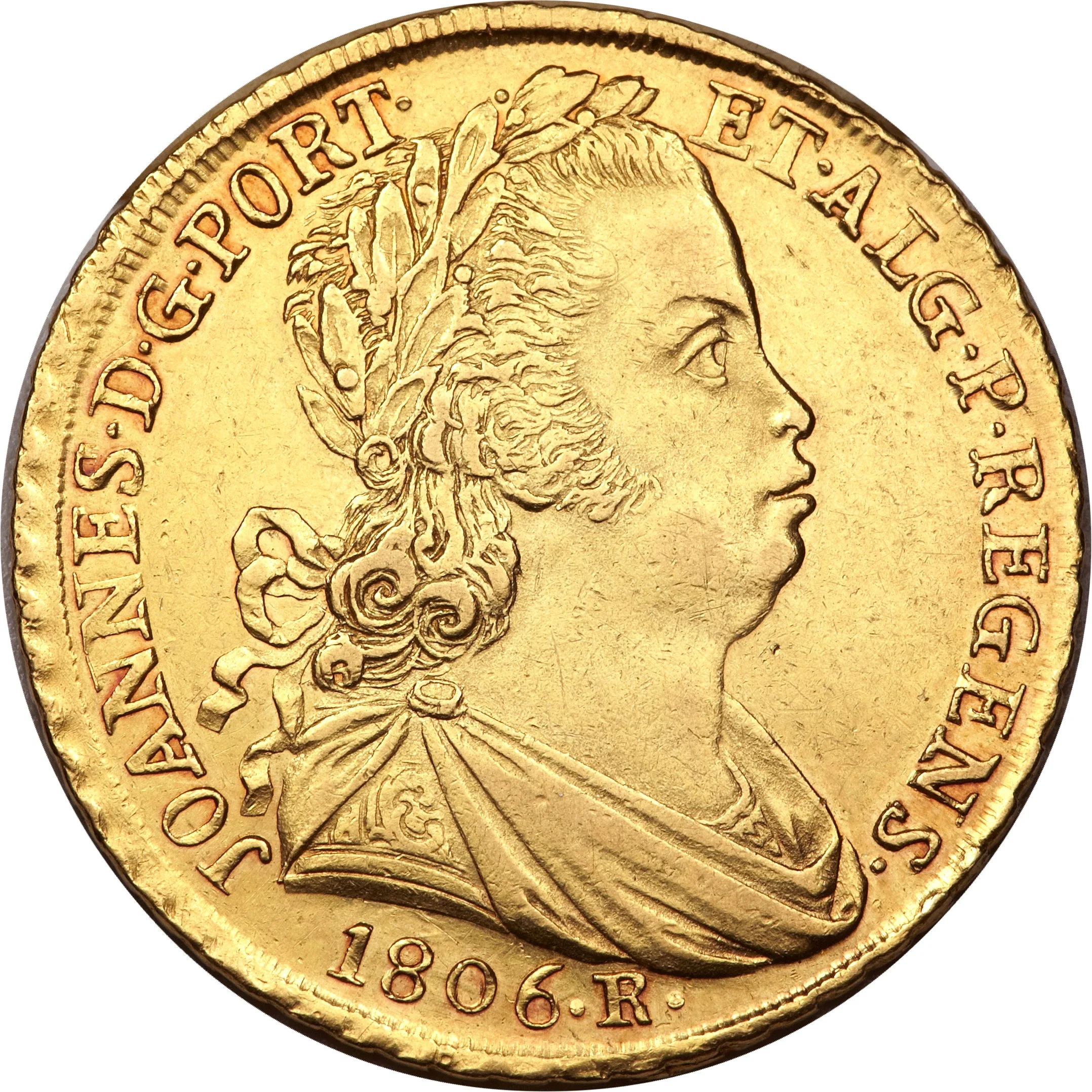
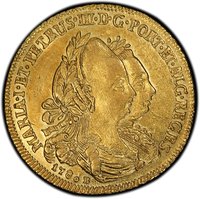
Laureate bust of John right, legend around, date and mintmark below.
Inscription:
JOANNES · D · G · PORT · ET · ALG · P · REGENS ·
1806 · R ·
1806 · R ·
Translation:
John by the Grace of God, Prince of Portugal and the Algarves, Regent.
1806. R.
1806. R.
Script: Latin
Language: Latin
Engraver: Cipriano da Silva Moreira
Designer: Domingos Sequeira
Reverse
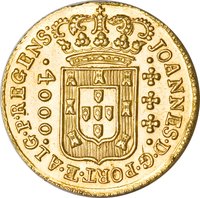
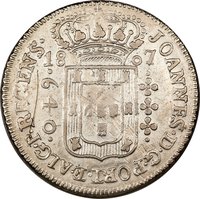
Description:
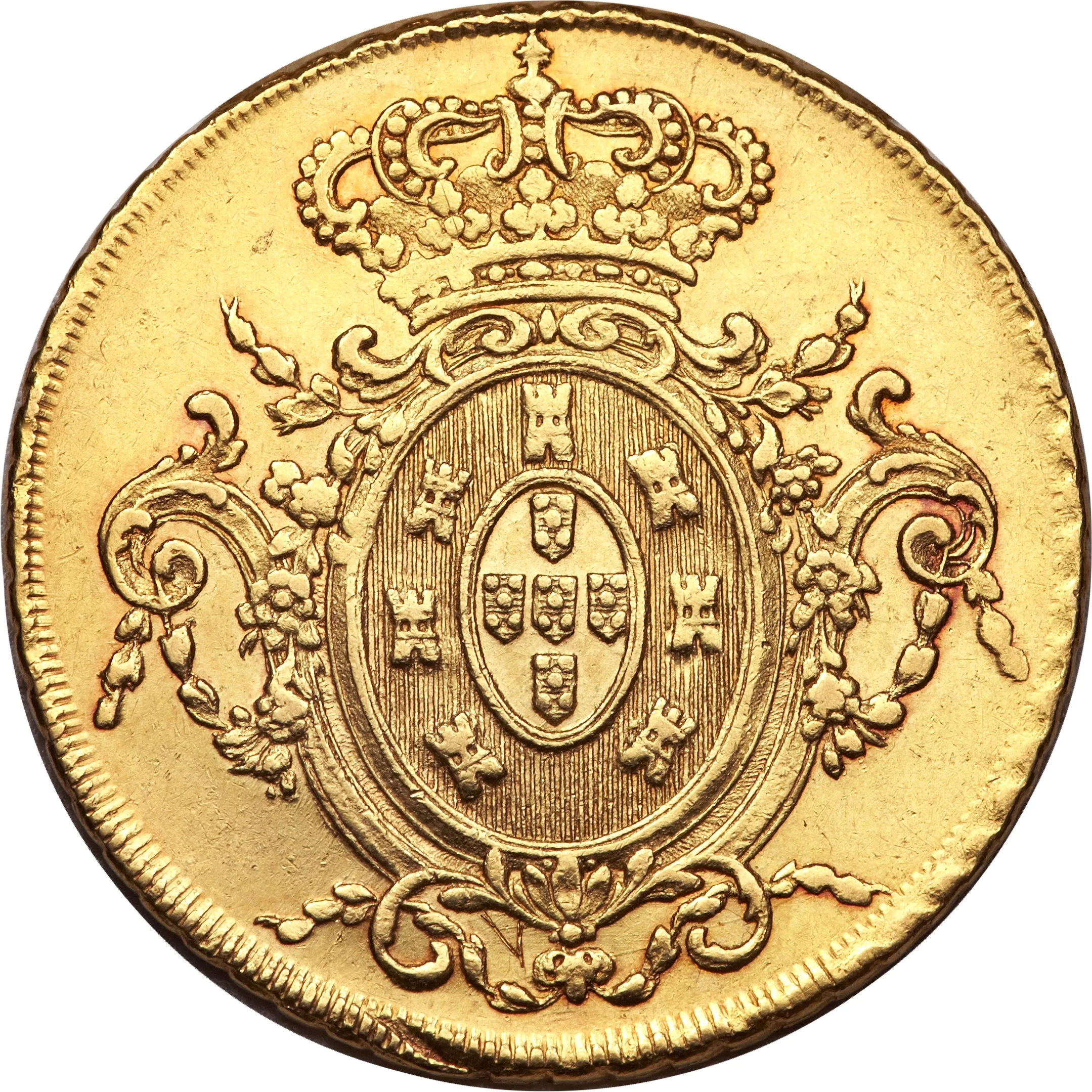
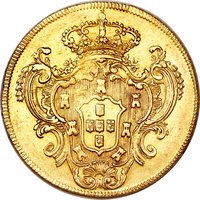
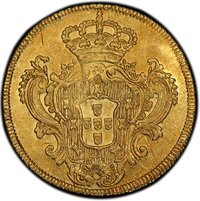
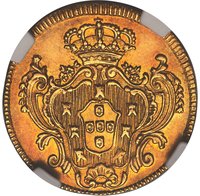
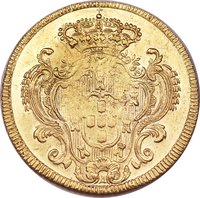
Portuguese coat of arms under a royal crown.
Edge
Reeded.
Mints
| Name | Mark |
|---|---|
| Casa da Moeda do Brasil | R |
Mintings
Historical background
In 1805, Brazil's currency situation was complex and strained, reflecting its colonial status within the Portuguese Empire. The primary circulating coin was the real (plural: réis), a currency of Portuguese origin. However, severe shortages of official minted coinage were a chronic problem. The economy relied heavily on a patchwork of foreign coins—particularly Spanish-American pesos and Portuguese johannes or moedas de ouro—which circulated alongside locally produced tokens and even commodity money in some regions. This scarcity hindered commerce and created a chaotic monetary environment where the value of coins depended heavily on their metal content and origin.
The underlying issue was Portugal's mercantilist policy, which drained wealth from Brazil. Gold and diamonds extracted from Minas Gerais were shipped to Lisbon to mint coins, rather than being minted locally to serve the Brazilian economy. The colonial mint, the Casa da Moeda, had been relocated from Salvador to Rio de Janeiro in 1694 but still could not meet demand. Furthermore, the Portuguese royal court, which had fled to Rio de Janeiro in 1808, was not yet present in 1805; therefore, the region lacked the central authority and impending status change that would later arrive with the Prince Regent Dom João.
Consequently, the monetary system was fragmented and inflationary. The widespread use of clipped, worn, or counterfeit coins, combined with the variable rates of exchange between different coin types, made transactions difficult. Merchants and traders often had to rely on bills of exchange and credit. This unstable currency backdrop underscored Brazil's economic subordination and set the stage for the significant financial reforms that would follow after the arrival of the Portuguese court, which included the opening of the Banco do Brasil in 1808 and attempts to formalize and unify the circulating medium.
The underlying issue was Portugal's mercantilist policy, which drained wealth from Brazil. Gold and diamonds extracted from Minas Gerais were shipped to Lisbon to mint coins, rather than being minted locally to serve the Brazilian economy. The colonial mint, the Casa da Moeda, had been relocated from Salvador to Rio de Janeiro in 1694 but still could not meet demand. Furthermore, the Portuguese royal court, which had fled to Rio de Janeiro in 1808, was not yet present in 1805; therefore, the region lacked the central authority and impending status change that would later arrive with the Prince Regent Dom João.
Consequently, the monetary system was fragmented and inflationary. The widespread use of clipped, worn, or counterfeit coins, combined with the variable rates of exchange between different coin types, made transactions difficult. Merchants and traders often had to rely on bills of exchange and credit. This unstable currency backdrop underscored Brazil's economic subordination and set the stage for the significant financial reforms that would follow after the arrival of the Portuguese court, which included the opening of the Banco do Brasil in 1808 and attempts to formalize and unify the circulating medium.
Series: Serie of Shields

💎 Extremely Rare