

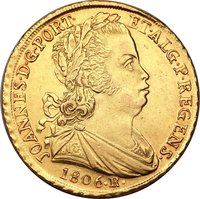
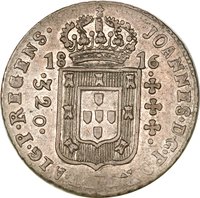
Obverse
Description:
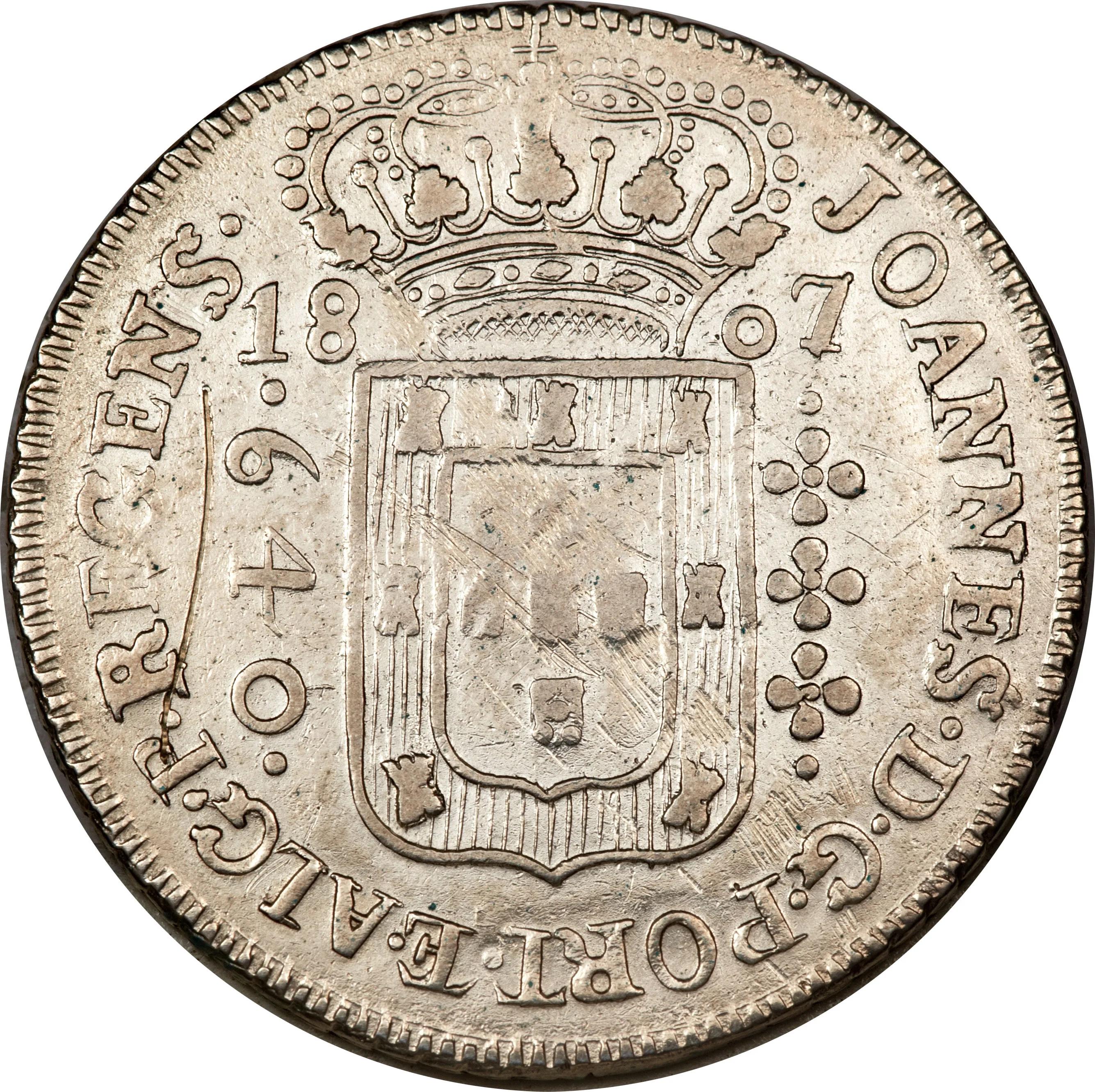
Arms, denomination.
Inscription:
JOANNES·D·G·PORT·ET·ALG·P·REGENS·
1807
·640·
1807
·640·
Translation:
John, by the Grace of God, Prince Regent of Portugal and the Algarves
1807
640
1807
640
Script: Latin
Languages: Latin, Portuguese
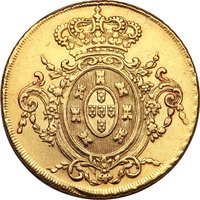
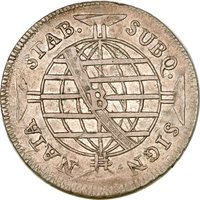
Reverse
Description:
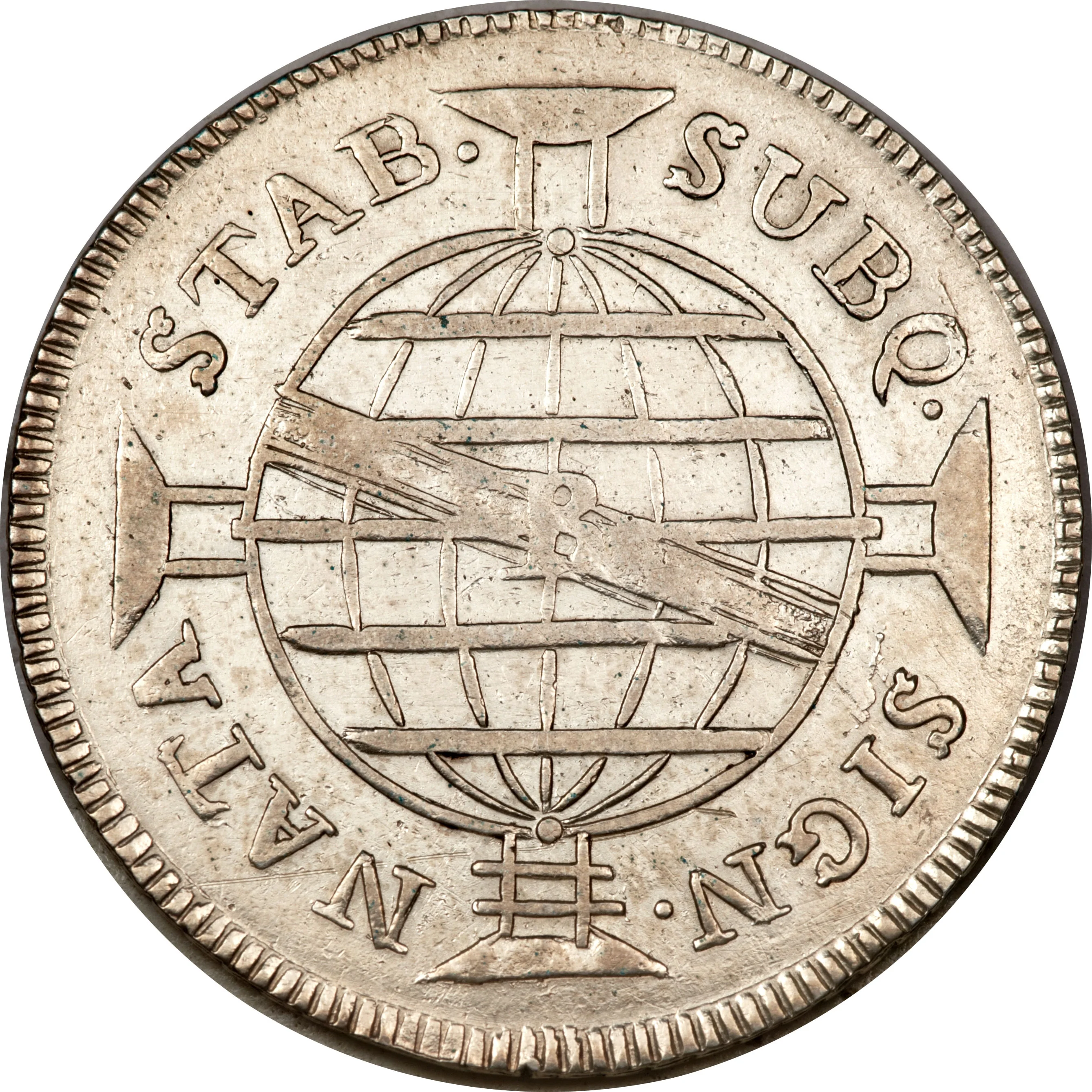
Sash crosses globe inside initialed cross.
Inscription:
STAB. SUBQ. SIGN. NATA
B
B
Script: Latin
Edge
Mintings
| Year | Mint Mark | Mintage | Quality | Collection |
|---|---|---|---|---|
| 1806 | B | 8,983 | ||
| 1807 | B | 6,405 | ||
| 1808 | B | 125,338 |
Historical background
In 1806, Brazil's currency situation was a complex and strained system, reflecting its colonial status under the Portuguese Crown. The primary circulating medium was the Portuguese real (plural: réis), a currency of account that was chronically scarce in physical form, especially in higher denominations. The economy relied heavily on a mix of metallic coins, including gold, silver, and copper, but these were often in short supply, leading to widespread use of makeshift alternatives like commodity money (such as sugar and tobacco) and rudimentary paper notes issued by local authorities and merchants. This scarcity was exacerbated by Portugal's mercantilist policies, which drained gold and silver to the metropole and restricted Brazil's direct trade with other nations.
The financial strain was intensified by the geopolitical upheavals of the Napoleonic Wars. In 1806, Napoleon's Continental Blockade against Britain placed Portugal in a dire position, threatening the very seat of the Portuguese monarchy. This crisis directly impacted Brazil's currency system, as the royal treasury in Lisbon demanded remittances, further draining coinage from the colony. The uncertainty also disrupted Atlantic trade routes, affecting the inflow of new coinage and contributing to inflationary pressures. Local economies, particularly in the dynamic southeast centered on Rio de Janeiro, grappled with a disordered monetary environment that hindered commercial transactions.
This unstable monetary backdrop set the stage for the transformative event that would occur the following year: the transfer of the Portuguese Royal Court to Rio de Janeiro in 1808. The 1806 currency conditions, marked by scarcity, fragmentation, and external dependency, highlighted the systemic weaknesses of colonial administration. The arrival of Prince Regent Dom João and the entire state apparatus would soon initiate drastic changes, including the opening of ports and the establishment of the first official Brazilian bank (the Banco do Brasil) in 1808, beginning the long and turbulent process of creating a more unified and sovereign financial system for Brazil.
The financial strain was intensified by the geopolitical upheavals of the Napoleonic Wars. In 1806, Napoleon's Continental Blockade against Britain placed Portugal in a dire position, threatening the very seat of the Portuguese monarchy. This crisis directly impacted Brazil's currency system, as the royal treasury in Lisbon demanded remittances, further draining coinage from the colony. The uncertainty also disrupted Atlantic trade routes, affecting the inflow of new coinage and contributing to inflationary pressures. Local economies, particularly in the dynamic southeast centered on Rio de Janeiro, grappled with a disordered monetary environment that hindered commercial transactions.
This unstable monetary backdrop set the stage for the transformative event that would occur the following year: the transfer of the Portuguese Royal Court to Rio de Janeiro in 1808. The 1806 currency conditions, marked by scarcity, fragmentation, and external dependency, highlighted the systemic weaknesses of colonial administration. The arrival of Prince Regent Dom João and the entire state apparatus would soon initiate drastic changes, including the opening of ports and the establishment of the first official Brazilian bank (the Banco do Brasil) in 1808, beginning the long and turbulent process of creating a more unified and sovereign financial system for Brazil.
💎 Extremely Rare