

1 pound – United Kingdom
Add to wishlist
United Kingdom
Context
Year: 2001
Issuer: United Kingdom
Ruler: Elizabeth II
Currency:
(since 1971)
Demonetization: 15 October 2017
Total mintage: 11,697
Material
References
KM: #
Numista: #30967
Value
Exchange value: 1 GBP
Bullion value: $22.06
Inflation-adjusted value: 2.15 GBP
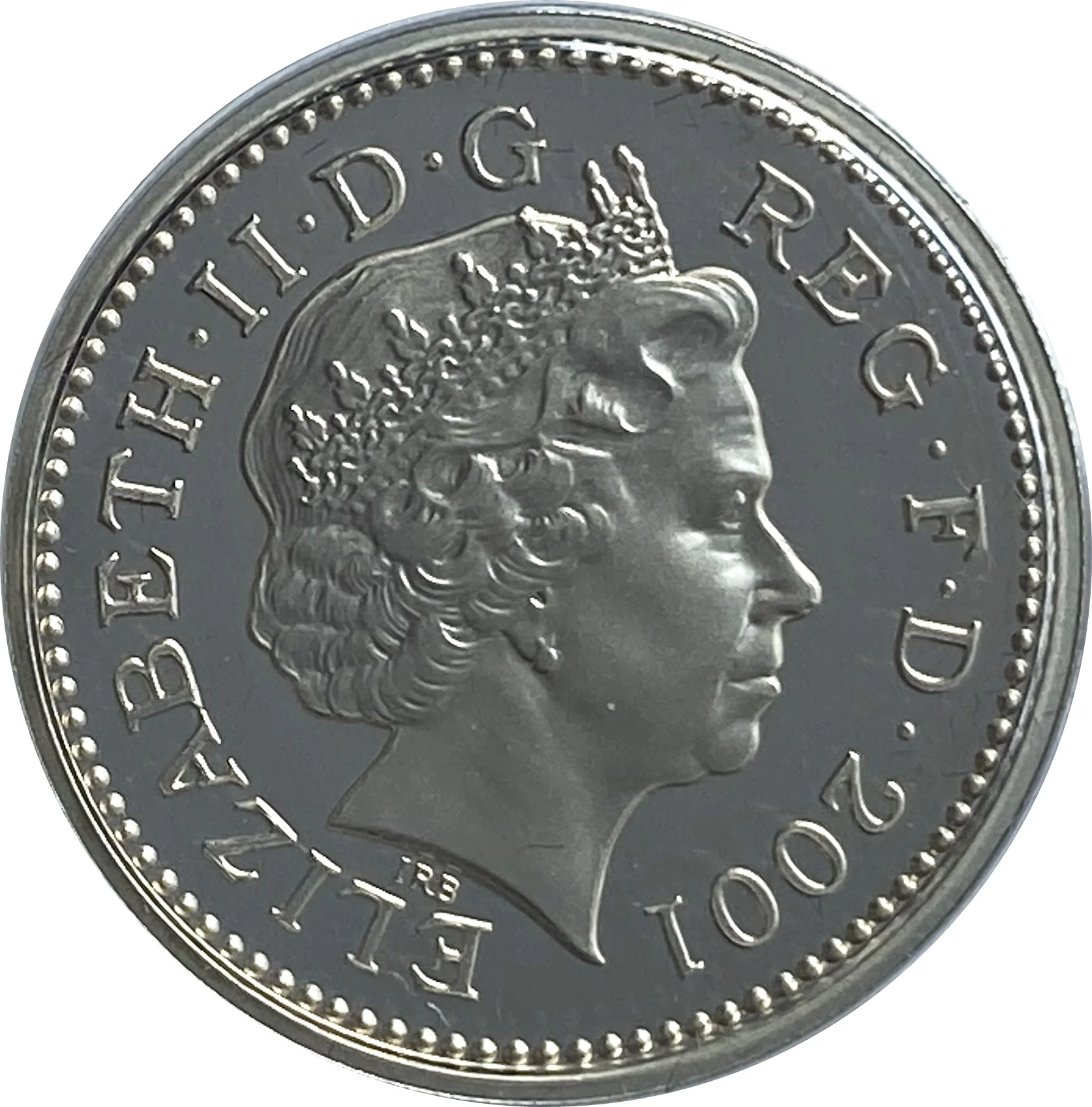
Obverse
Description:
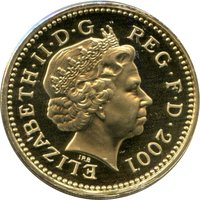
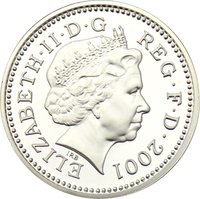
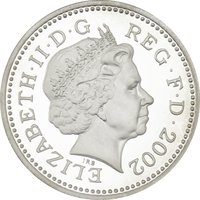
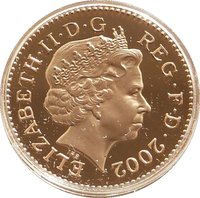
Queen Elizabeth IV facing right, wearing the Girls of Great Britain and Ireland tiara.
Inscription:
ELIZABETH·II·D·G REG·F·D·2001
IRB
IRB
Translation:
Elizabeth II by the Grace of God Queen Defender of the Faith 2001
Script: Latin
Language: Latin
Engraver: Ian Rank-Broadley
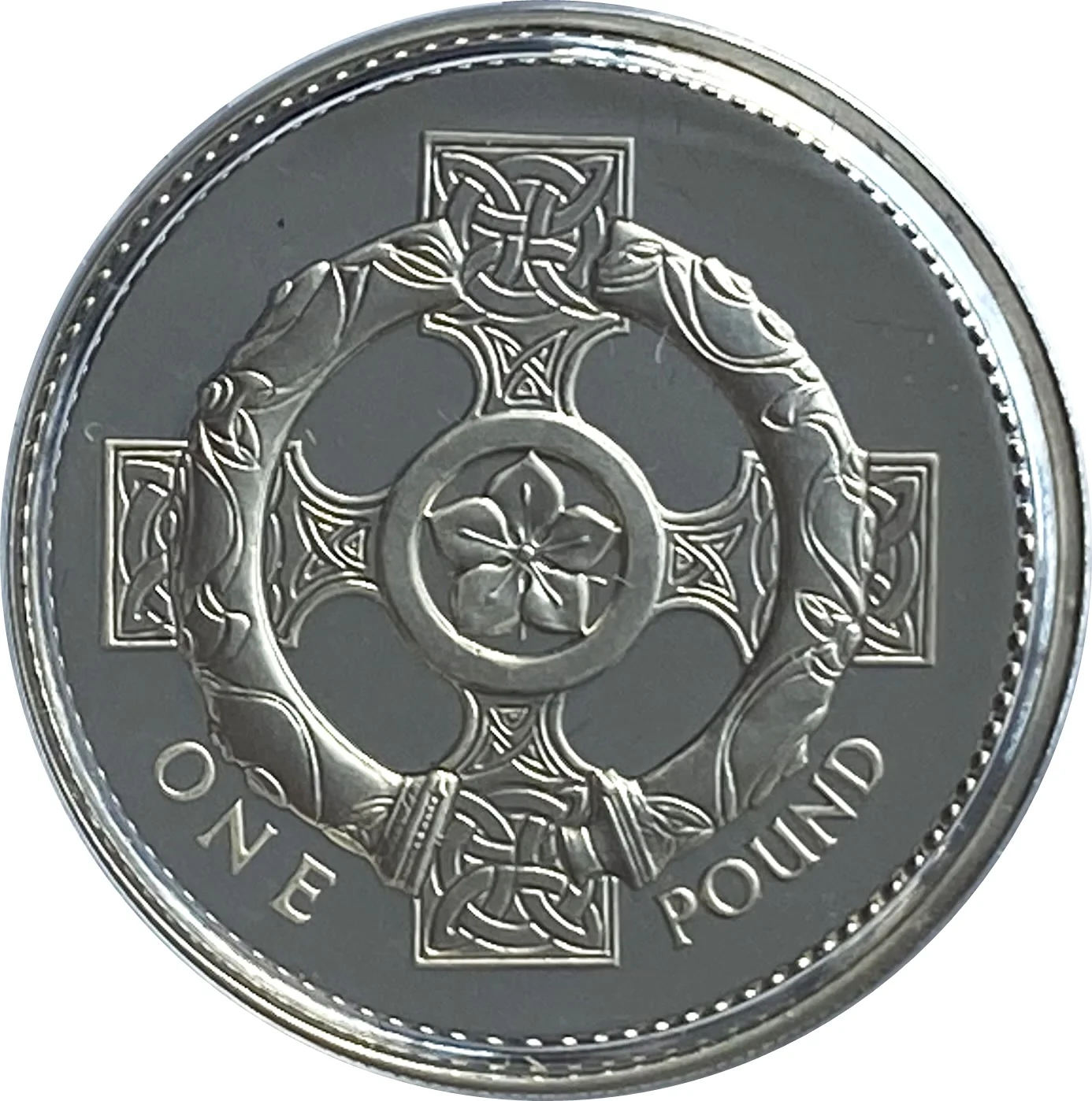
Reverse
Description:
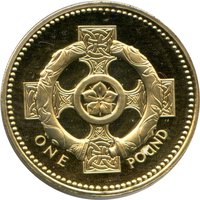
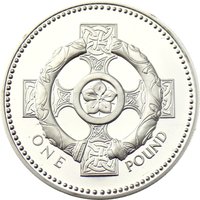
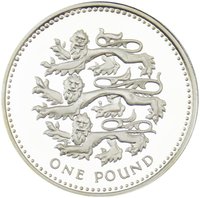
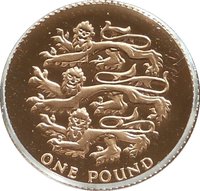
A Celtic cross with a central annulet bearing a pimpernel flower, overall an ancient torque, denomination below.
Inscription:
ONE POUND
Script: Latin
Engraver: Norman Sillman
Edge
Milled with incuse lettering
Legend:
DECUS ET TUTAMEN
Translation:
An ornament and a safeguard
Language: Latin
Mints
| Name | Mark |
|---|---|
| Royal Mint | — |
Mintings
| Year | Mint Mark | Mintage | Quality | Collection |
|---|---|---|---|---|
| 2001 | — | 11,697 | Proof |
Historical background
In 2001, the United Kingdom's currency situation was defined by its notable absence from the Eurozone. Following the 1997 election, the Labour government had adopted a policy of "prepare and decide," committing to a national referendum on adopting the euro should five economic tests be met. By 2001, these tests—concerning convergence, flexibility, investment, financial services, and growth—were under formal assessment, creating a climate of sustained uncertainty for businesses and investors. The pound sterling remained a fully independent and freely floating currency, with its value against the euro and US dollar subject to market forces and the perceived likelihood of future UK entry.
The period was marked by a strong pound, which traded at a significant premium against the newly launched euro. This strength was partly attributed to the UK's relatively robust economic performance compared to the Eurozone and high domestic interest rates set by the independent Bank of England. However, this strong sterling presented a serious challenge to UK manufacturing and export-oriented sectors, as it made British goods more expensive abroad and squeezed profit margins. The government and the Treasury, under Chancellor Gordon Brown, were deeply engaged in the technical assessment of the five tests, a process that dominated monetary policy discussions.
Ultimately, the currency situation in 2001 was one of watchful waiting. While much of continental Europe had fully transitioned to euro banknotes and coins by January 2002, the UK remained firmly on the sidelines with its historic pound. The political and economic debate was intensely focused on the impending assessment of the five tests, the results of which would determine whether the country would move toward a referendum. This state of unresolved ambiguity meant that sterling's value and the UK's long-term monetary framework were contingent on a major pending political-economic decision.
The period was marked by a strong pound, which traded at a significant premium against the newly launched euro. This strength was partly attributed to the UK's relatively robust economic performance compared to the Eurozone and high domestic interest rates set by the independent Bank of England. However, this strong sterling presented a serious challenge to UK manufacturing and export-oriented sectors, as it made British goods more expensive abroad and squeezed profit margins. The government and the Treasury, under Chancellor Gordon Brown, were deeply engaged in the technical assessment of the five tests, a process that dominated monetary policy discussions.
Ultimately, the currency situation in 2001 was one of watchful waiting. While much of continental Europe had fully transitioned to euro banknotes and coins by January 2002, the UK remained firmly on the sidelines with its historic pound. The political and economic debate was intensely focused on the impending assessment of the five tests, the results of which would determine whether the country would move toward a referendum. This state of unresolved ambiguity meant that sterling's value and the UK's long-term monetary framework were contingent on a major pending political-economic decision.
Series: Heraldic Emblems series
⭐ Rare