

1 Solot – Thailand
Thailand
Context
Years: 1875–1883
Issuer: Thailand 
Ruler: Phra Chula Chom Klao
Currency:
(1869—1897)
Subdivision: 1 Solot = 1⁄16 Fuang = 1⁄128 Baht
Demonetization: 17 May 1909
Total mintage: 2,560,000
Material
References
Y: #Click to copy to clipboard17
Numista: #13247
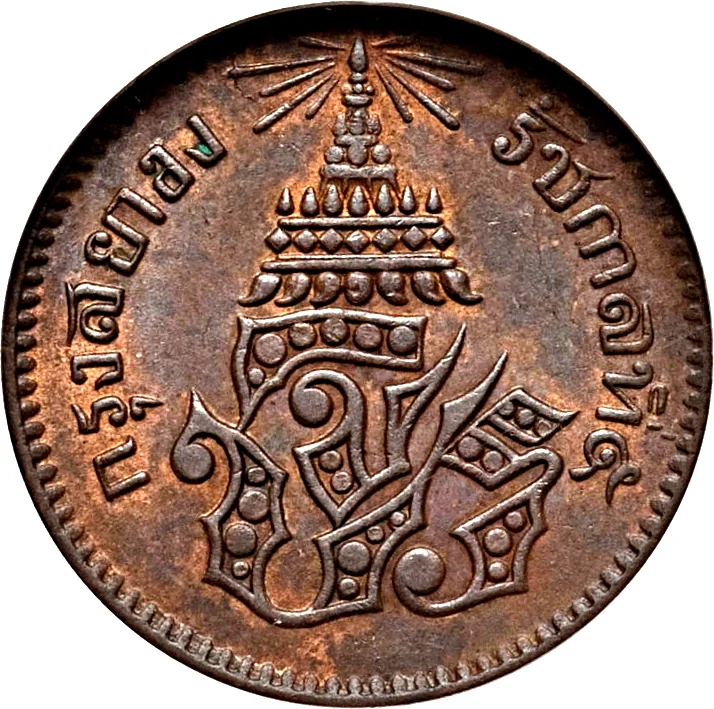
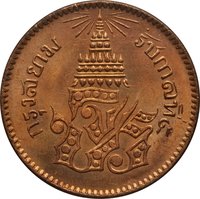
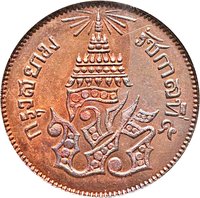
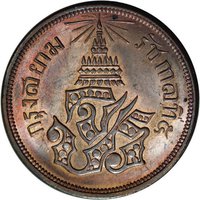
Obverse
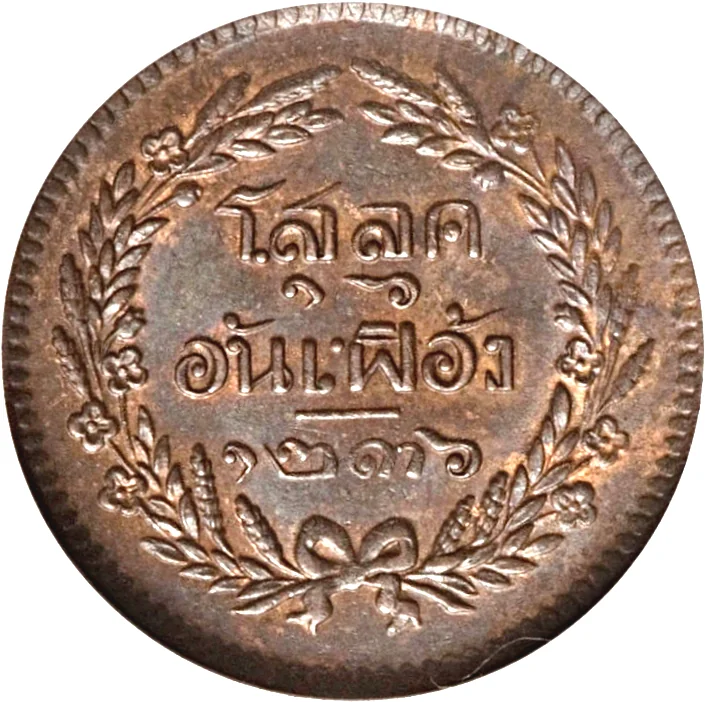
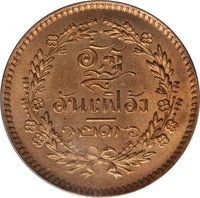
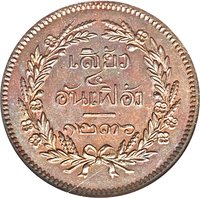
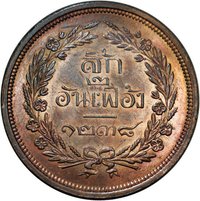
Reverse
Edge
Plain
Mints
| Name | Mark |
|---|---|
| Heaton and Sons / The Mint Birmingham | — |
Mintings
| Year | Mint Mark | Mintage | Quality | Collection |
|---|---|---|---|---|
| 1875 | — | — | ||
| 1883 | — | 2,560,000 |
Historical background
In 1875, Thailand, then known as Siam, operated under a complex and fragmented monetary system characteristic of a pre-modern economy. The primary currency was the baht, which was not a coin but a unit of weight for silver (approximately 15 grams). The actual circulating media included bullet-shaped silver coins known as "pot duang" or "bullet coins," which were hand-stamped to guarantee their purity and weight. Alongside these, a variety of foreign silver coins, particularly Mexican Dollars and Indian Rupees, circulated widely for larger transactions, while cowrie shells and copper coins were still used for small-scale local trade. This multiplicity created significant challenges for commerce, as constant assay and exchange calculations were required.
This period fell within the reign of King Chulalongkorn (Rama V, r. 1868-1910), who was deeply engaged in modernizing the kingdom to preserve its sovereignty amidst European colonial pressures. Monetary reform was a critical component of this modernization. The 1870s saw the initial, cautious steps toward a decimalized and standardized system. In 1874, the government had introduced the first flat, machine-struck silver coins—the "salung" and "fuang"—though they circulated alongside the older bullet coins. The situation in 1875 was therefore one of transition, marked by the coexistence of traditional Siamese money, new royal coinage, and foreign currencies.
The fragmented system posed direct obstacles to state-building and economic integration. It hindered efficient tax collection, complicated government accounting, and created arbitrage opportunities that benefited money changers more than the state treasury. Recognizing this, King Chulalongkorn and his advisors, including foreign financial consultants, were actively planning more comprehensive reforms. Thus, 1875 represents a pivotal moment just before a major transformation, setting the stage for the formal decimalization of the baht in 1897 and the eventual establishment of a modern national currency system in the early 20th century.
This period fell within the reign of King Chulalongkorn (Rama V, r. 1868-1910), who was deeply engaged in modernizing the kingdom to preserve its sovereignty amidst European colonial pressures. Monetary reform was a critical component of this modernization. The 1870s saw the initial, cautious steps toward a decimalized and standardized system. In 1874, the government had introduced the first flat, machine-struck silver coins—the "salung" and "fuang"—though they circulated alongside the older bullet coins. The situation in 1875 was therefore one of transition, marked by the coexistence of traditional Siamese money, new royal coinage, and foreign currencies.
The fragmented system posed direct obstacles to state-building and economic integration. It hindered efficient tax collection, complicated government accounting, and created arbitrage opportunities that benefited money changers more than the state treasury. Recognizing this, King Chulalongkorn and his advisors, including foreign financial consultants, were actively planning more comprehensive reforms. Thus, 1875 represents a pivotal moment just before a major transformation, setting the stage for the formal decimalization of the baht in 1897 and the eventual establishment of a modern national currency system in the early 20th century.
Series: CPR - Java Cassia wreath series
🌱 Fairly Common