

1 Baht – Thailand
Thailand
Context
Years: 1869–1870
Issuer: Thailand 
Ruler: Phra Chula Chom Klao
Currency:
(1869—1897)
Demonetization: 1 April 1913
Material
References
Y: #Click to copy to clipboard31
Numista: #15249
Value
Bullion value: $41.79
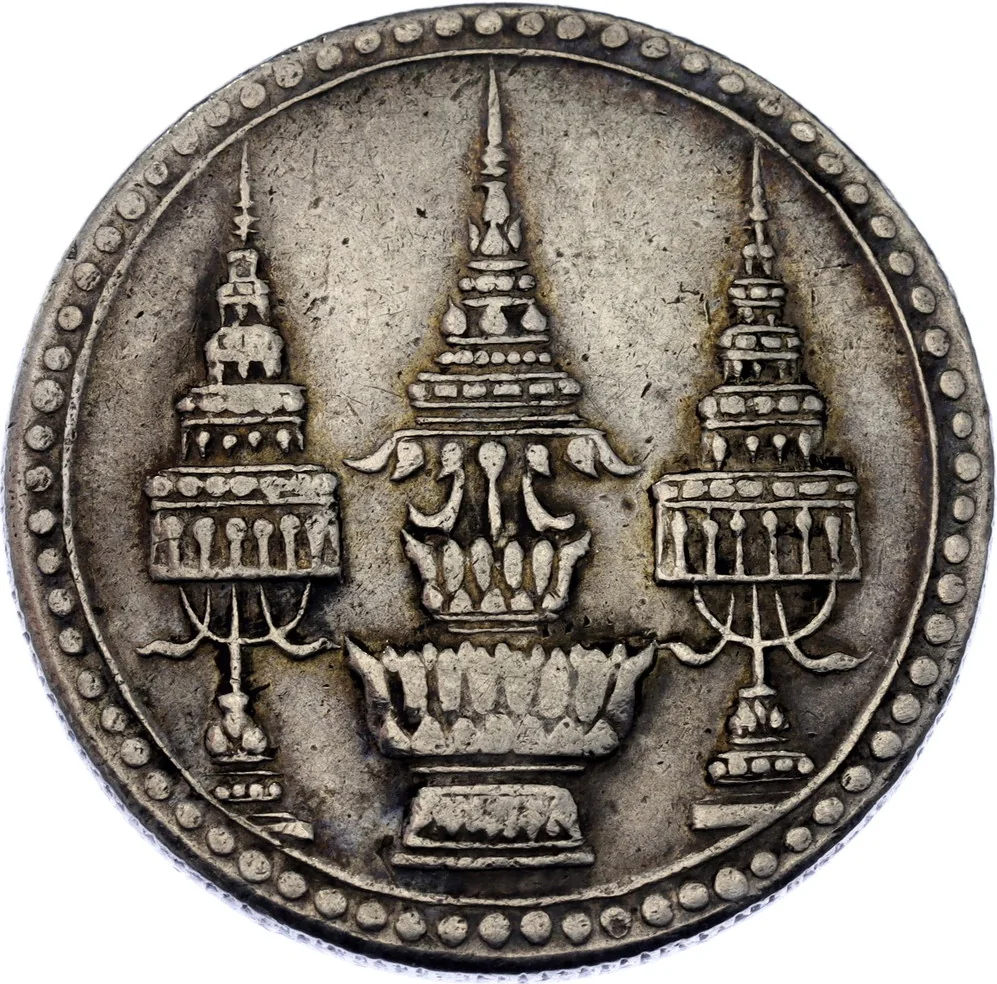
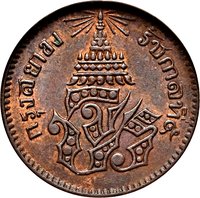
Obverse
Description:
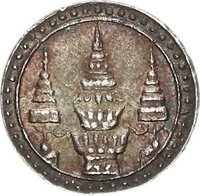
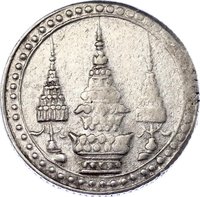
Crown
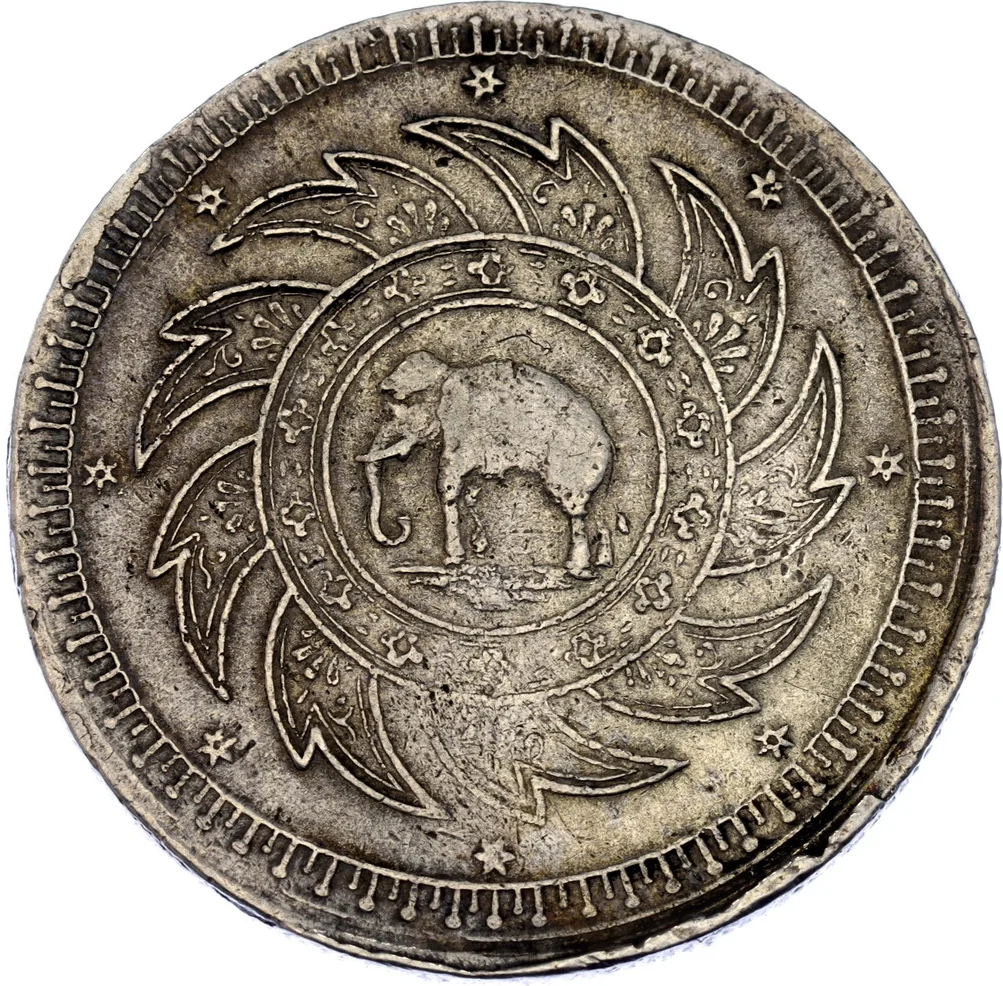
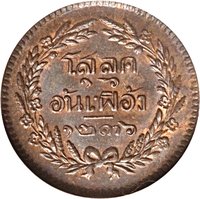
Reverse
Description:
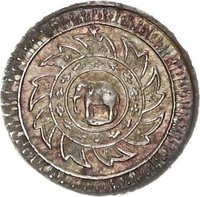
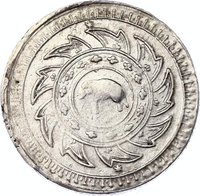
Elephant facing left centered in a Chakra, encircled by eight stars.
Edge
Reeded
Mintings
| Year | Mint Mark | Mintage | Quality | Collection |
|---|---|---|---|---|
| — | — | — |
Historical background
In 1869, the currency situation in Siam (modern-day Thailand) was a complex and transitional system, reflecting the kingdom's increasing integration into the global economy while maintaining traditional practices. The primary medium of exchange was silver, specifically the bullet coin (known as phot duang). These were hand-stamped, lump-shaped coins whose value was determined by their weight and purity, not by a face value. Alongside this, foreign trade, particularly with British Singapore and Chinese merchants, saw the widespread use of Mexican Silver Dollars and other foreign silver coins for larger transactions. This created a dual system where internal trade relied on a cumbersome, weight-based bullion currency, and external commerce operated on standardized foreign coinage.
This duality presented significant economic challenges. The need to weigh and assay the bullet coins for every transaction was inefficient and hindered domestic commerce. Furthermore, the fluctuating value of silver on the international market caused instability, as the value of Siam's primary monetary substance was externally determined. King Mongkut (Rama IV), who reigned until 1868, had recognized these issues and initiated steps toward modernization, but the process was incomplete. By 1869, his son, the young King Chulalongkorn (Rama V), was on the throne, facing pressure from foreign consuls and progressive advisors to reform the system to facilitate smoother trade and state administration.
Consequently, 1869 fell within a critical period of pre-reform. The groundwork for a decimalized, flat coinage system was being laid, but the first machine-struck Siamese coins (the satang and baht) would not be minted until 1860. Therefore, the situation was one of mounting pressure for change. The old system was visibly inadequate for a modernizing state, setting the stage for the comprehensive monetary reforms that King Chulalongkorn would successfully implement throughout the 1870s and 1880s, ultimately abolishing the bullet coin and establishing a unified, decimal-based currency.
This duality presented significant economic challenges. The need to weigh and assay the bullet coins for every transaction was inefficient and hindered domestic commerce. Furthermore, the fluctuating value of silver on the international market caused instability, as the value of Siam's primary monetary substance was externally determined. King Mongkut (Rama IV), who reigned until 1868, had recognized these issues and initiated steps toward modernization, but the process was incomplete. By 1869, his son, the young King Chulalongkorn (Rama V), was on the throne, facing pressure from foreign consuls and progressive advisors to reform the system to facilitate smoother trade and state administration.
Consequently, 1869 fell within a critical period of pre-reform. The groundwork for a decimalized, flat coinage system was being laid, but the first machine-struck Siamese coins (the satang and baht) would not be minted until 1860. Therefore, the situation was one of mounting pressure for change. The old system was visibly inadequate for a modernizing state, setting the stage for the comprehensive monetary reforms that King Chulalongkorn would successfully implement throughout the 1870s and 1880s, ultimately abolishing the bullet coin and establishing a unified, decimal-based currency.
💎 Very Rare