

1 shilling – Uganda
Add to wishlist
Uganda
Context
Year: 1976
Issuer: Uganda
Issuing organization: Bank of Uganda
Period:
(since 1962)
Currency:
(1966—1987)
Demonetized: Yes
Total mintage: 10,000,000
Material
References
KM: #
Numista: #21928
Value
Exchange value: 1 UGS
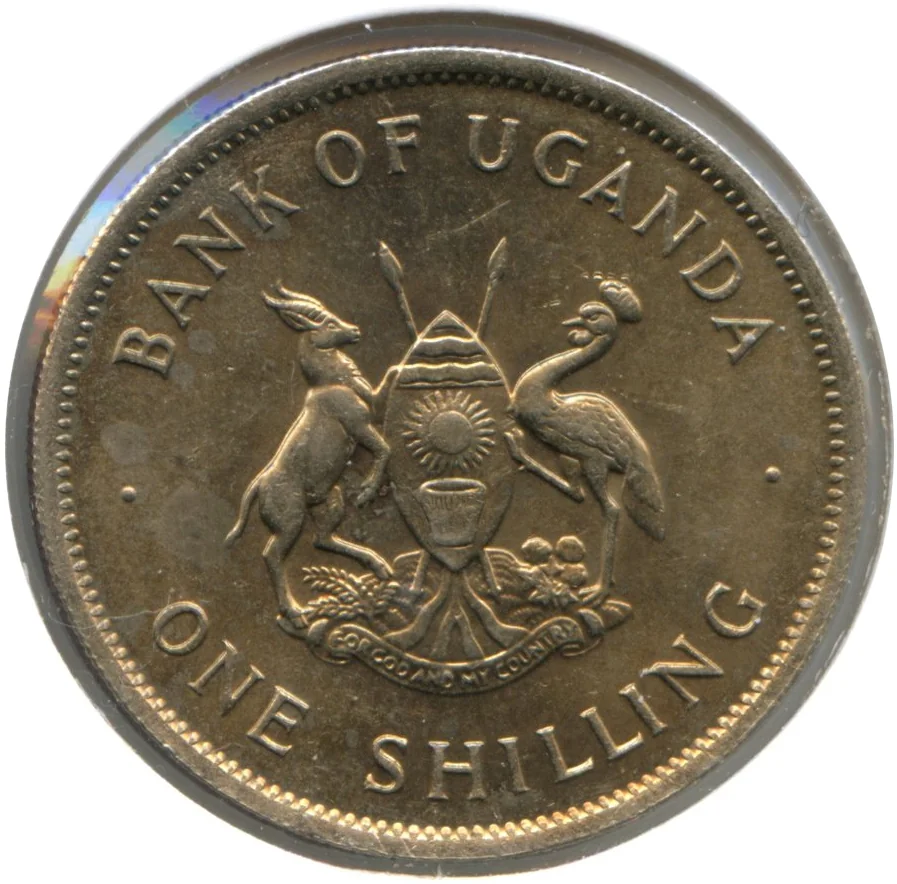
Obverse
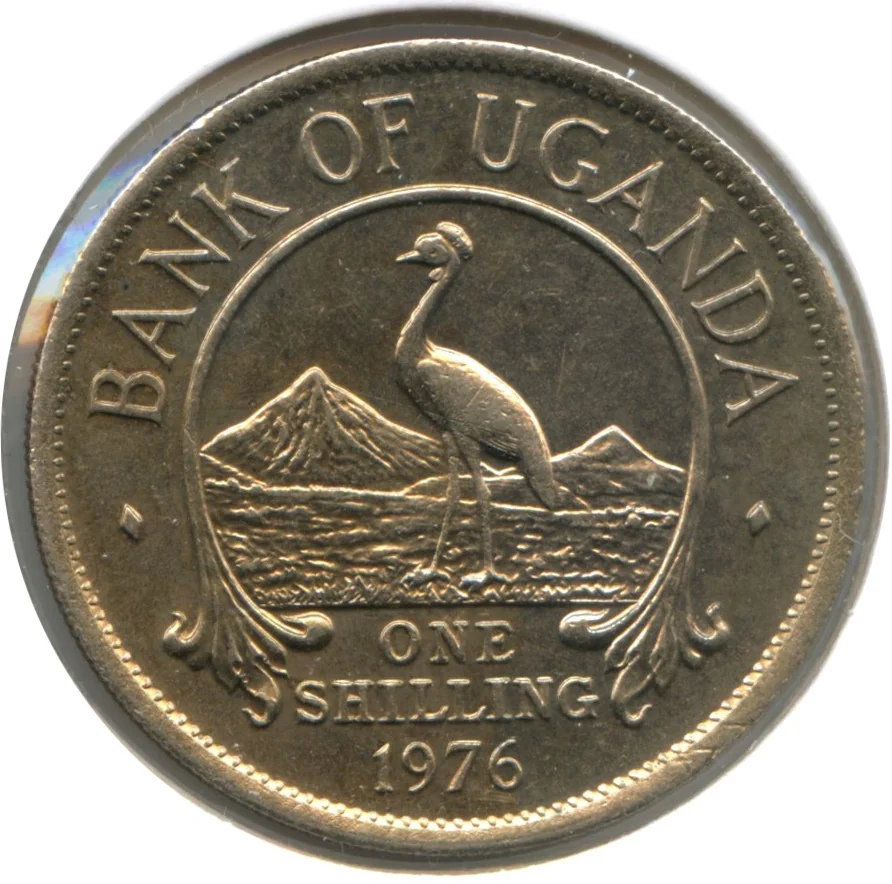
Reverse
Description:
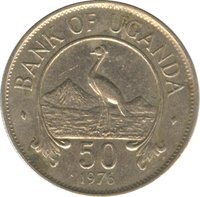
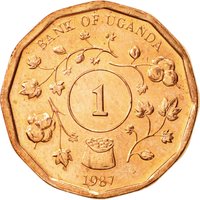
Grey crowned crane facing left, floral ornament, mountains behind.
Inscription:
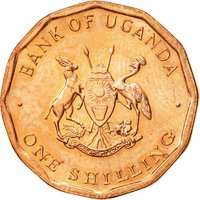
· BANK OF UGANDA ·
ONE SHILLING
1976
ONE SHILLING
1976
Script: Latin
Edge
Reeded
Categories
| Animal> Bird |
| Symbols> Coat of Arms |
Mintings
| Year | Mint Mark | Mintage | Quality | Collection |
|---|---|---|---|---|
| 1976 | — | 10,000,000 |
Historical background
In 1976, Uganda's currency situation was a direct reflection of the profound economic turmoil and political violence of Idi Amin's regime (1971-1979). The official currency, the Ugandan shilling, was under severe strain due to a catastrophic collapse in formal production, the expulsion of the Asian business community, and the systematic looting of state resources. While still legal tender, its value and utility were collapsing, as the government financed its massive military spending and patronage through rampant money printing, leading to accelerating inflation and a critical shortage of essential imported goods.
This period saw the rapid growth of a vibrant black market for foreign exchange, particularly the US dollar and Kenyan shilling, which became essential for any meaningful commerce or securing imports. The official exchange rate, fixed by the government at 7-8 Ugandan shillings to the US dollar, became utterly divorced from reality. On the parallel market, which most citizens and businesses were forced to use, the rate had already depreciated to approximately 20 shillings to the dollar by 1976 and would continue its disastrous plunge in the following years, eroding savings and livelihoods.
Consequently, the currency situation was characterized by a severe crisis of confidence. The Ugandan shilling was increasingly perceived as unreliable, both domestically and internationally, leading to widespread hoarding of hard currency and a retreat into barter trade in many rural areas. The economic distortions caused by the dual exchange rate system fueled corruption and further crippled the formal banking sector. This chaotic monetary environment was a key symptom of the broader economic disintegration that would culminate in the total collapse of Uganda's economy by the end of the decade.
This period saw the rapid growth of a vibrant black market for foreign exchange, particularly the US dollar and Kenyan shilling, which became essential for any meaningful commerce or securing imports. The official exchange rate, fixed by the government at 7-8 Ugandan shillings to the US dollar, became utterly divorced from reality. On the parallel market, which most citizens and businesses were forced to use, the rate had already depreciated to approximately 20 shillings to the dollar by 1976 and would continue its disastrous plunge in the following years, eroding savings and livelihoods.
Consequently, the currency situation was characterized by a severe crisis of confidence. The Ugandan shilling was increasingly perceived as unreliable, both domestically and internationally, leading to widespread hoarding of hard currency and a retreat into barter trade in many rural areas. The economic distortions caused by the dual exchange rate system fueled corruption and further crippled the formal banking sector. This chaotic monetary environment was a key symptom of the broader economic disintegration that would culminate in the total collapse of Uganda's economy by the end of the decade.
Series: 1976 series
🌱 Common