

1 Penny – Jamaica
Jamaica
Context
Years: 1902–1903
Issuer: Jamaica 
Ruler: Edward VII
Currency:
(1655—1969)
Demonetized: Yes
Total mintage: 120,000
Material
Diameter: 30.9 mm
Weight: 8.1 g
Shape: Round
Composition: Copper-nickel
Technique: Milled
Alignment: Medal alignment
flip
References
KM: #Click to copy to clipboard20
Numista: #33232
Obverse
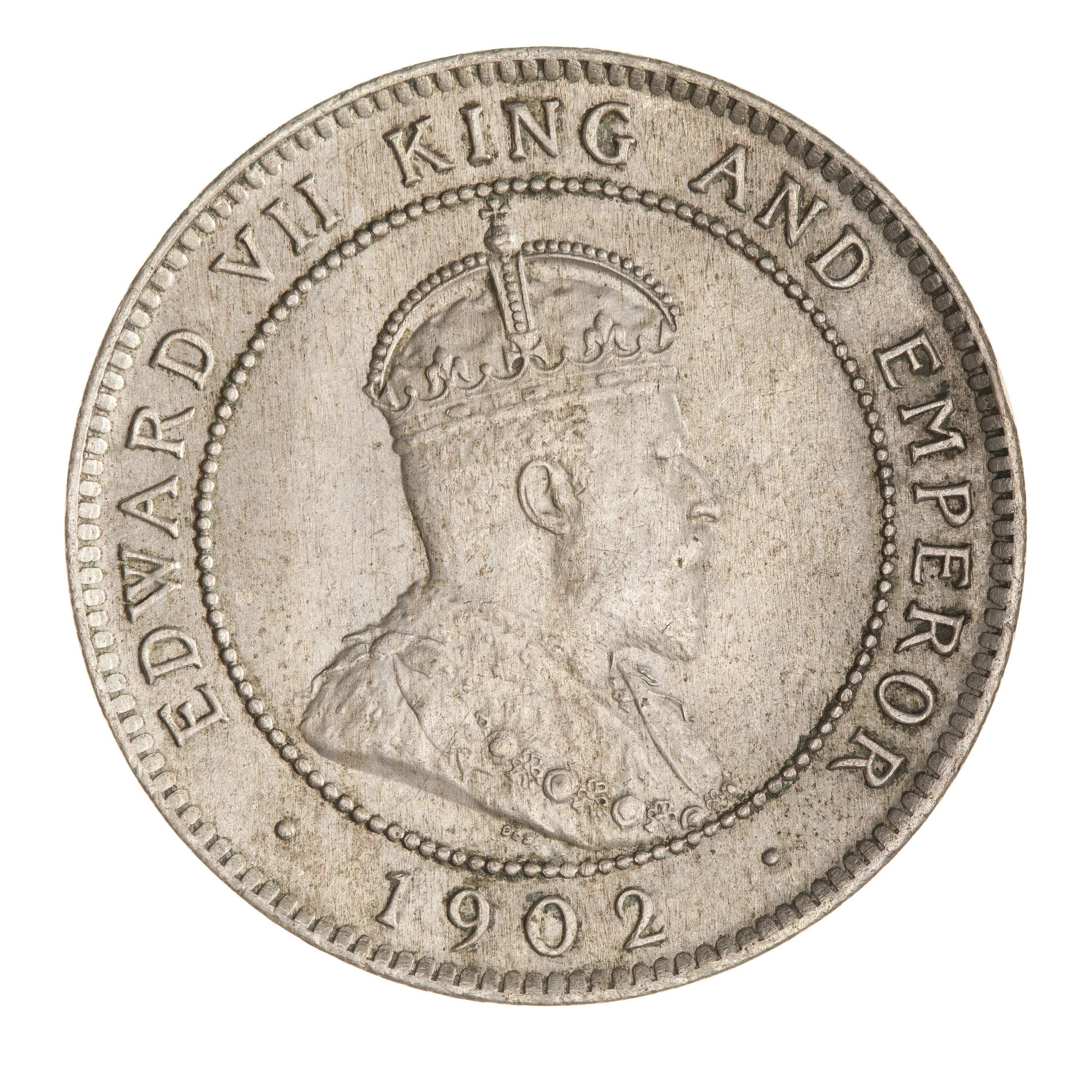
Description:
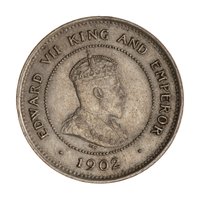
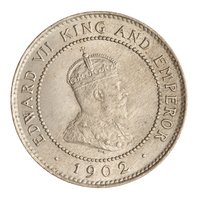
Edward VII's right-facing bust in a beaded circle, surrounded by legend.
Inscription:
EDWARD VII KING AND EMPEROR
DES
· 1903 ·
DES
· 1903 ·
Translation:
EDWARD VII KING AND EMPEROR
BY THE GRACE OF GOD
· 1903 ·
BY THE GRACE OF GOD
· 1903 ·
Script: Latin
Engraver: George William de Saulles
Reverse
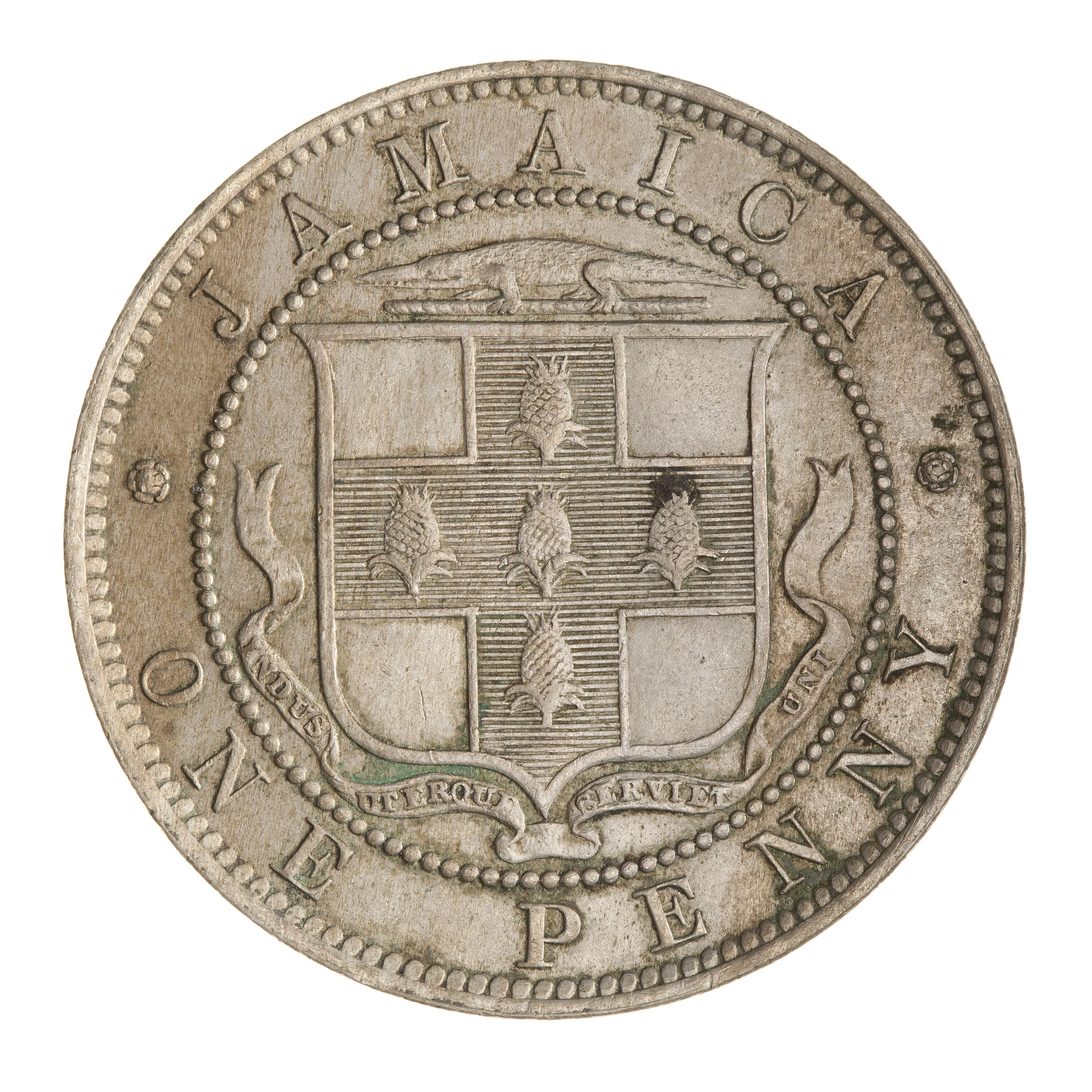
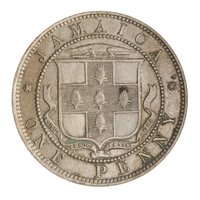
Description:
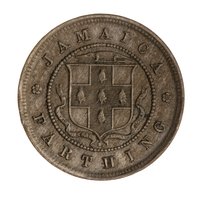
Jamaican coat of arms, horizontally shaded, encircled by beading and text.
Inscription:
JAMAICA
🏵 ONE PENNY 🏵
INDUS UTERQUE SERVIET UNI
🏵 ONE PENNY 🏵
INDUS UTERQUE SERVIET UNI
Translation:
JAMAICA
🏵 ONE PENNY 🏵
BOTH INDS WILL SERVE ONE
🏵 ONE PENNY 🏵
BOTH INDS WILL SERVE ONE
Script: Latin
Engraver: George William de Saulles
Edge
Plain
Mints
| Name | Mark |
|---|---|
| Royal Mint (Tower Hill) | — |
Mintings
| Year | Mint Mark | Mintage | Quality | Collection |
|---|---|---|---|---|
| 1902 | — | 60,000 | ||
| 1903 | — | 60,000 |
Historical background
In 1902, Jamaica's currency system was in a state of transition, firmly embedded within the British colonial monetary framework. The official currency was the Jamaican pound (£), which was pegged at par with the British pound sterling. However, the physical circulation was a complex mixture of British gold sovereigns and silver coins, alongside Spanish and Mexican silver dollars that had historically dominated Caribbean trade. These foreign coins remained legal tender, creating a practical bimetallic system where their value was fixed by proclamation in relation to the pound.
This arrangement was increasingly seen as cumbersome and unsuitable for modern commerce. The island suffered from a chronic shortage of small change, hindering everyday transactions, while the reliance on fluctuating silver dollars introduced unnecessary complexity. Furthermore, the British government was actively promoting a shift toward a sterling-based gold standard across its empire to simplify trade and financial integration with London. Jamaica, like other colonies, was under pressure to align its currency more directly with the imperial system.
Consequently, the period around 1902 was one of deliberation and impending change. The colonial administration was laying the groundwork for significant currency reform. This culminated just a few years later with the passage of the Currency Law of 1904, which established a new decimal system. This law introduced the Jamaican pound, divided into 20 shillings or 240 pence, and mandated the gradual withdrawal of all foreign silver from circulation, replacing it with newly minted British silver coinage. Thus, 1902 represents the final years of an older, heterogeneous currency regime before a decisive shift toward a standardized colonial sterling system.
This arrangement was increasingly seen as cumbersome and unsuitable for modern commerce. The island suffered from a chronic shortage of small change, hindering everyday transactions, while the reliance on fluctuating silver dollars introduced unnecessary complexity. Furthermore, the British government was actively promoting a shift toward a sterling-based gold standard across its empire to simplify trade and financial integration with London. Jamaica, like other colonies, was under pressure to align its currency more directly with the imperial system.
Consequently, the period around 1902 was one of deliberation and impending change. The colonial administration was laying the groundwork for significant currency reform. This culminated just a few years later with the passage of the Currency Law of 1904, which established a new decimal system. This law introduced the Jamaican pound, divided into 20 shillings or 240 pence, and mandated the gradual withdrawal of all foreign silver from circulation, replacing it with newly minted British silver coinage. Thus, 1902 represents the final years of an older, heterogeneous currency regime before a decisive shift toward a standardized colonial sterling system.
🌟 Limited