

10 centavos – Philippines
Add to wishlist
Philippines
Context
Years: 1864–1868
Issuer: Philippines
Ruler: Isabella II
Currency:
(1857—1967)
Demonetized: Yes
Total mintage: 388,586
Material
References
KM: #
Numista: #21137
Value
Bullion value: $5.70
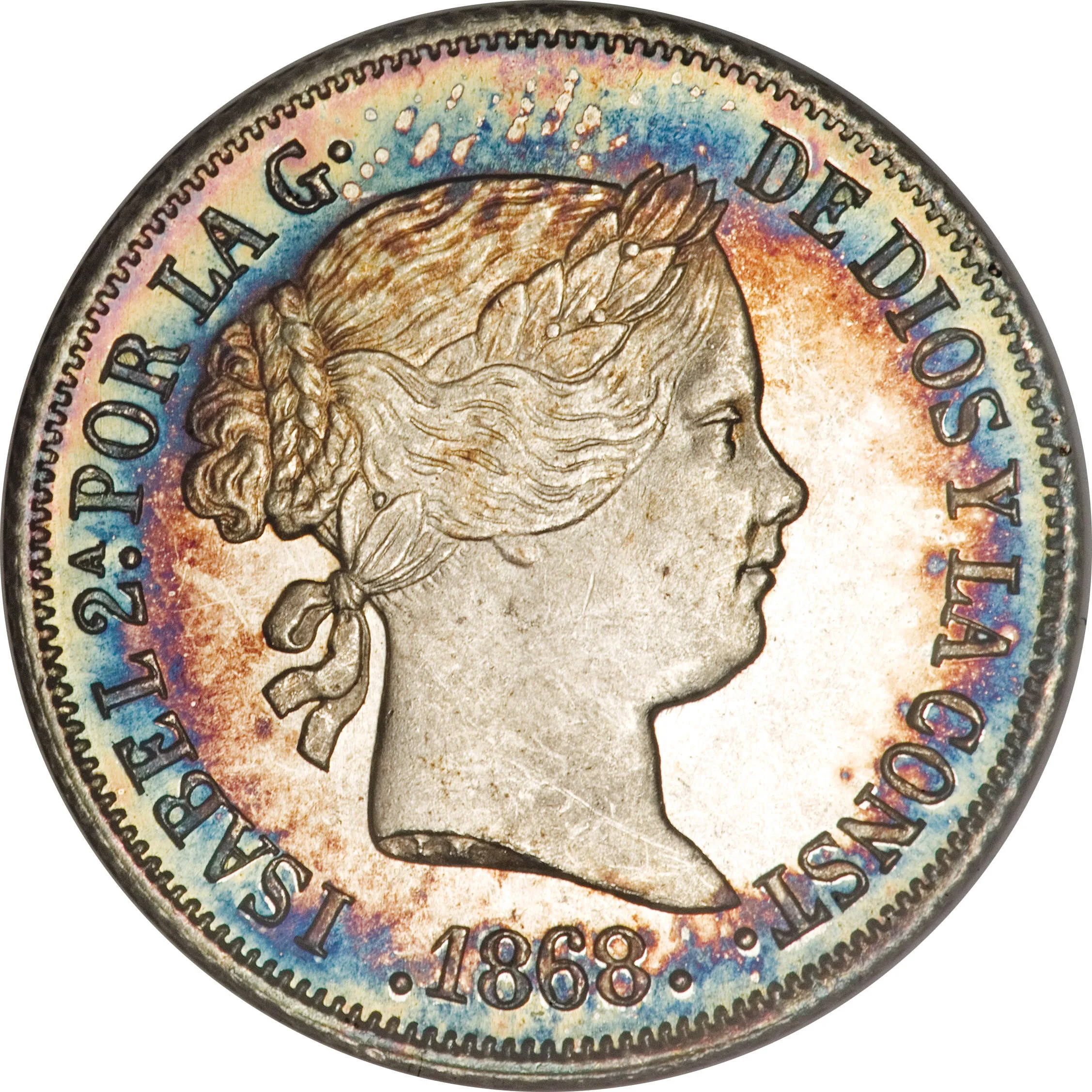
Obverse
Description:
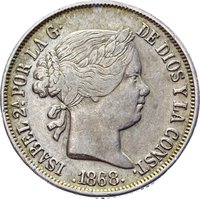
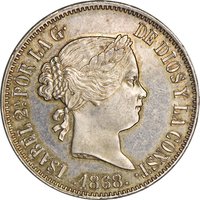
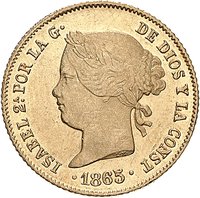
Isabella II laureate head right.
Inscription:
ISABEL 2ª POR LA G. DE DIOS Y LA CONST ·
L.M.
.1868.
L.M.
.1868.
Translation:
Isabel 2nd by the Grace of God and the Constitution
L.M.
.1868.
L.M.
.1868.
Script: Latin
Language: Spanish
Engraver: Luis Marchionni y Hombrón
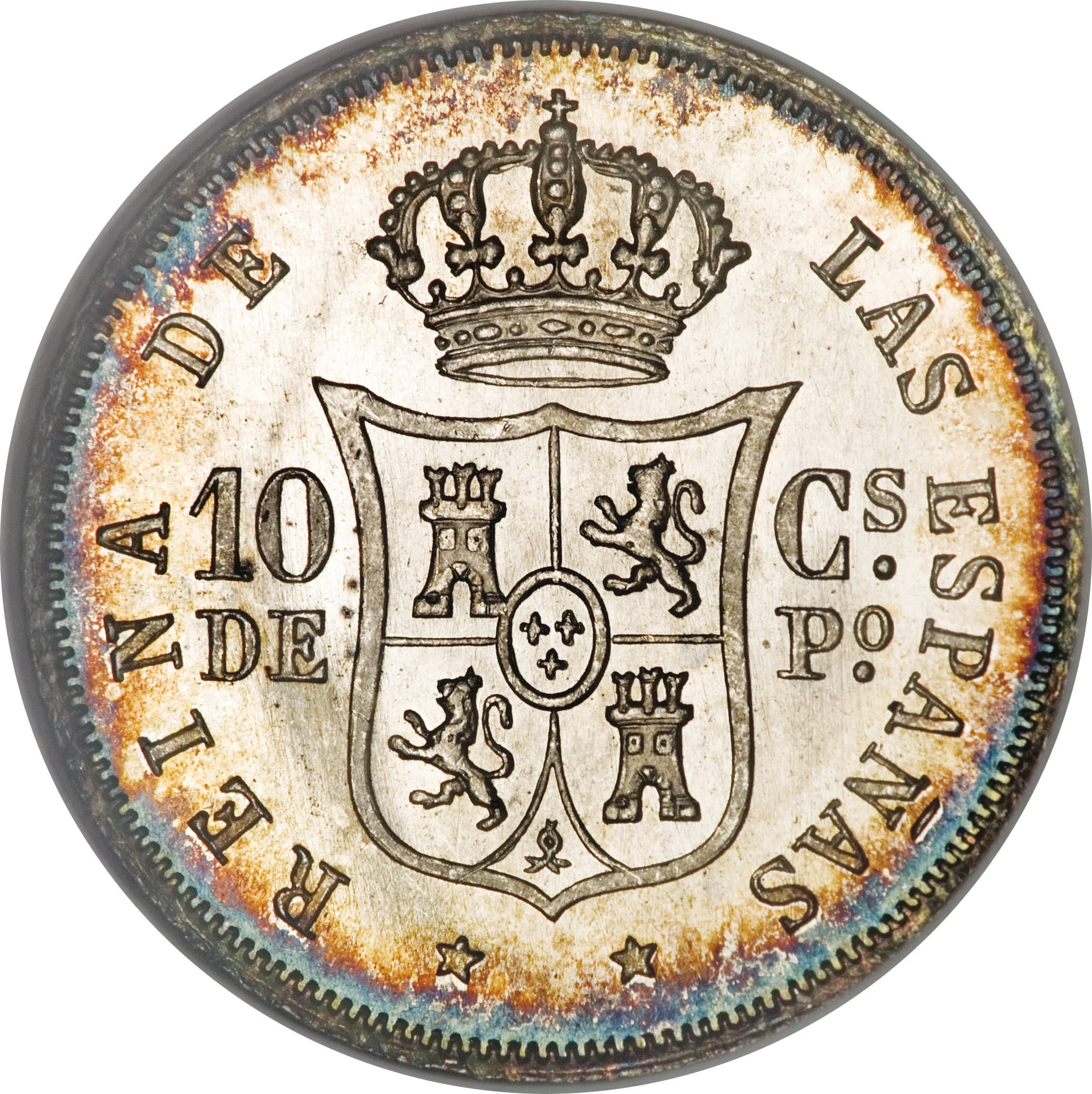
Reverse
Edge
Reeded
Categories
| Person> Monarch |
| Symbols> Coat of Arms |
Mints
| Name | Mark |
|---|---|
| Manila | — |
Mintings
| Year | Mint Mark | Mintage | Quality | Collection |
|---|---|---|---|---|
| 1864 | — | 4,586 | ||
| 1865 | — | 82,000 | ||
| 1866 | — | 39,000 | ||
| 1867 | — | 124,000 | ||
| 1868 | — | 139,000 |
Historical background
In 1864, the currency situation in the Philippines was a complex and strained system under Spanish colonial rule. The official monetary system was theoretically based on the Spanish peso, divisible into 8 reales (silver coins often called "peso fuertes"). However, the reality was one of severe scarcity of official coinage. This shortage was chronic, caused by the colony's trade imbalance, where more silver flowed out to pay for imports (particularly from China and other Asian ports) than flowed in from Spanish subsidies or Mexican mint production. Consequently, everyday commerce was heavily reliant on a chaotic mix of low-quality fractional coins from other Spanish colonies, worn and clipped coins, and even counterfeits, leading to widespread confusion and loss of value in transactions.
To fill the void, a vast array of alternative currencies circulated unofficially but indispensably. The most important of these were the pesos fuertes banknotes, first issued by the El Banco Español Filipino de Isabel II (now Bank of the Philippine Islands) from 1852. While these were a pioneering step in Asian banking, public trust in paper money was limited, and their acceptance was largely confined to Manila and major trade centers. In provincial areas, barter persisted, and more notably, Mexican and Peruvian silver dollars, along with other foreign coins, were commonly used, valued by their intrinsic silver weight rather than any proclaimed face value. This created a de facto bimetallic system where the value of money was often negotiated.
The year 1864 itself was a point of mounting pressure within this fragile system. The colonial government, recognizing the disorder, was actively seeking solutions. It was a period just prior to significant monetary reforms, notably the royal decree of 1868 that would demonetize many foreign coins. The inherent instability of the currency stifled economic growth, complicated government finance, and frustrated both local and foreign merchants. Thus, the situation in 1864 was characterized by an official system in decay, a thriving unofficial multi-currency environment, and a growing colonial impetus to impose order and assert greater control over the monetary supply, setting the stage for the reforms that would follow.
To fill the void, a vast array of alternative currencies circulated unofficially but indispensably. The most important of these were the pesos fuertes banknotes, first issued by the El Banco Español Filipino de Isabel II (now Bank of the Philippine Islands) from 1852. While these were a pioneering step in Asian banking, public trust in paper money was limited, and their acceptance was largely confined to Manila and major trade centers. In provincial areas, barter persisted, and more notably, Mexican and Peruvian silver dollars, along with other foreign coins, were commonly used, valued by their intrinsic silver weight rather than any proclaimed face value. This created a de facto bimetallic system where the value of money was often negotiated.
The year 1864 itself was a point of mounting pressure within this fragile system. The colonial government, recognizing the disorder, was actively seeking solutions. It was a period just prior to significant monetary reforms, notably the royal decree of 1868 that would demonetize many foreign coins. The inherent instability of the currency stifled economic growth, complicated government finance, and frustrated both local and foreign merchants. Thus, the situation in 1864 was characterized by an official system in decay, a thriving unofficial multi-currency environment, and a growing colonial impetus to impose order and assert greater control over the monetary supply, setting the stage for the reforms that would follow.
🌟 Limited