

50 centavos – Philippines
Add to wishlist
Philippines
Context
Years: 1865–1868
Issuer: Philippines
Ruler: Isabella II
Currency:
(1857—1967)
Demonetized: Yes
Total mintage: 518,312
Material
References
KM: #
Numista: #21139
Value
Bullion value: $28.92
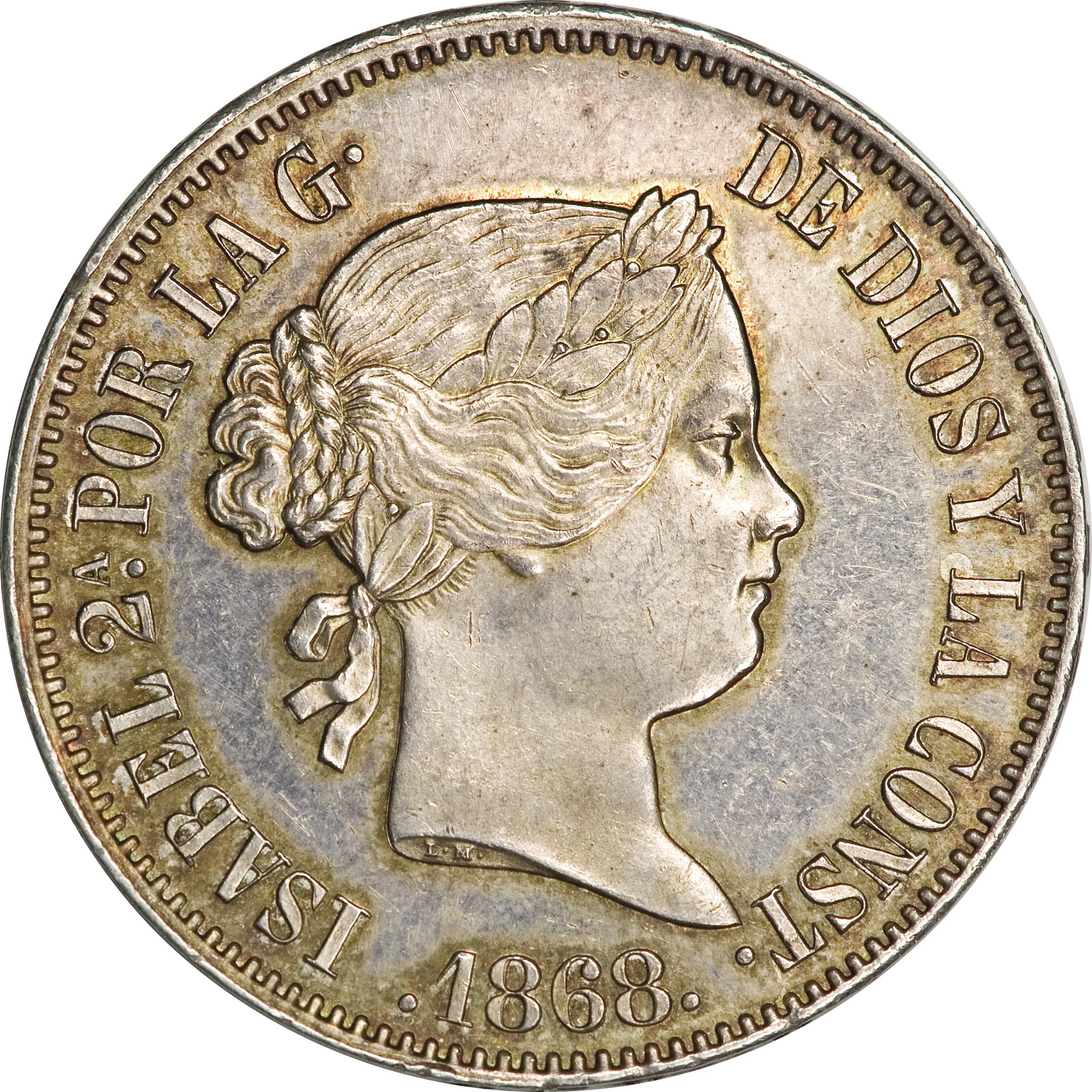
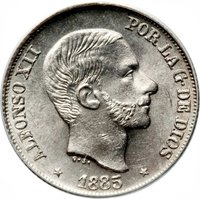
Obverse
Description:
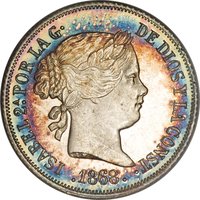
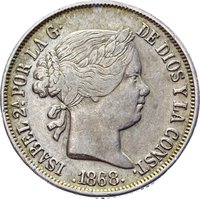
Isabella II laureate head right.
Inscription:
ISABEL 2ª POR LA G. DE DIOS Y LA CONST ·
L.M.
.1868.
L.M.
.1868.
Translation:
Isabel 2nd by the Grace of God and the Constitution
L.M.
.1868.
L.M.
.1868.
Script: Latin
Language: Spanish
Engraver: Luis Marchionni y Hombrón
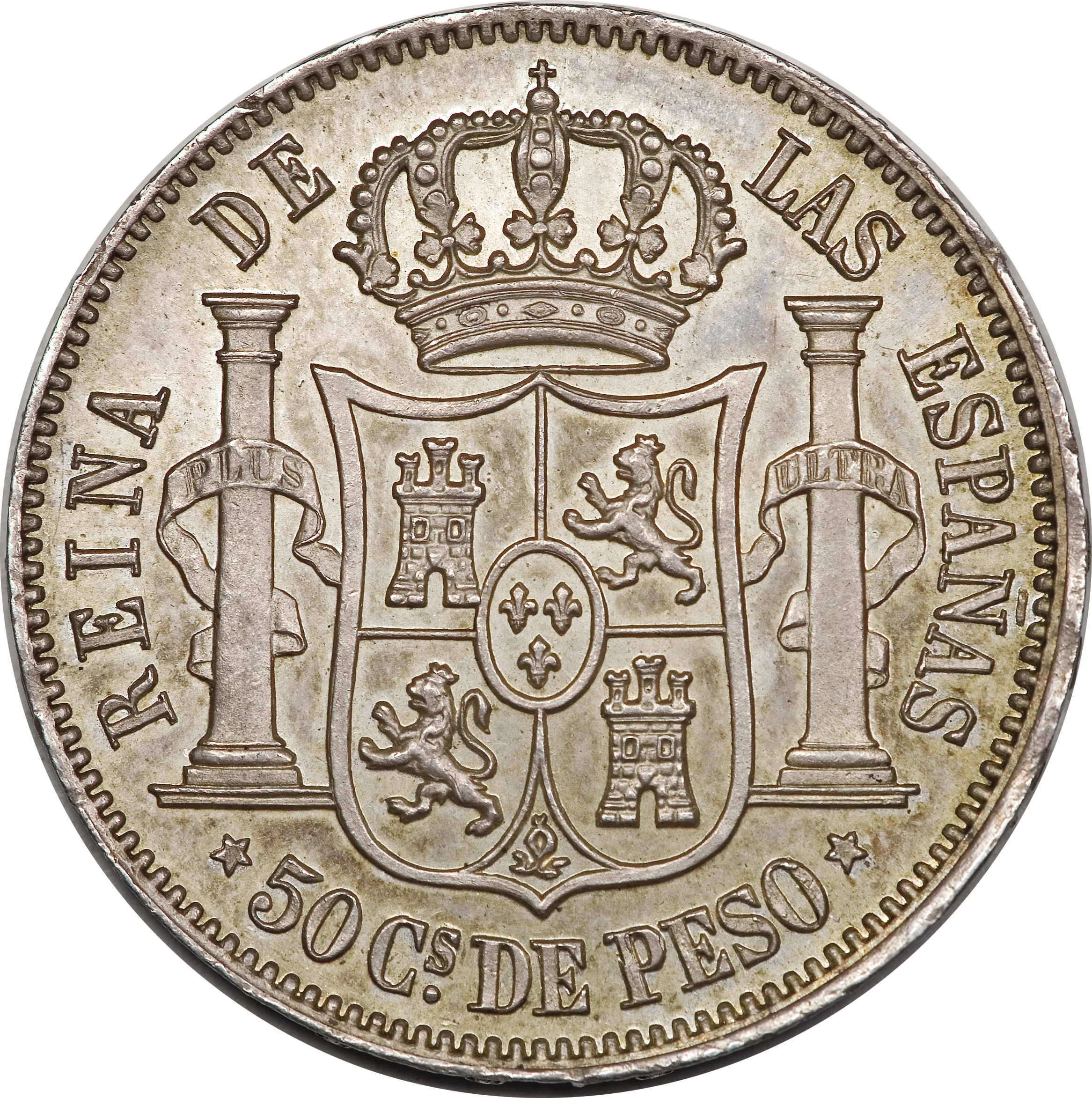
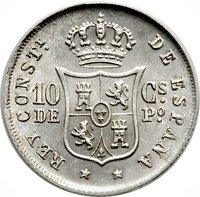
Reverse
Description:
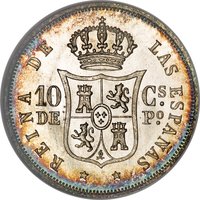
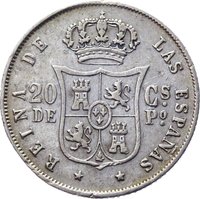
Spanish coat of arms.
Inscription:
REINA DE LAS ESPAÑA
50 Cs DE PESO
PLUS ULTRA
50 Cs DE PESO
PLUS ULTRA
Translation:
Queen of the Spains
50 Centimos of Peso
Further Beyond
50 Centimos of Peso
Further Beyond
Script: Latin
Language: Spanish
Engraver: Luis Marchionni y Hombrón
Edge
Categories
| Person> Monarch |
| Symbols> Coat of Arms |
Mints
| Name | Mark |
|---|---|
| Manila | — |
Mintings
| Year | Mint Mark | Mintage | Quality | Collection |
|---|---|---|---|---|
| 1865 | — | 81,000 | ||
| 1866 | — | 7,442 | ||
| 1867 | — | 6,870 | ||
| 1868 | — | 423,000 |
Historical background
In 1865, the Philippines operated under a complex and strained monetary system, a legacy of Spanish colonial rule. The official currency was the Spanish-Filipino peso (or "peso fuerte"), a silver coin theoretically on a bimetallic standard tied to both gold and silver. However, the reality was a chaotic mix of circulating coins. These included not only Spanish and Mexican silver pesos but also smaller subsidiary coins like reales and cuartos, alongside limited gold coins. A significant problem was the widespread circulation of worn, clipped, and counterfeit coins, which eroded public trust and complicated commerce. Furthermore, the Manila mint, which had opened in 1857, struggled with inconsistent output, failing to produce enough high-quality coinage to meet the demands of the growing economy.
This fragmented system existed alongside a severe shortage of small-change currency, which crippled daily transactions in markets. To fill this void, a unique and unregulated practice flourished: the issuance of private currency known as pesos fuertes. These were promissory notes printed by major merchant houses and religious orders (like the Obras Pías), accepted on the credibility of the issuer. While providing necessary liquidity, this practice underscored the state's inability to control the money supply and introduced risk, as the notes' value was only as sound as the issuing entity. The economy was also increasingly exposed to global silver price fluctuations, which would later trigger a major crisis.
Thus, the monetary background of 1865 was one of transition and tension. The colonial government recognized the system's flaws, but reforms were slow. The year fell within a period of growing pressure to modernize the currency, which would eventually lead to the establishment of the Banco Español-Filipino de Isabel II (later Bank of the Philippine Islands) as the first bank with note-issuing authority in 1852, though its impact was still limited. The situation set the stage for more decisive actions in the coming decades, including the adoption of the gold standard and the creation of a unified national currency, but in 1865, the Philippines grappled with an unreliable, multi-sourced, and inefficient monetary environment.
This fragmented system existed alongside a severe shortage of small-change currency, which crippled daily transactions in markets. To fill this void, a unique and unregulated practice flourished: the issuance of private currency known as pesos fuertes. These were promissory notes printed by major merchant houses and religious orders (like the Obras Pías), accepted on the credibility of the issuer. While providing necessary liquidity, this practice underscored the state's inability to control the money supply and introduced risk, as the notes' value was only as sound as the issuing entity. The economy was also increasingly exposed to global silver price fluctuations, which would later trigger a major crisis.
Thus, the monetary background of 1865 was one of transition and tension. The colonial government recognized the system's flaws, but reforms were slow. The year fell within a period of growing pressure to modernize the currency, which would eventually lead to the establishment of the Banco Español-Filipino de Isabel II (later Bank of the Philippine Islands) as the first bank with note-issuing authority in 1852, though its impact was still limited. The situation set the stage for more decisive actions in the coming decades, including the adoption of the gold standard and the creation of a unified national currency, but in 1865, the Philippines grappled with an unreliable, multi-sourced, and inefficient monetary environment.
🌟 Uncommon