

1 cent – British Honduras
Add to wishlist
Belize
Context
Years: 1949–1951
Country: Belize
Issuer: British Honduras
Ruler: George VI
Currency:
(1885—1973)
Total mintage: 300,000
Material
References
KM: #
Numista: #19839
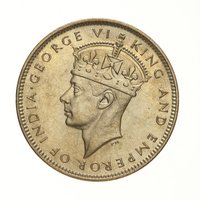
Obverse
Description:
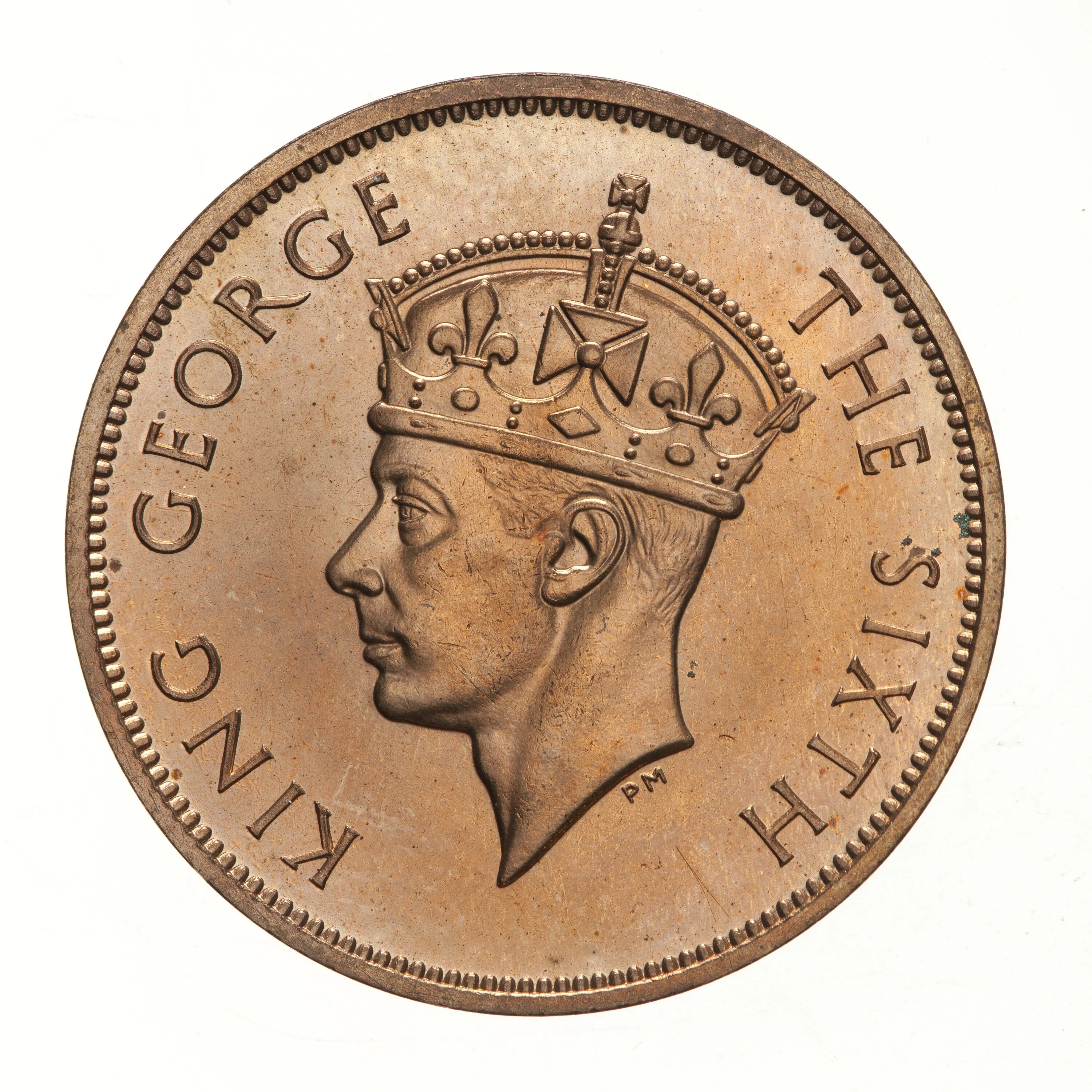
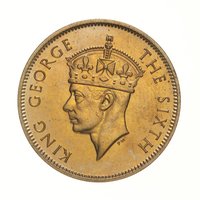
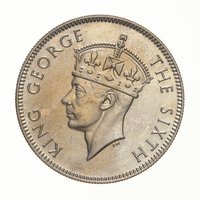
King George VI facing left.
Inscription:
KING GEORGE THE SIXTH
PM
PM
Translation:
KING GEORGE THE SIXTH
BY THE GRACE OF GOD, KING OF ALL THE BRITISH DOMINIONS, DEFENDER OF THE FAITH, EMPEROR OF INDIA
BY THE GRACE OF GOD, KING OF ALL THE BRITISH DOMINIONS, DEFENDER OF THE FAITH, EMPEROR OF INDIA
Script: Latin
Language: English
Engraver: Percy Metcalfe
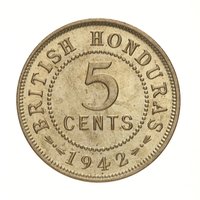
Reverse
Description:
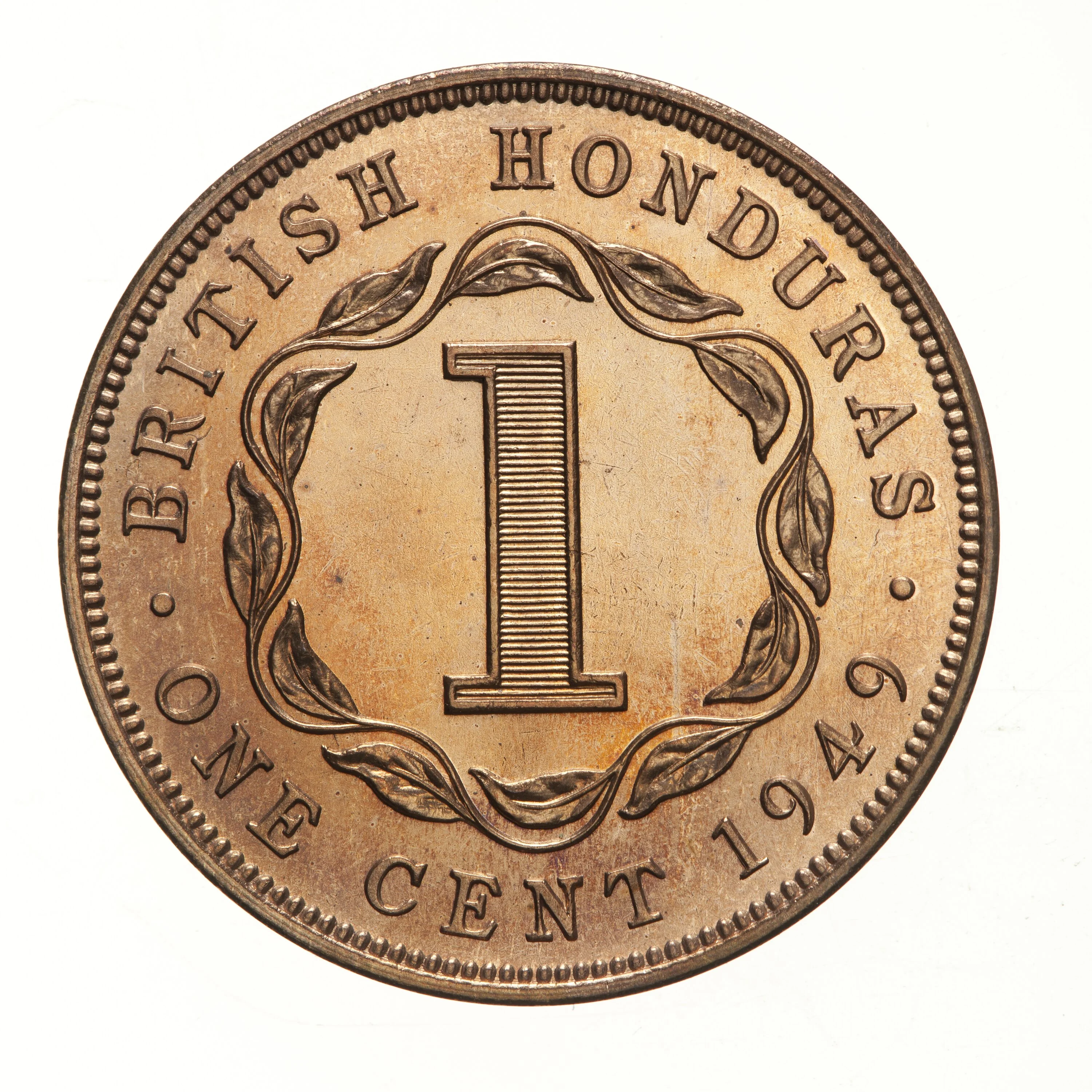
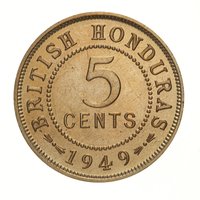
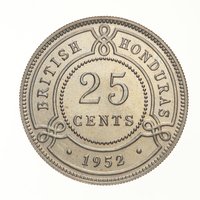
Scalloped circle with value, denomination and date below.
Inscription:
BRITISH HONDURAS
1
· ONE CENT 1949 ·
1
· ONE CENT 1949 ·
Script: Latin
Edge
Mints
| Name | Mark |
|---|---|
| Royal Mint (Tower Hill) | — |
Mintings
| Year | Mint Mark | Mintage | Quality | Collection |
|---|---|---|---|---|
| 1949 | — | 100,000 | ||
| 1949 | — | — | Proof | |
| 1950 | — | 100,000 | ||
| 1950 | — | — | Proof | |
| 1951 | — | 100,000 | ||
| 1951 | — | — | Proof |
Historical background
In 1949, the currency situation in British Honduras (modern-day Belize) was defined by its longstanding and somewhat anomalous peg to the British pound sterling, set at a fixed rate of 4 shillings 2 pence to one British Honduran dollar (BZ$). This meant the local dollar was worth exactly half a pound sterling (BZ$4 = £1). The currency itself was issued by the British Honduras Currency Board, established in 1894, which operated on a strict "currency board" principle. This required that every dollar in local circulation be fully backed by sterling reserves held in London, ensuring high confidence and convertibility but also directly tethering the colony's money supply and economic policy to the United Kingdom.
This system came under significant indirect pressure in 1949 due to the United Kingdom's own severe financial crisis. In September of that year, the British government devalued the pound sterling by 30.5% against the US dollar, from US$4.03 to US$2.80. As a sterling-area territory with a rigid peg, British Honduras was compelled to follow suit, automatically devaluing its dollar against the US dollar by the same magnitude. This had immediate and profound consequences for the colony, which conducted a large portion of its trade—especially for vital imports like food and manufactured goods—with the United States and its non-sterling neighbour, Mexico. The devaluation made those imports substantially more expensive, exacerbating post-war inflation and increasing the cost of living for the population.
Consequently, 1949 became a pivotal year that exposed the drawbacks of the automatic sterling peg for the local economy. The forced devaluation sparked widespread public discontent and led to serious political repercussions, most notably the galvanization of the independence movement. The event crystallized arguments for greater economic autonomy and was a direct catalyst for the formation of the People's Committee (later the People's United Party), which championed the cause of "Devaluation of the Dollar, Devaluation of the Government." Thus, the 1949 currency situation transcended finance, becoming a key grievance that fueled the political struggle for self-government and eventual independence.
This system came under significant indirect pressure in 1949 due to the United Kingdom's own severe financial crisis. In September of that year, the British government devalued the pound sterling by 30.5% against the US dollar, from US$4.03 to US$2.80. As a sterling-area territory with a rigid peg, British Honduras was compelled to follow suit, automatically devaluing its dollar against the US dollar by the same magnitude. This had immediate and profound consequences for the colony, which conducted a large portion of its trade—especially for vital imports like food and manufactured goods—with the United States and its non-sterling neighbour, Mexico. The devaluation made those imports substantially more expensive, exacerbating post-war inflation and increasing the cost of living for the population.
Consequently, 1949 became a pivotal year that exposed the drawbacks of the automatic sterling peg for the local economy. The forced devaluation sparked widespread public discontent and led to serious political repercussions, most notably the galvanization of the independence movement. The event crystallized arguments for greater economic autonomy and was a direct catalyst for the formation of the People's Committee (later the People's United Party), which championed the cause of "Devaluation of the Dollar, Devaluation of the Government." Thus, the 1949 currency situation transcended finance, becoming a key grievance that fueled the political struggle for self-government and eventual independence.
🌱 Fairly Common