

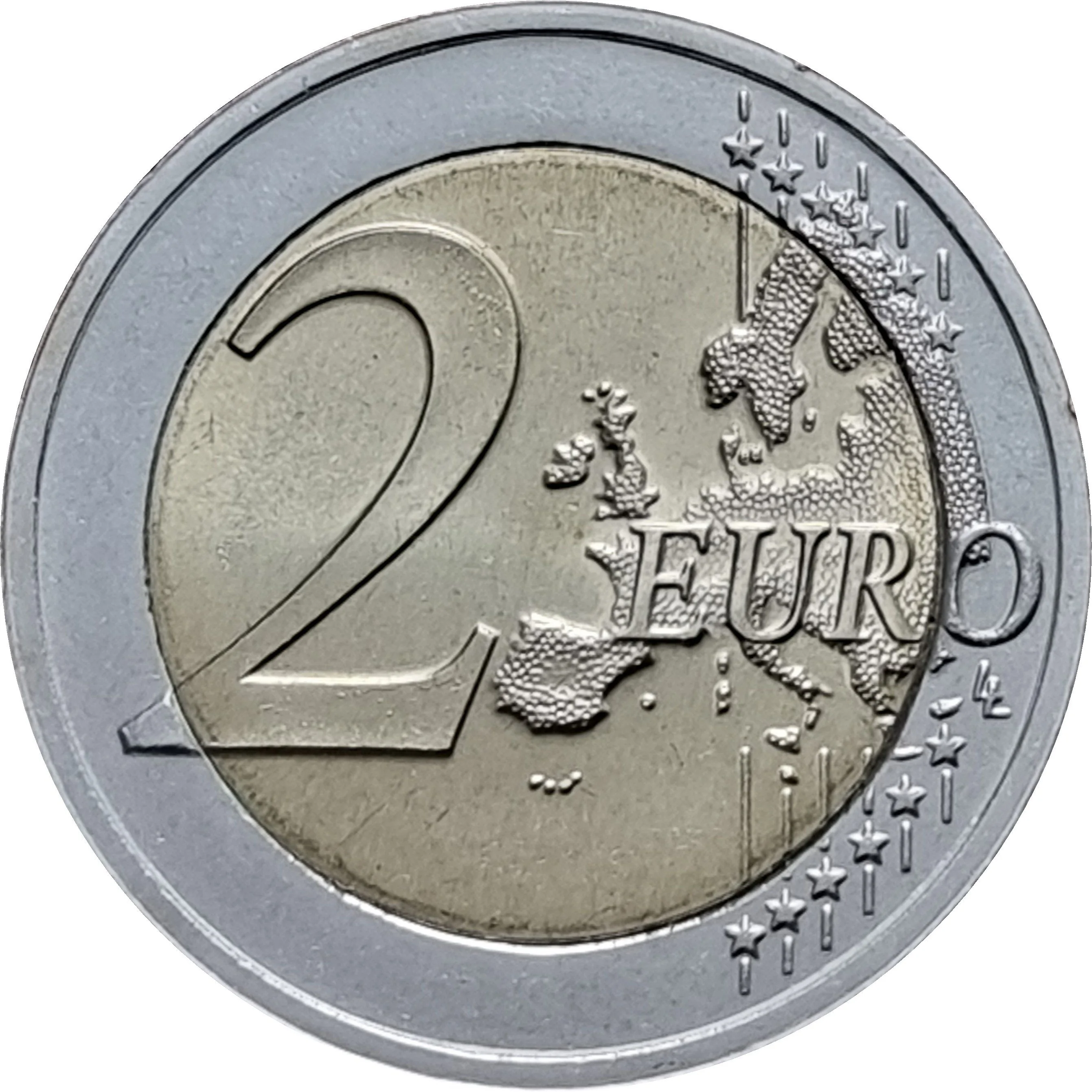
2 euro (founding of the Estonian language University of Tartu) – Estonia
Add to wishlist
Circulating commemorative coins
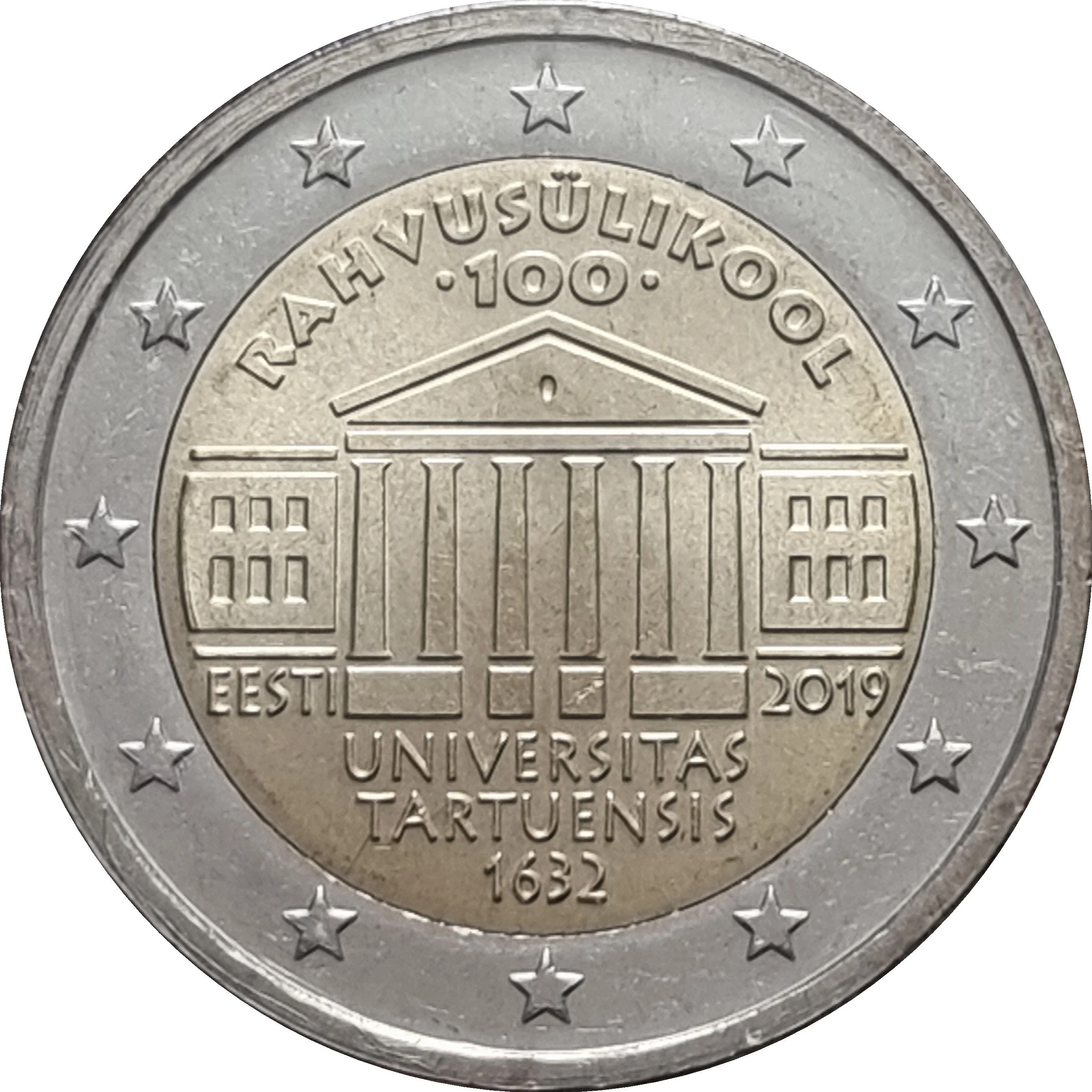
Commemoration: 100th anniversary of the founding of the Estonian language University of Tartu
Estonia
Obverse
Description:
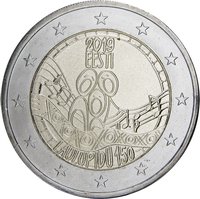
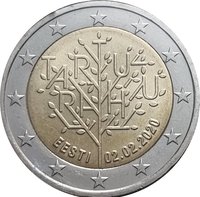
The center features the main building of Tartu University with the inscriptions 'RAHVUSÜLIKOOL 100', 'UNIVERSITAS TARTUENSIS', '1632', 'EESTI', and the issue date. The outer ring bears the 12 stars of the European flag.
Inscription:
RAHVUSÜLIKOOL
100
EESTI 2019
UNIVERSITAS
TARTUENSIS
1632
100
EESTI 2019
UNIVERSITAS
TARTUENSIS
1632
Translation:
National University
100
Estonia 2019
University
of Tartu
1632
100
Estonia 2019
University
of Tartu
1632
Script: Latin
Engraver: Indrek Ilves
Reverse
Edge
"O" and "EESTI" repeated alternately upright and inverted.
Legend:
EESTI O EESTI O
Translation:
O Estonia, O Estonia
Language: Estonian
Mintings
| Year | Mint Mark | Mintage | Quality | Collection |
|---|---|---|---|---|
| 2019 | — | 992,500 | ||
| 2019 | — | 7,500 | BU |
Historical background
In 2019, Estonia was a stable and fully integrated member of the Eurozone, having adopted the euro as its official currency on 1 January 2011. The transition from the Estonian kroon, which had been pegged to the euro (and previously the Deutsche Mark) for decades, was considered a major success story of economic convergence. By 2019, the euro was firmly established in everyday life, with strong public support and no serious political movements advocating for a return to a national currency. This stability provided Estonia with the benefits of a major international currency, including lower transaction costs, eliminated exchange rate risk, and deeper financial integration with the European single market.
The broader economic context in 2019 was one of moderate growth but growing concerns about competitiveness. Estonia's economy was slowing from the rapid pace of previous years, with GDP growth projected at around 3.6% for the year, down from over 4% in 2018. A key domestic challenge was high inflation, which consistently exceeded the Eurozone average, driven largely by rising labor costs in a tight job market rather than currency dynamics. This "inflation divergence" within the Eurozone meant that Estonia, while using the same currency as core countries like Germany, was experiencing different domestic price pressures, leading to a gradual loss of cost competitiveness.
Furthermore, 2019 fell within a period of ongoing European monetary policy debate that directly impacted Estonia. The European Central Bank (ECB) maintained its ultra-loose monetary policy, including negative interest rates, to stimulate the larger Eurozone economies still recovering from the sovereign debt crisis. For a booming, inflation-prone economy like Estonia's, this policy was often seen as overly accommodative, potentially exacerbating wage and price growth. However, as a small member without its own central bank or monetary levers, Estonia had to accept the ECB's one-size-fits-all policy, highlighting both the security and the loss of independent policy tools that came with euro membership.
The broader economic context in 2019 was one of moderate growth but growing concerns about competitiveness. Estonia's economy was slowing from the rapid pace of previous years, with GDP growth projected at around 3.6% for the year, down from over 4% in 2018. A key domestic challenge was high inflation, which consistently exceeded the Eurozone average, driven largely by rising labor costs in a tight job market rather than currency dynamics. This "inflation divergence" within the Eurozone meant that Estonia, while using the same currency as core countries like Germany, was experiencing different domestic price pressures, leading to a gradual loss of cost competitiveness.
Furthermore, 2019 fell within a period of ongoing European monetary policy debate that directly impacted Estonia. The European Central Bank (ECB) maintained its ultra-loose monetary policy, including negative interest rates, to stimulate the larger Eurozone economies still recovering from the sovereign debt crisis. For a booming, inflation-prone economy like Estonia's, this policy was often seen as overly accommodative, potentially exacerbating wage and price growth. However, as a small member without its own central bank or monetary levers, Estonia had to accept the ECB's one-size-fits-all policy, highlighting both the security and the loss of independent policy tools that came with euro membership.
Series: Estonia 2 euro commemoratives

🌱 Very Common