

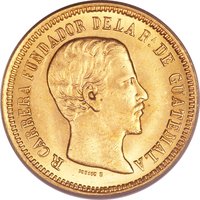
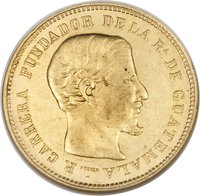
Obverse
Description:
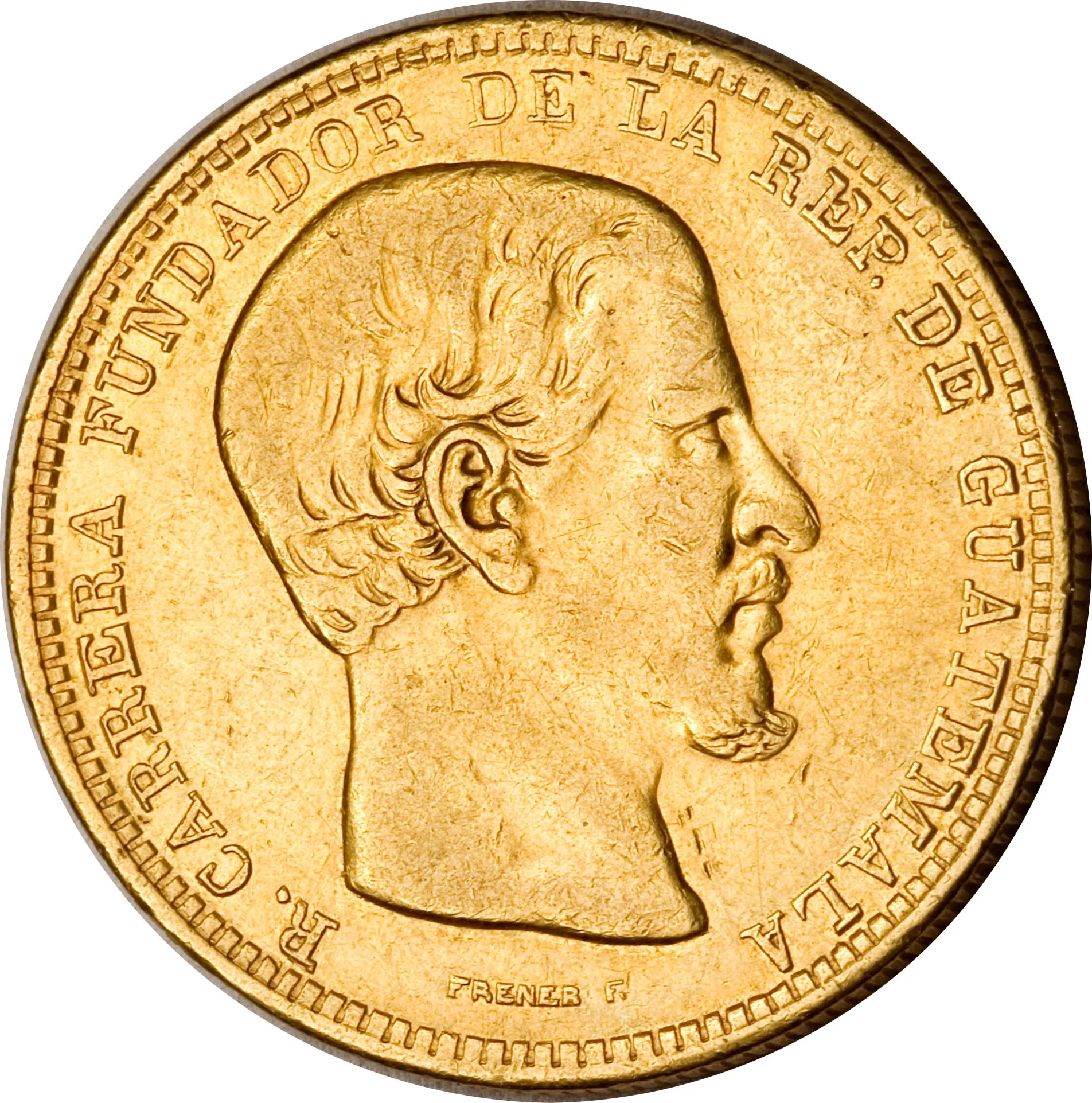
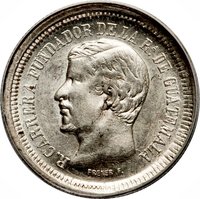
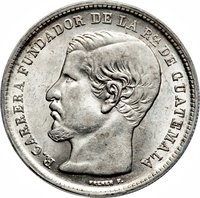
Bust right, legend around, engraver's name at base.
Inscription:
R. CARRERA FUNDADOR DE LA REP. DE GUATEMALA
FRENER F
FRENER F
Translation:
R. Carrera Founder of the Republic of Guatemala
Frener F
Frener F
Script: Latin
Language: Spanish
Engraver: Johann-Baptist Frener
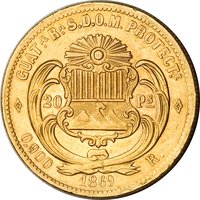
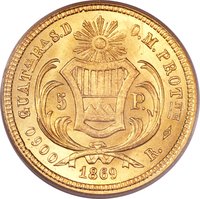
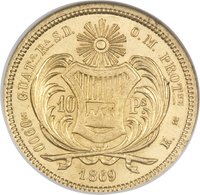
Reverse
Description:
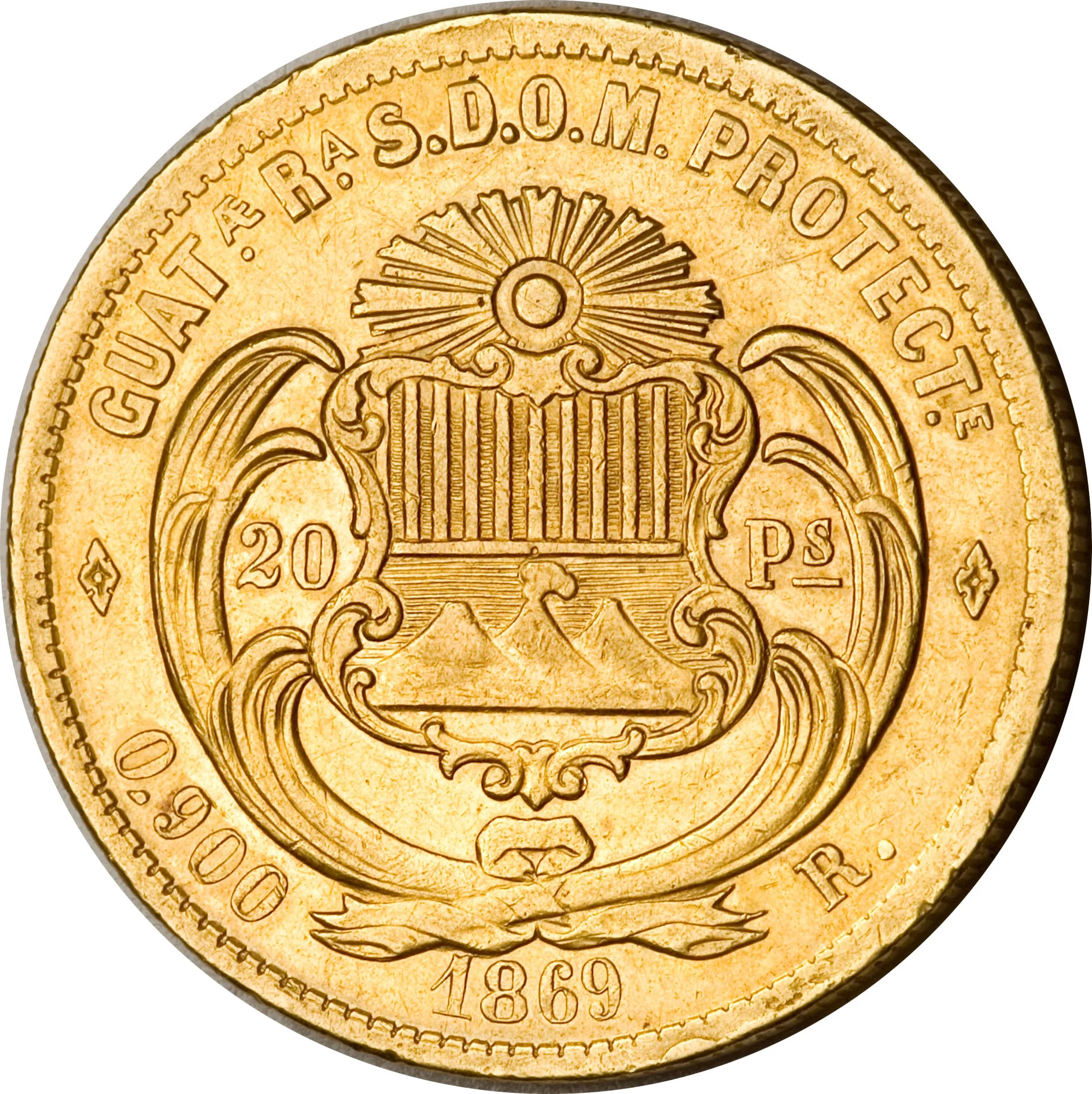
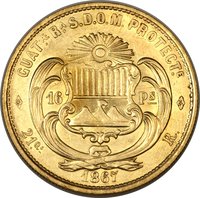
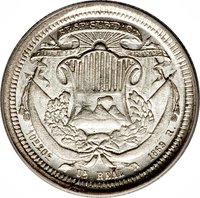
Shield divides value. Legend above. Fineness, date, and initial below.
Inscription:
GUATÆ RA S.D.O.M. PROTNE
20 Ps.
-0.900 1869 R.-
20 Ps.
-0.900 1869 R.-
Translation:
By the Grace of God, Protector of the Supreme Order of Mexico.
20 Pesos.
-0.900 1869 R.-
20 Pesos.
-0.900 1869 R.-
Script: Latin
Engraver: Johann-Baptist Frener
Edge
Reeded
Categories
| Symbols> Coat of Arms |
| Person> Politician |
Mints
| Name | Mark |
|---|---|
| Casa de Moneda de Guatemala | — |
Mintings
| Year | Mint Mark | Mintage | Quality | Collection |
|---|---|---|---|---|
| 1869 | — | 15,712 | ||
| 1870 | — | 184 |
Historical background
In 1869, Guatemala's currency situation was characterized by a period of transition and instability following the liberal reforms initiated under President Miguel García Granados. The country was moving away from the colonial monetary legacy and grappling with the practical challenges of establishing a unified national currency. The primary circulating medium still included a mix of foreign coins, particularly Spanish and Mexican silver pesos (often called "pesos fuertes" or strong pesos), alongside remnants of older Central American Republic coinage and even privately issued tokens or fichas used on coffee plantations. This heterogeneity created confusion in commerce and hindered economic integration.
The government had taken a significant step in 1865 by contracting with the British Royal Mint to produce the first modern, decimal-based Guatemalan coins, featuring the national emblem (the quetzal bird). These new coins, in denominations of pesos and centavos, began arriving in 1869 and were intended to replace the patchwork of foreign currencies. However, their introduction was gradual, and they circulated alongside the older, often more trusted, silver coins from abroad. The success of this monetary unification was also hampered by a chronic shortage of small-denomination coins (moneda menuda), which continued to disrupt daily transactions for the general population.
Furthermore, the broader economic context was one of state-building and promoting coffee exports, which required stable credit and reliable currency. The 1869 currency reforms were part of a larger liberal project to modernize the economy, attract foreign investment, and increase state authority. While the introduction of the new national coinage was a symbolic and practical move toward sovereignty, full monetary stability and public confidence in a uniform system would not be achieved until more substantive banking and financial laws were enacted in the subsequent decades under President Justo Rufino Barrios.
The government had taken a significant step in 1865 by contracting with the British Royal Mint to produce the first modern, decimal-based Guatemalan coins, featuring the national emblem (the quetzal bird). These new coins, in denominations of pesos and centavos, began arriving in 1869 and were intended to replace the patchwork of foreign currencies. However, their introduction was gradual, and they circulated alongside the older, often more trusted, silver coins from abroad. The success of this monetary unification was also hampered by a chronic shortage of small-denomination coins (moneda menuda), which continued to disrupt daily transactions for the general population.
Furthermore, the broader economic context was one of state-building and promoting coffee exports, which required stable credit and reliable currency. The 1869 currency reforms were part of a larger liberal project to modernize the economy, attract foreign investment, and increase state authority. While the introduction of the new national coinage was a symbolic and practical move toward sovereignty, full monetary stability and public confidence in a uniform system would not be achieved until more substantive banking and financial laws were enacted in the subsequent decades under President Justo Rufino Barrios.
Series: System: 1859-1870
✨ Legendary