

50 Centavos – Guatemala
Guatemala
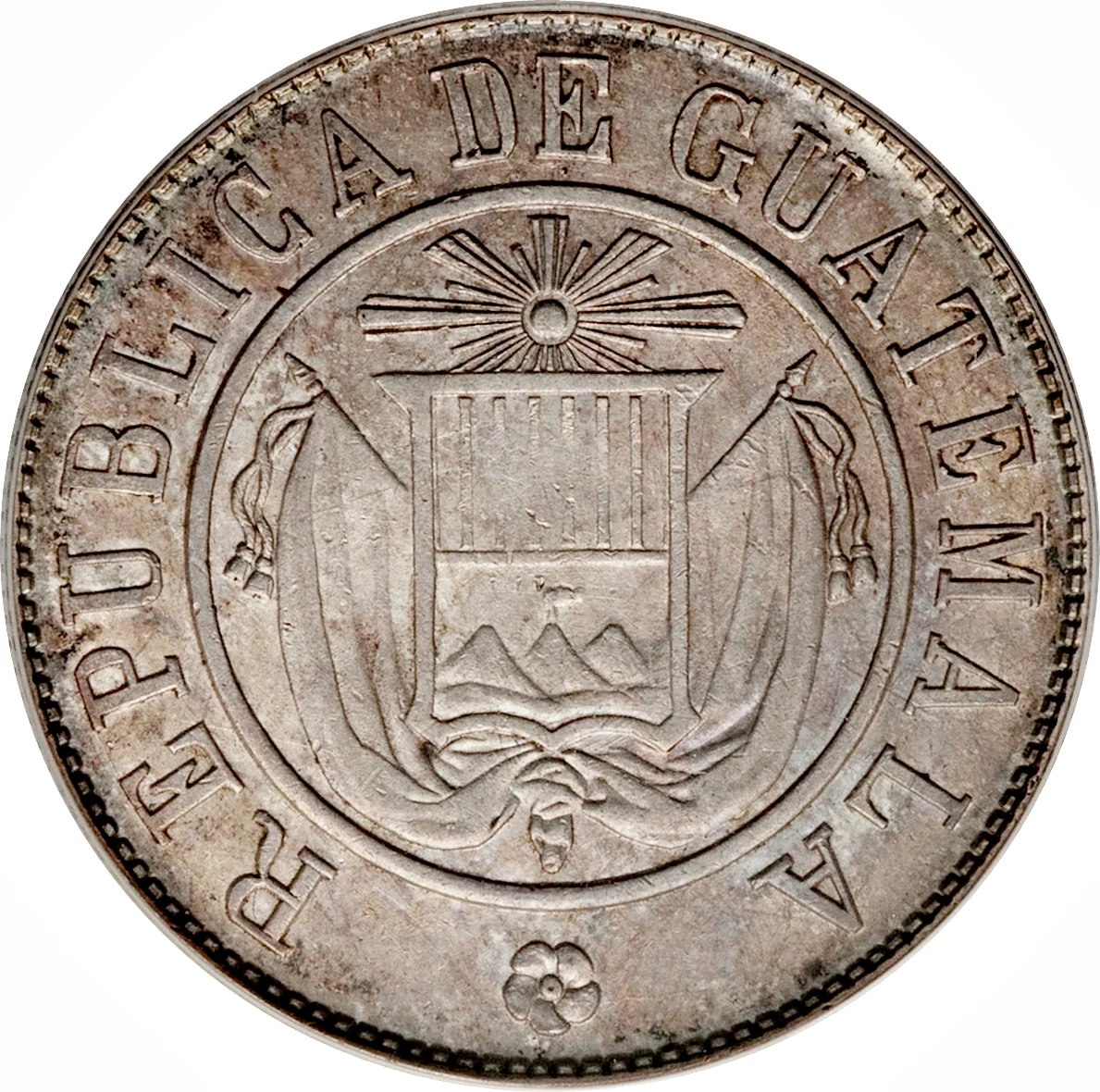
Obverse
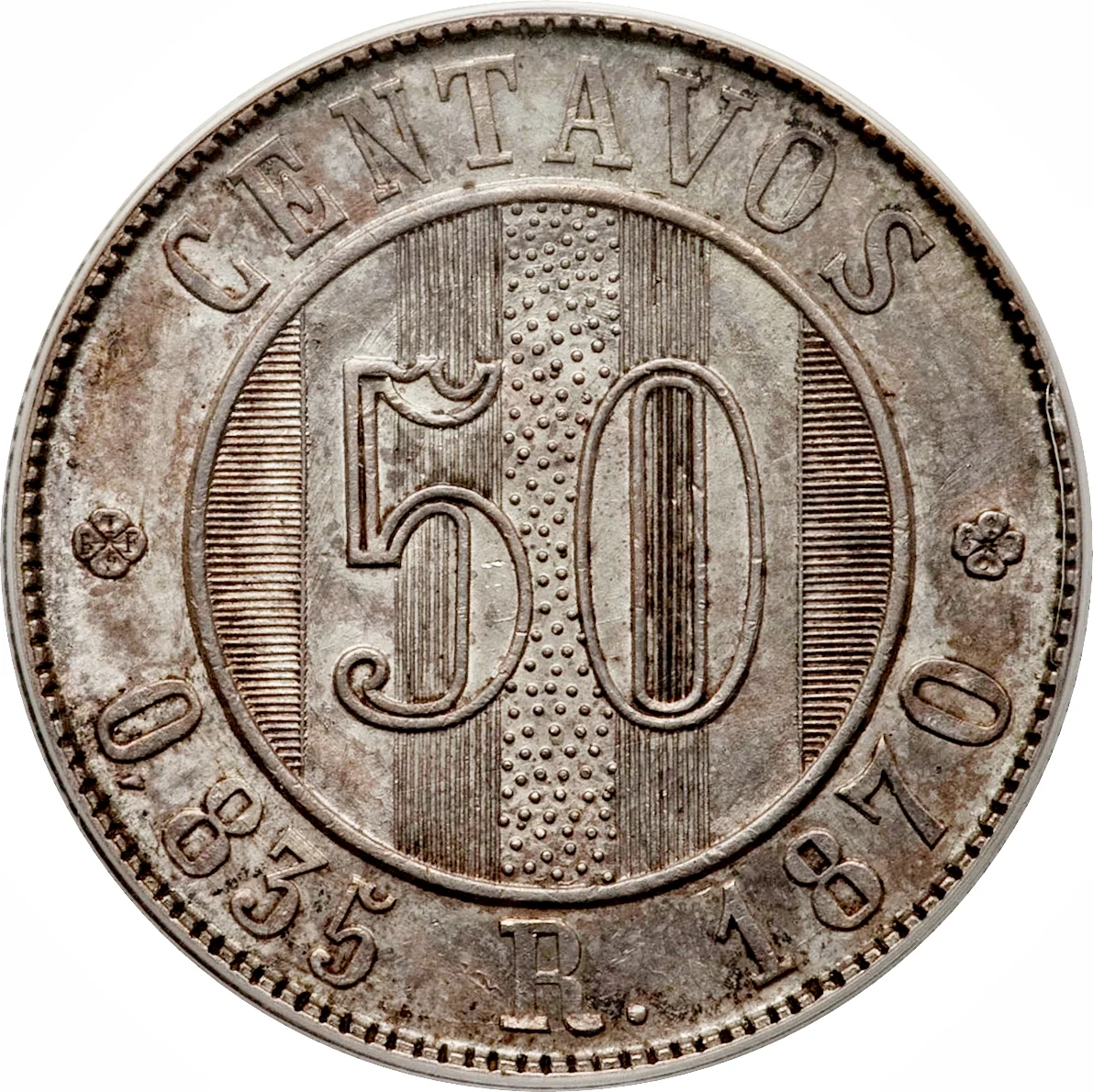
Reverse
Description:
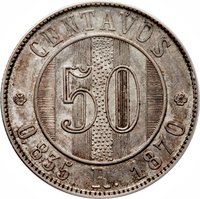
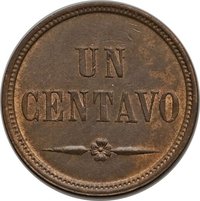
Circle with face value and unit above. Fineness and date below.
Inscription:
CENTAVOS
50
*0,835 R. 1870*
50
*0,835 R. 1870*
Script: Latin
Edge
Categories
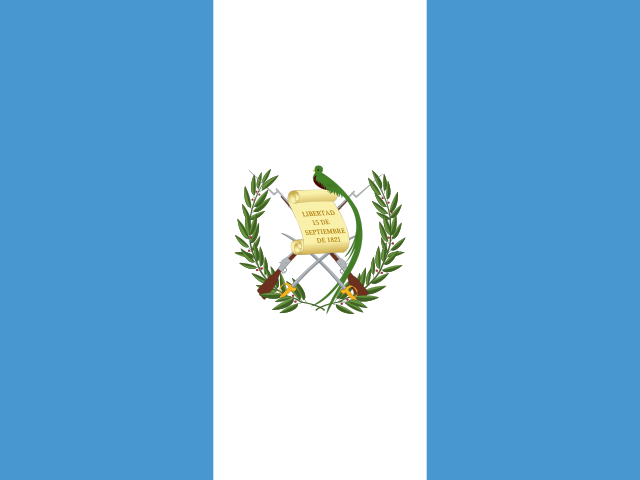
| Symbols> Coat of Arms |
Mints
| Name | Mark |
|---|---|
| Casa de Moneda de Guatemala | — |
Mintings
| Year | Mint Mark | Mintage | Quality | Collection |
|---|---|---|---|---|
| 1870 | — | 140,258 |
Historical background
In 1870, Guatemala's currency system was a complex and unstable mixture of the old Spanish colonial system and new republican coinage, operating within a predominantly agrarian economy. The official currency was the Guatemalan Peso, divided into 8 Reales, a direct inheritance from the Spanish colonial real. However, the actual circulation was a chaotic jumble of physical money. This included worn Spanish and Mexican silver coins (like pesos and reales), locally minted Guatemalan coins from the Guatemala City mint, and even foreign coins from other Central American republics and beyond. This lack of uniform, trusted specie hindered commerce and state finance.
The period was marked by chronic silver shortage and severe debasement. To address the lack of circulating currency, the government, particularly under the long conservative rule of Rafael Carrera (who died in 1865), had repeatedly authorized the minting of low-weight, low-purity silver coins known as "pesos fuertes" and "reales" with reduced silver content. This led to a disconnect between the face value and the intrinsic bullion value of the coins, causing inflation and public distrust. Merchants and the public often hoarded older, purer coins (Gresham's Law in action), further exacerbating the scarcity of reliable money.
This monetary instability occurred against a backdrop of state-building efforts under President Miguel García Granados (1871-1873), as the Liberal Revolution was about to erupt. The chaotic currency was a significant obstacle to modernizing the economy, attracting foreign investment, and increasing coffee export revenues, which were becoming the nation's economic lifeline. The situation created urgent pressure for reform, setting the stage for the sweeping monetary and banking changes that would be implemented by Granados's successor, Justo Rufino Barrios, in the coming decade as part of his Liberal reforms, including the eventual introduction of the peso backed by the gold standard.
The period was marked by chronic silver shortage and severe debasement. To address the lack of circulating currency, the government, particularly under the long conservative rule of Rafael Carrera (who died in 1865), had repeatedly authorized the minting of low-weight, low-purity silver coins known as "pesos fuertes" and "reales" with reduced silver content. This led to a disconnect between the face value and the intrinsic bullion value of the coins, causing inflation and public distrust. Merchants and the public often hoarded older, purer coins (Gresham's Law in action), further exacerbating the scarcity of reliable money.
This monetary instability occurred against a backdrop of state-building efforts under President Miguel García Granados (1871-1873), as the Liberal Revolution was about to erupt. The chaotic currency was a significant obstacle to modernizing the economy, attracting foreign investment, and increasing coffee export revenues, which were becoming the nation's economic lifeline. The situation created urgent pressure for reform, setting the stage for the sweeping monetary and banking changes that would be implemented by Granados's successor, Justo Rufino Barrios, in the coming decade as part of his Liberal reforms, including the eventual introduction of the peso backed by the gold standard.
⭐ Rare