

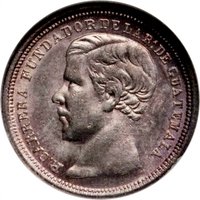
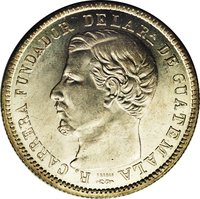
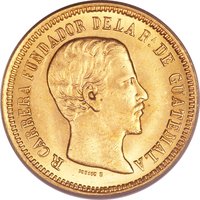
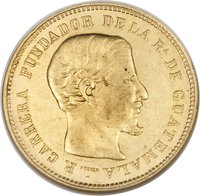
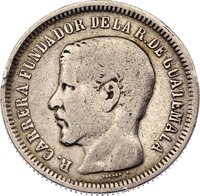
Obverse
Description:
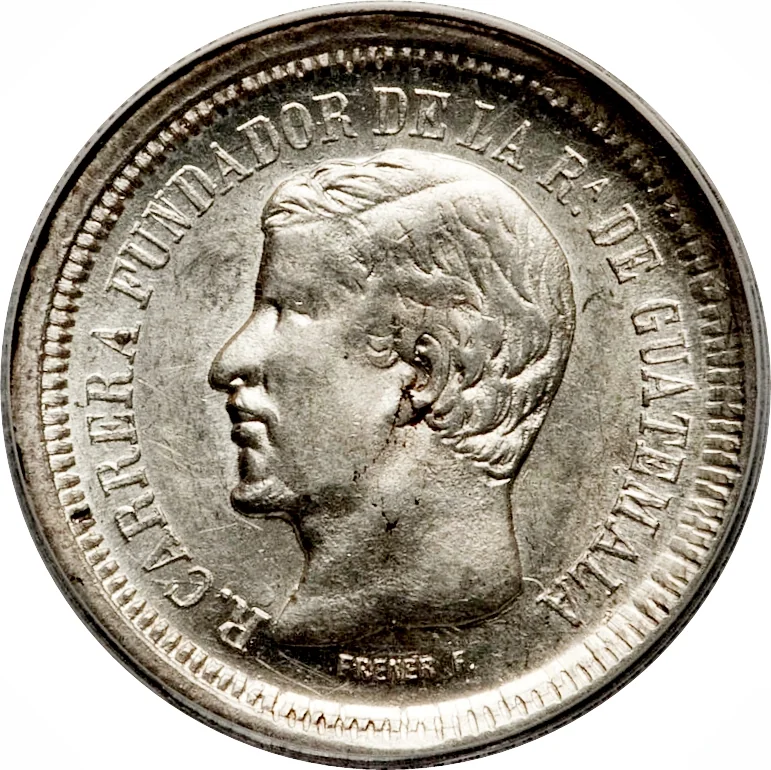
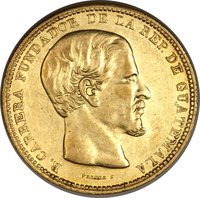
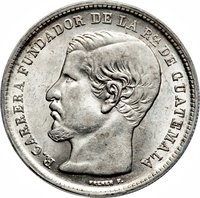
Bust left, legend around, engraver's name below neck.
Inscription:
R.CARRERA FUNDADOR DE LA R.DE GUATEMALA
FRENER F.
FRENER F.
Translation:
Founder of the Republic of Guatemala, R. Carrera
F. Freiner
F. Freiner
Script: Latin
Language: Spanish
Engraver: Johann-Baptist Frener
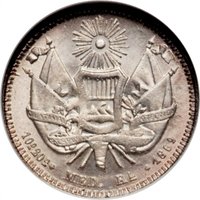
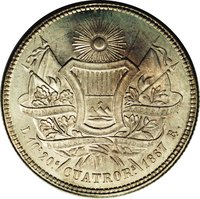
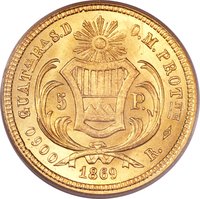
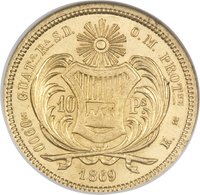
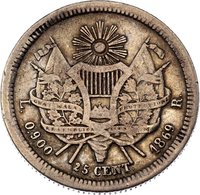
Reverse
Description:
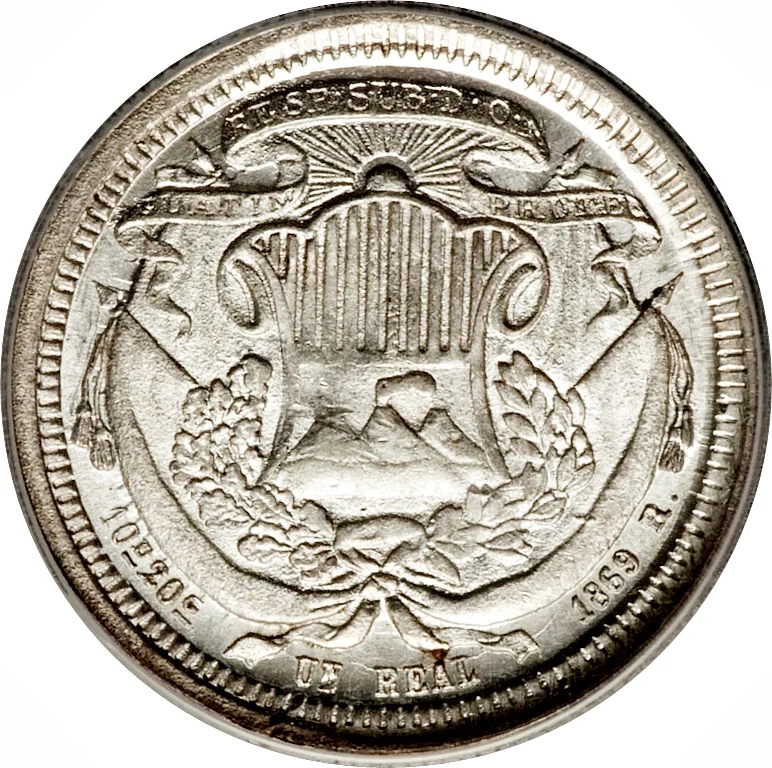
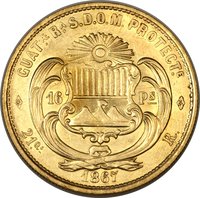
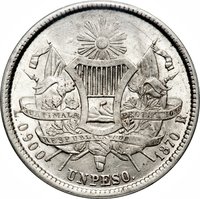
Coat of arms with fineness, value, and date below.
Inscription:
10D20G UN REAL 1869 R.
Translation:
Ten Dollars Twenty Grams. Un Real. 1869 R.
Script: Latin
Engraver: Johann-Baptist Frener
Edge
Milled
Categories
| Symbols> Coat of Arms |
| Person> Politician |
Mints
| Name | Mark |
|---|---|
| Casa de Moneda de Guatemala | — |
Mintings
| Year | Mint Mark | Mintage | Quality | Collection |
|---|---|---|---|---|
| 1868 | — | 334,755 | ||
| 1869 | — | 130,628 |
Historical background
In 1868, Guatemala's currency situation was characterized by a period of significant transition and instability, rooted in the economic policies of the Conservative regime under President Vicente Cerna. The country operated on a bimetallic system, but it was heavily reliant on the peso fuerte, a silver coin that served as the primary unit of account. However, the supply of precious metals was inconsistent, and the circulation was further complicated by the widespread use of foreign coins, particularly Peruvian and Bolivian silver, as well as coins from other Central American republics. This created a fragmented and often confusing monetary environment for commerce.
A critical factor in this era was the chronic shortage of small-denomination currency, which severely hampered everyday transactions and market efficiency. To address this, the government and private entities frequently issued token coins (fichas) and paper notes, but these were often of dubious value and limited acceptance, leading to public distrust. The Cerna administration, attempting to impose order, passed monetary laws to regulate weights and standards, but enforcement was weak. Consequently, the actual value of coins in circulation depended more on their metal content and public perception than on official decree, leading to variability and discounting.
This monetary disarray occurred against a backdrop of broader economic strain, including declining indigo exports and rising public debt. The instability in the currency system contributed to inflationary pressures and acted as a drag on economic development, fueling discontent among liberal coffee growers and merchants who desired a more modern and unified monetary system. Thus, the currency situation of 1868 was not merely a technical financial issue but a symptom of the weakening Conservative state, setting the stage for the monetary reforms that would follow the Liberal Revolution of 1871.
A critical factor in this era was the chronic shortage of small-denomination currency, which severely hampered everyday transactions and market efficiency. To address this, the government and private entities frequently issued token coins (fichas) and paper notes, but these were often of dubious value and limited acceptance, leading to public distrust. The Cerna administration, attempting to impose order, passed monetary laws to regulate weights and standards, but enforcement was weak. Consequently, the actual value of coins in circulation depended more on their metal content and public perception than on official decree, leading to variability and discounting.
This monetary disarray occurred against a backdrop of broader economic strain, including declining indigo exports and rising public debt. The instability in the currency system contributed to inflationary pressures and acted as a drag on economic development, fueling discontent among liberal coffee growers and merchants who desired a more modern and unified monetary system. Thus, the currency situation of 1868 was not merely a technical financial issue but a symptom of the weakening Conservative state, setting the stage for the monetary reforms that would follow the Liberal Revolution of 1871.
Series: System: 1859-1870
💎 Very Rare