

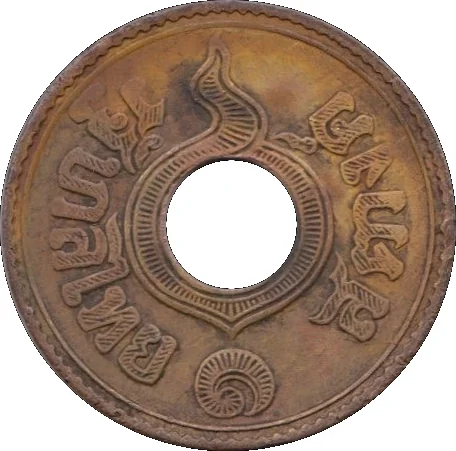
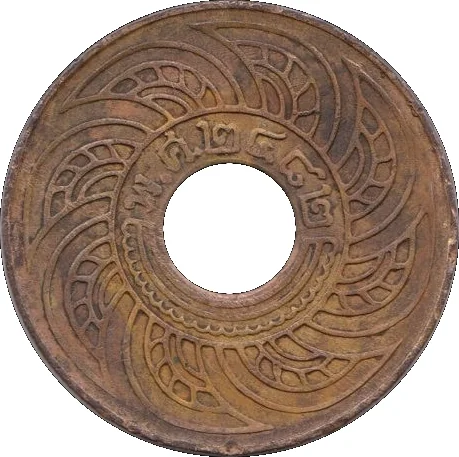
1 satang – Thailand
Add to wishlist
Thailand
Context
Year: 1939
Thai Year:: 2482
Issuer: Thailand
Ruler: Ananda Mahidol
Currency:
(since 1897)
Demonetized: Yes
Total mintage: 23,170,000
Material
Diameter: 22.4 mm
Weight: 4.75 g
Thickness: 1.8 mm
Shape: Round with a round hole
Composition: Bronze
Magnetic: No
Technique: Milled
Alignment: Coin alignment
flip
References
Y: #
Numista: #12237
Value
Exchange value: 0.01 THB
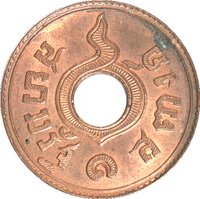
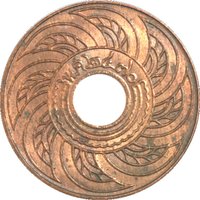
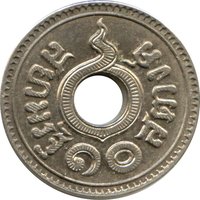
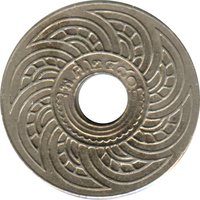
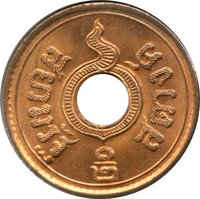
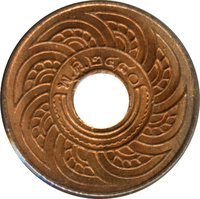
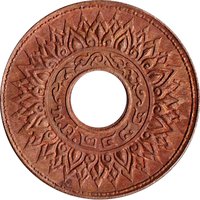
Obverse
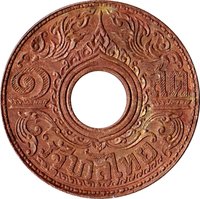
Reverse
Edge
Mintings
| Year | Mint Mark | Mintage | Quality | Collection |
|---|---|---|---|---|
| 1939 | — | 23,170,000 |
Historical background
In 1939, Thailand (then known as Siam until June of that year) operated under a managed currency system centered on the Baht, which was pegged to a fixed gold standard and, by practical extension, to the British Pound Sterling. This link to sterling, established in the early 20th century, provided stability and facilitated international trade, particularly with the British Empire, which was Thailand's dominant economic partner. The country's currency was issued by the Paper Money Division of the Royal Treasury, with the value of the Baht firmly guaranteed by substantial gold and foreign exchange reserves held in London.
The geopolitical climate of 1939, however, placed this system under growing strain. The rise of Japanese militarism in Asia and the outbreak of war in Europe created significant economic uncertainty. While the peg to sterling remained formally intact, the looming threat of global conflict raised concerns about the accessibility and security of Thailand's overseas reserves. Domestically, the nationalist government of Field Marshal Plaek Phibunsongkhram, which had just renamed the country to Thailand, was pursuing a policy of economic self-sufficiency and reducing foreign influence, which indirectly questioned the long-term reliance on a British-linked monetary standard.
Consequently, 1939 represented a precarious calm before a period of profound monetary change. The stability of the Baht was maintained, but the foundations of the system were becoming increasingly vulnerable. Within a few years, the pressures of World War II—specifically Japan's regional dominance and its forced "alliance" with Thailand—would lead to the severing of the sterling link, the occupation of British reserve assets, and a shift to a de facto yen bloc, resulting in severe inflation. Thus, the currency situation in 1939 was one of superficial stability, masking the imminent collapse of the old monetary order under the weight of impending war.
The geopolitical climate of 1939, however, placed this system under growing strain. The rise of Japanese militarism in Asia and the outbreak of war in Europe created significant economic uncertainty. While the peg to sterling remained formally intact, the looming threat of global conflict raised concerns about the accessibility and security of Thailand's overseas reserves. Domestically, the nationalist government of Field Marshal Plaek Phibunsongkhram, which had just renamed the country to Thailand, was pursuing a policy of economic self-sufficiency and reducing foreign influence, which indirectly questioned the long-term reliance on a British-linked monetary standard.
Consequently, 1939 represented a precarious calm before a period of profound monetary change. The stability of the Baht was maintained, but the foundations of the system were becoming increasingly vulnerable. Within a few years, the pressures of World War II—specifically Japan's regional dominance and its forced "alliance" with Thailand—would lead to the severing of the sterling link, the occupation of British reserve assets, and a shift to a de facto yen bloc, resulting in severe inflation. Thus, the currency situation in 1939 was one of superficial stability, masking the imminent collapse of the old monetary order under the weight of impending war.
Series: Unalom - Chakra series
🌱 Fairly Common