Logo Title
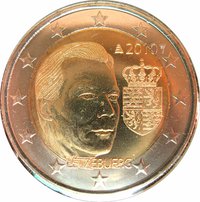
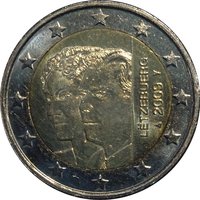
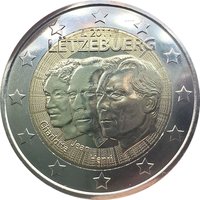
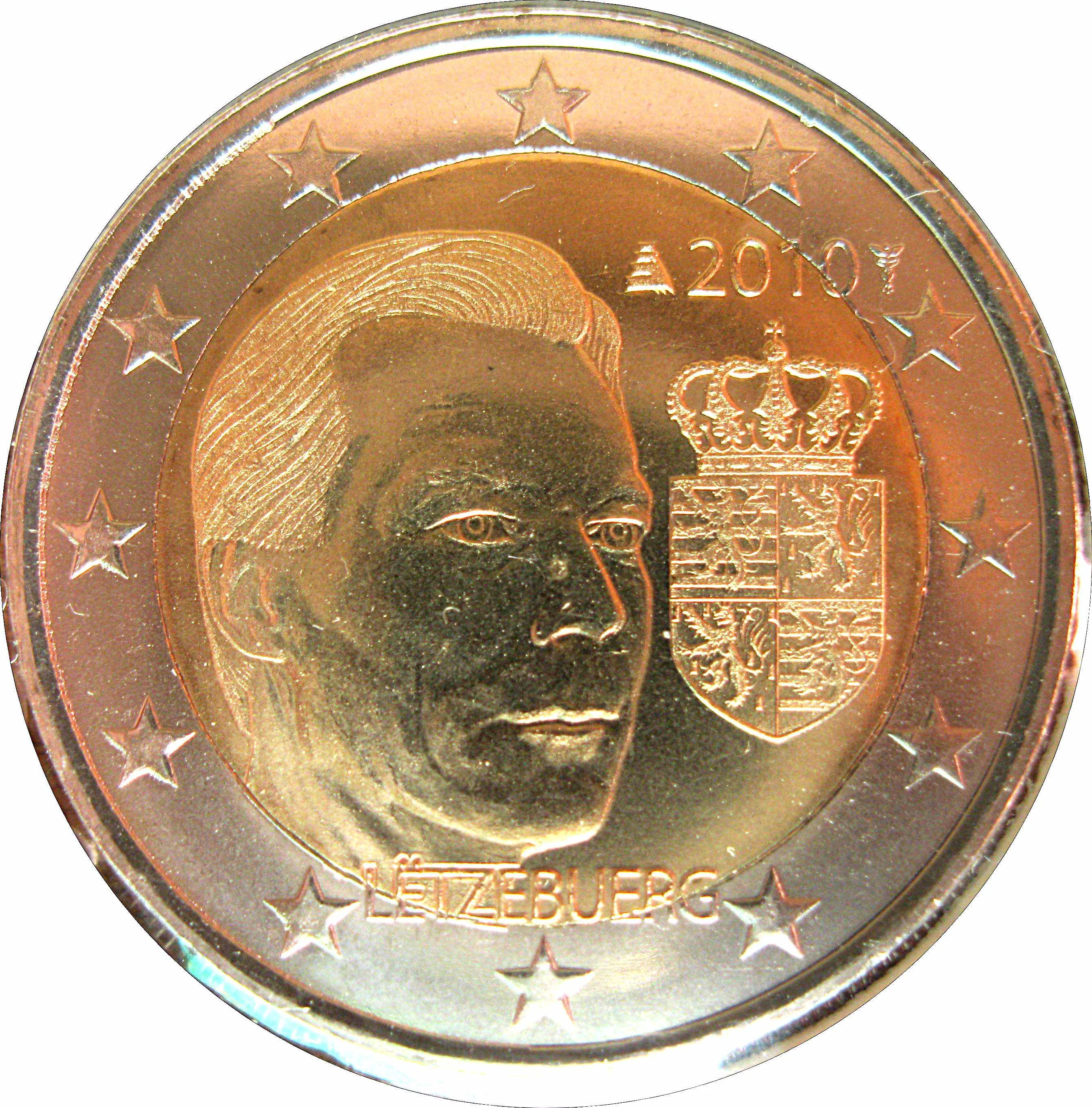
obverse
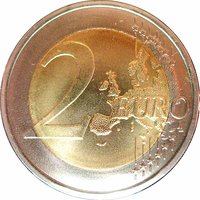
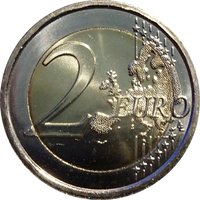
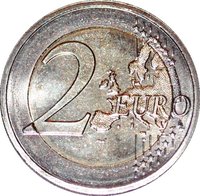
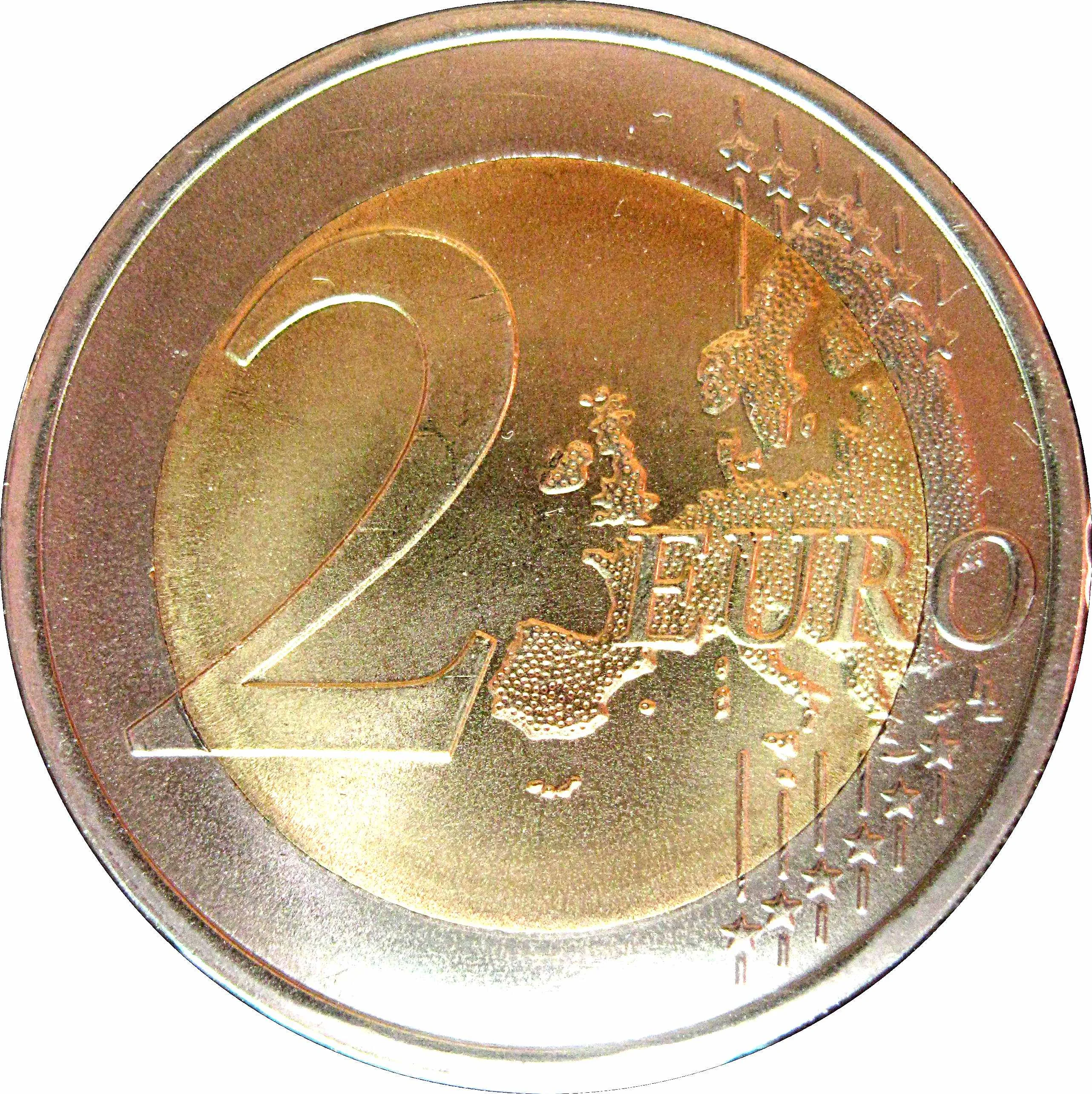
reverse
Florino28 CC BY-NC-SA

2 Euro – Grand Duchy of Luxembourg

Circulating commemorative coins
Commemoration: Duke Henri - Coat of Arms
Luxembourg
Context
Year: 2010
Country: Luxembourg Country flag
Ruler: Henry
Currency:
(since 2002)
Total mintage: 526,500
Material
Diameter: 25.75 mm
Weight: 8.5 g
Thickness: 2.2 mm
Shape: Round
Composition: Bimetallic (Nickel brass center, Copper-nickel ring)
Technique: Milled
Alignment: Medal alignment
Obverse
OBVERSE ↑
flip
Reverse
REVERSE ↑
References
KM: #Click to copy to clipboard115
Numista: #10115
Value
Exchange value: 2 EUR = $2.36
Inflation-adjusted value: 2.82 EUR

Obverse

Description:
The inner part shows Grand Duke Henri facing right, adjacent to his coat of arms. The year 2010 appears above the arms between mint marks. Below the portrait, "LËTZEBUERG" is inscribed. Both text and date slightly overlap the outer ring, which features the 12 stars of the European Union.
Inscription:
2010 LËTZEBUERG
Translation:
2010 LUXEMBOURG
Script: Latin
Language: Luxembourgish
Engraver: Alain Hoffmann

Reverse

Description:
A map shows Europe borderless beside its face value.
Inscription:
2 EURO LL
Script: Latin
Engraver: Luc Luycx

Edge

Legend:
2 ** 2 ** 2 ** 2 ** 2 ** 2 **

Mints

NameMark
Royal Dutch Mint

Mintings

YearMint MarkMintageQualityCollection
201025,000BU
20101,500Proof
2010500,000

Historical background

In 2010, the Grand Duchy of Luxembourg was a fully integrated member of the Eurozone, having adopted the euro as its official currency on 1 January 1999. The country was therefore operating under the monetary policy of the European Central Bank (ECB), which set interest rates and managed the single currency for the entire bloc. This meant Luxembourg had relinquished control over its national monetary policy, a trade-off for the benefits of currency stability and deeper economic integration within the European Union, particularly with its key trading partners Germany, France, and Belgium.

The global financial crisis of 2007-2008 and the subsequent European sovereign debt crisis, which intensified in 2010, formed the crucial backdrop for Luxembourg's currency situation. While Luxembourg's own public finances remained relatively strong compared to other Eurozone members, the stability of the euro itself came under significant market pressure. Concerns over sovereign debt in Greece, Ireland, Portugal, and others led to volatility and a loss of confidence in the euro, affecting all member states. Luxembourg's economy, heavily reliant on its large financial sector, was particularly sensitive to this financial turbulence and the associated threats to the currency union's cohesion.

Domestically, the euro's stability was paramount. Luxembourg's economy, characterized by a high degree of openness, cross-border workers, and its role as an international financial centre, depended heavily on the predictability and credibility of the single currency. The 2010 period was thus marked by Luxembourg's active political support for stronger Eurozone governance and fiscal discipline mechanisms to safeguard the euro. The government, under Prime Minister Jean-Claude Juncker (who also chaired the Eurogroup), was a key advocate for the European financial stability facilities established in 2010, viewing the defence of the euro as essential for its own national economic security.

Series: Grand Duchy of Luxembourg 2 euro commemoratives

2 Euro obverse
2 Euro reverse
2 Euro
2008
2 Euro obverse
2 Euro reverse
2 Euro
2009
2 Euro obverse
2 Euro reverse
2 Euro
2009
2 Euro obverse
2 Euro reverse
2 Euro
2010
2 Euro obverse
2 Euro reverse
2 Euro
2011
2 Euro obverse
2 Euro reverse
2 Euro
2012
2 Euro obverse
2 Euro reverse
2 Euro
2012
🌱 Very Common