

2 euro (Appointment of Jean as lieutenant-représentant) – Luxembourg
Add to wishlist
Circulating commemorative coins
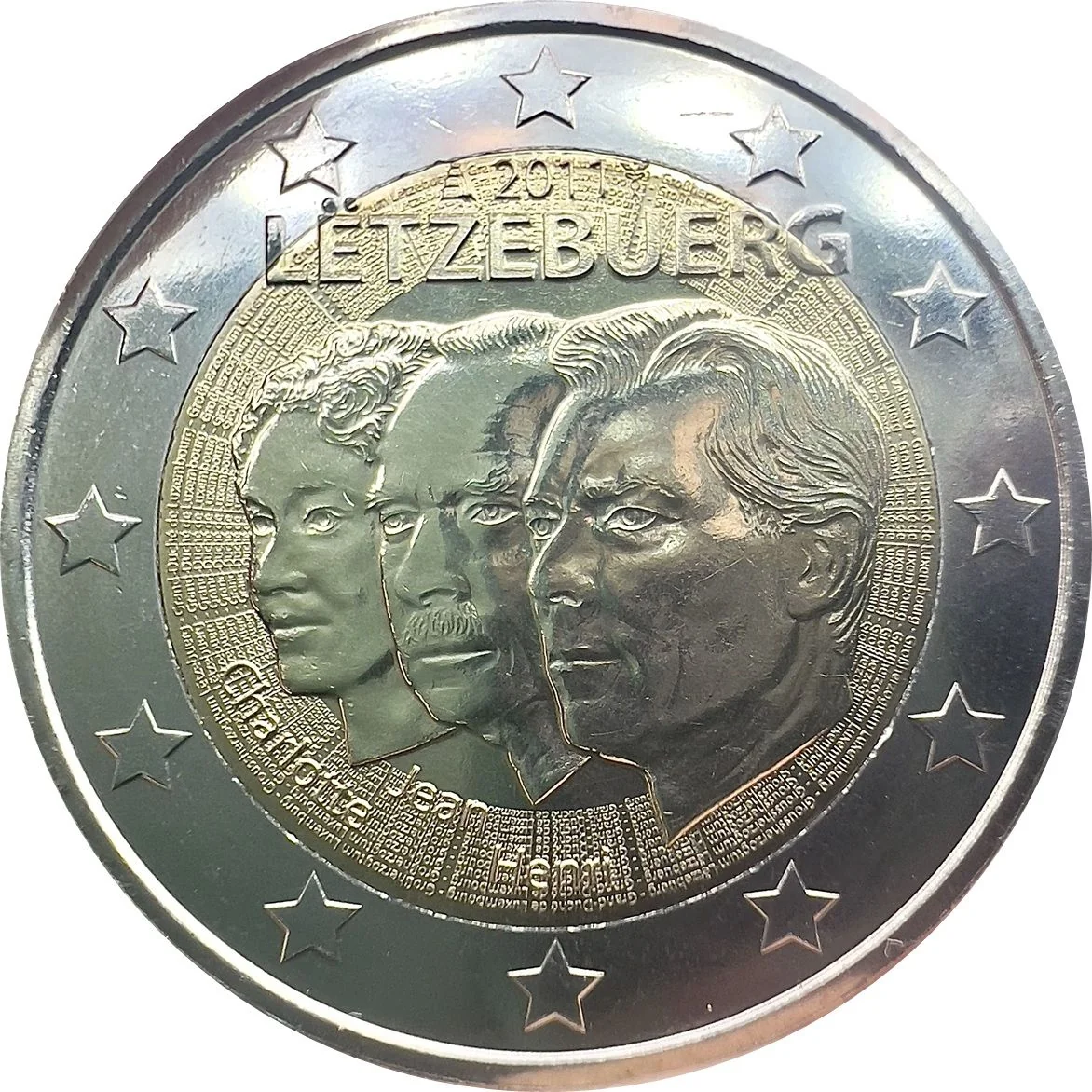
Commemoration: 50th Anniversary of the Appointment of Jean as "lieutenant-représentant"
Luxembourg
Context
Material
References
KM: #
Numista: #18687
Value
Exchange value: 2 EUR
Inflation-adjusted value: 2.75 EUR
Obverse
Description:
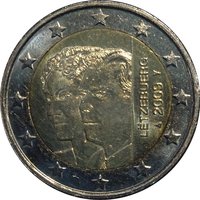
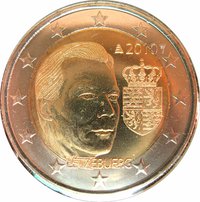
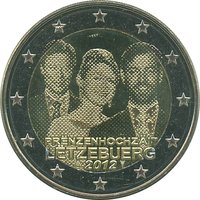
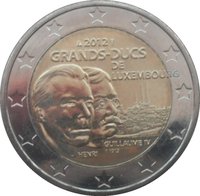
The coin's inner part features the effigy of Grand-Duke Henri, facing left and superimposed over those of Grand-Duke Jean and Grand-Duchess Charlotte. "LËTZEBUERG" appears above them, with the "2011" date and mint marks above that. Each royal name is below their effigy. The outer ring bears the 12 stars of the European Union.
Inscription:
2011
LËTZEBUERG
Jean
Charlotte
Henri
Grand-Duché de Luxembourg
Großherzogtum Luxemburg
Groussherzogtum Lëtzebuerg
LËTZEBUERG
Jean
Charlotte
Henri
Grand-Duché de Luxembourg
Großherzogtum Luxemburg
Groussherzogtum Lëtzebuerg
Translation:
2011
LUXEMBOURG
Jean
Charlotte
Henri
Grand Duchy of Luxembourg
Grand Duchy of Luxembourg
Grand Duchy of Luxembourg
LUXEMBOURG
Jean
Charlotte
Henri
Grand Duchy of Luxembourg
Grand Duchy of Luxembourg
Grand Duchy of Luxembourg
Script: Latin
Engraver: Alain Hoffmann
Reverse
Edge
Legend:
2 ** 2 ** 2 ** 2 ** 2 ** 2 **
Mints
| Name | Mark |
|---|---|
| Royal Dutch Mint | — |
Mintings
| Year | Mint Mark | Mintage | Quality | Collection |
|---|---|---|---|---|
| 2011 | — | 700,000 | ||
| 2011 | — | 25,000 | BU | |
| 2011 | — | 1,500 | Proof |
🌱 Very Common