

1 liard – Liege
Add to wishlist
Belgium
Context
Years: 1750–1752
Country: Belgium
Issuer: Liege
Period:
Ruler: John Theodore of Bavaria
Currency:
(1650—1795)
Demonetization: 17 February 1840
Material
Diameter: 23 mm
Weight: 3.1 g
Thickness: 1 mm
Shape: Round
Composition: Copper
Standard: Gold tenth ounce
Magnetic: No
Alignment: Coin alignment
flip
References
KM: #
Numista: #5432
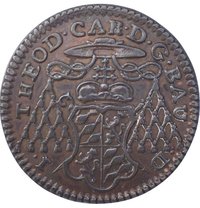
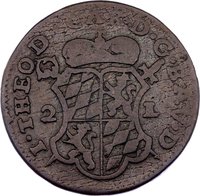
Obverse
Description:
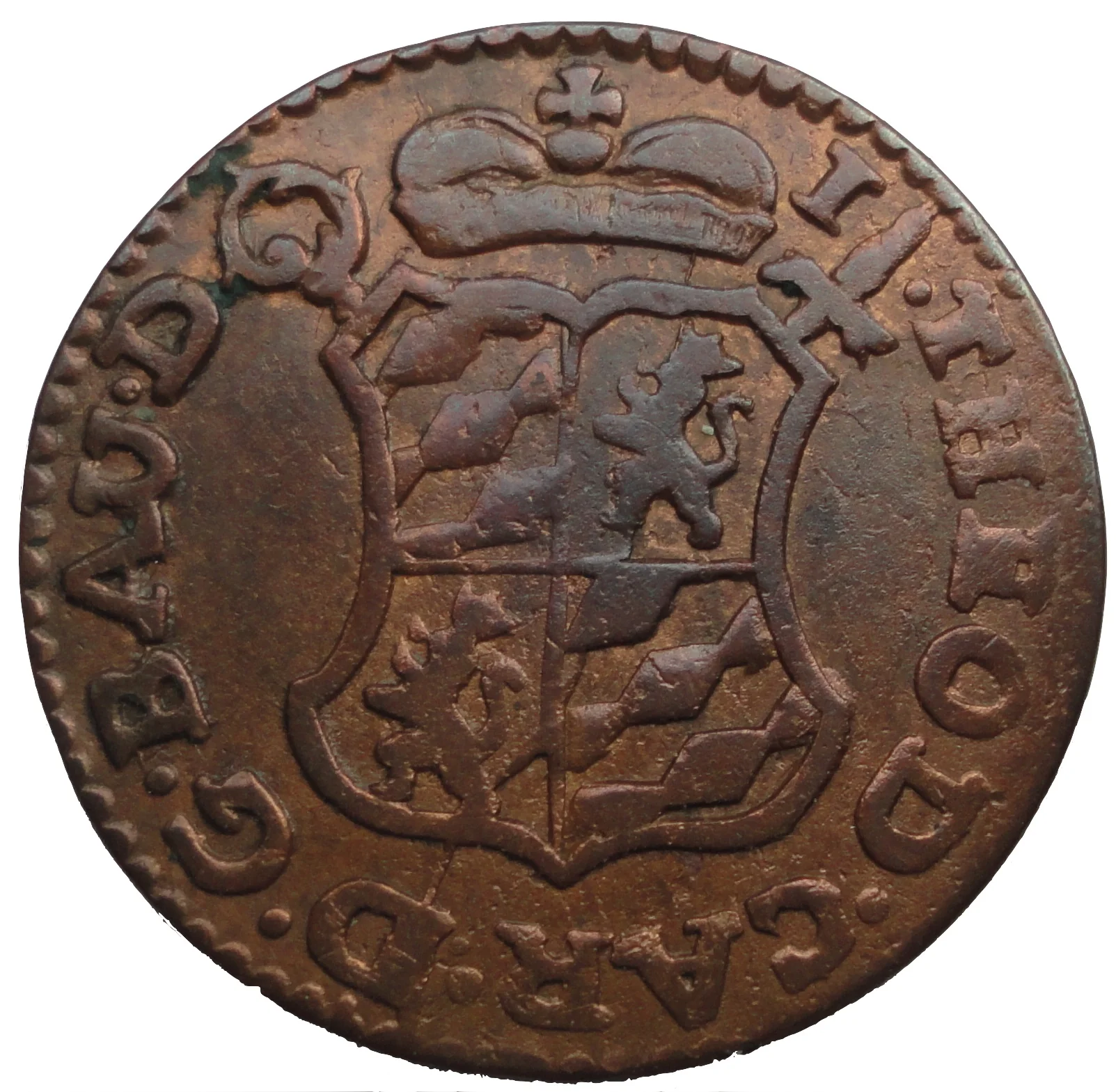
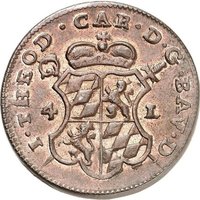
Concave shield with quartered Bavarian-Palatinate arms, crossed crozier and sword, and electoral cap.
Inscription:
I · THEOD · CAR ·D · G · BAU · D
Script: Latin
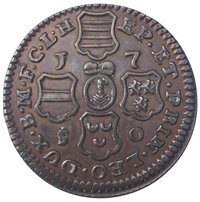
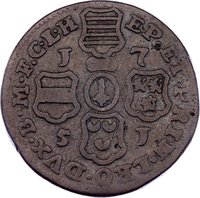
Reverse
Description:
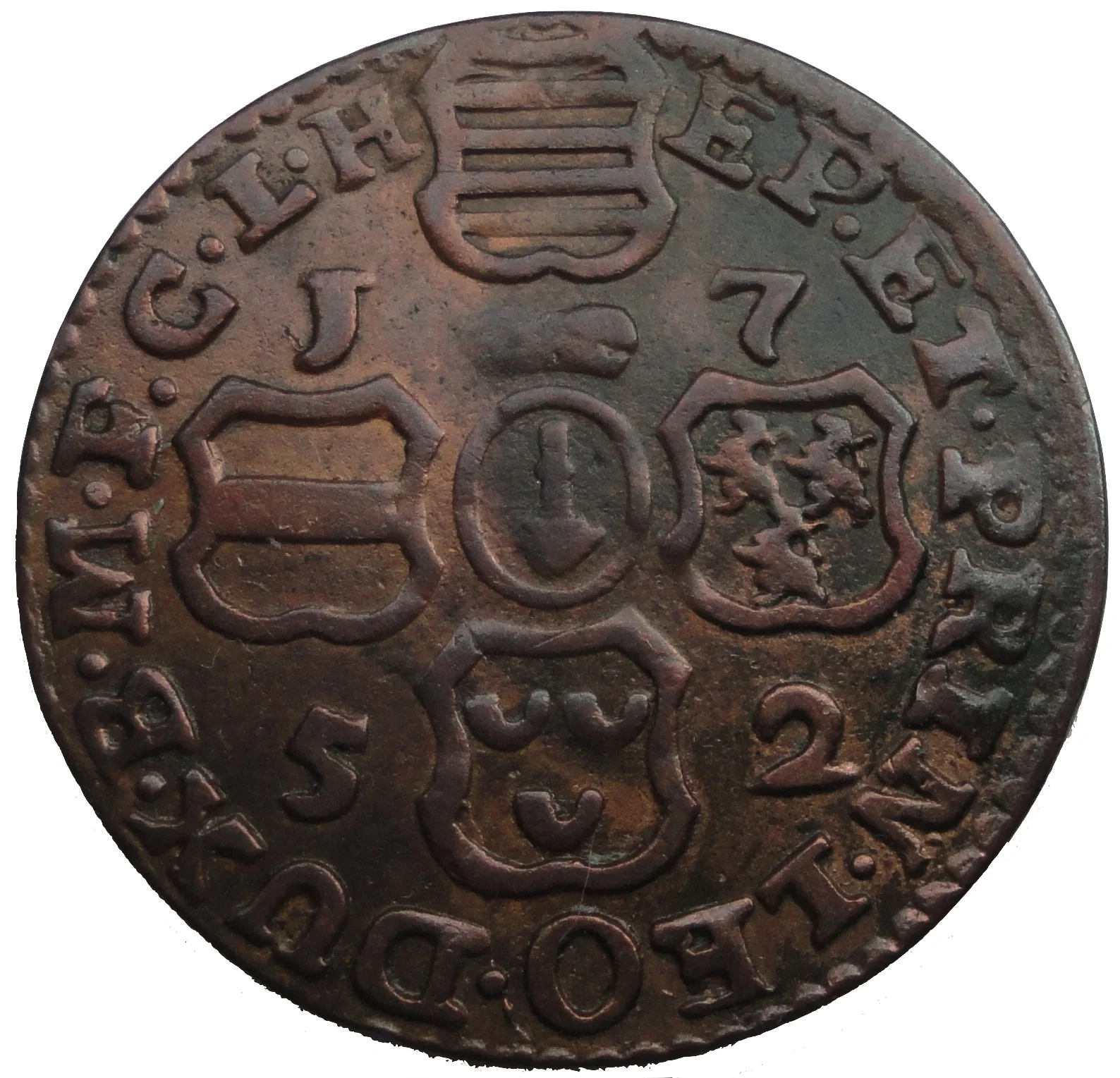
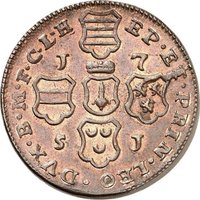
Five coats of arms in a cross: Loon (top), Franchimont (right), Horne (bottom), Bouillon (left), Liège (center), with the date's digits in the angles.
Inscription:
EP · ET · PRIN · LEO · DUX · B · M · F · C · L · H
1752
1752
Script: Latin
Edge
Plain
Categories
| Symbols> Coat of Arms |
Mints
| Name | Mark |
|---|---|
| Liège | — |
Mintings
| Year | Mint Mark | Mintage | Quality | Collection |
|---|---|---|---|---|
| 1750 | — | — | ||
| 1751 | — | — | ||
| 1752 | — | — |

🌱 Common