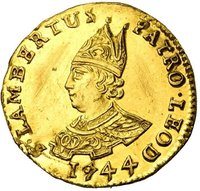
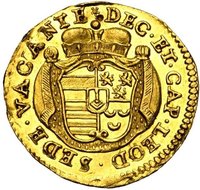
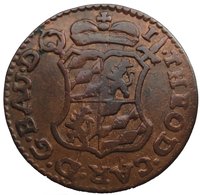
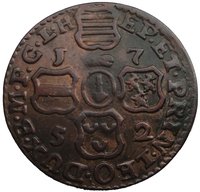
In 1745, the Prince-Bishopric of Liège found itself in a precarious monetary situation, caught between the competing currency systems of its powerful neighbors, the Dutch Republic and France. As an independent ecclesiastical state within the Holy Roman Empire, Liège lacked the sovereign power to enforce a strong, unified currency of its own. Consequently, a chaotic mix of foreign coins, notably Dutch
guilders and French
livres, circulated alongside various German and local issues, leading to frequent confusion, exchange rate fluctuations, and widespread counterfeiting that eroded public trust.
The core of the problem was the bishopric's chronic trade deficit, particularly with the Dutch Republic. This caused a persistent outflow of high-quality silver coins to settle accounts, a process known as the "drain of good specie." In their place, debased and lightweight foreign coins flooded the local economy, driving the sound money out of circulation in accordance with Gresham's Law. The local authorities, including the Prince-Bishop and the three Estates, struggled to respond effectively, as their attempts to fix official exchange rates often lagged behind market realities and were easily circumvented by merchants and money changers.
This monetary instability was exacerbated by the wider European conflict of the War of the Austrian Succession (1740-1748), which raged around Liège's borders. The war increased military spending and economic disruption, further straining the fragile system. While the Peace of Aix-la-Chapelle in 1748 would eventually bring some external stability, the fundamental structural issues of Liège's currency—its dependence on foreign coinage and lack of monetary sovereignty—remained unresolved, continuing to plague its economy for decades.