

6 kreuzers – Tyrol
Add to wishlist
Austria
Context
Material
Diameter: 24 mm
Weight: 3.47 g
Silver Weight:: 1.74 g
Shape: Round
Composition: 50% Silver
Magnetic: No
Technique: Roller milled
Alignment: Medal alignment
flip
References
KM: #
Numista: #39146
Value
Bullion value: $4.35
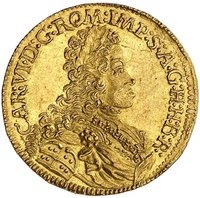
Obverse
Description:
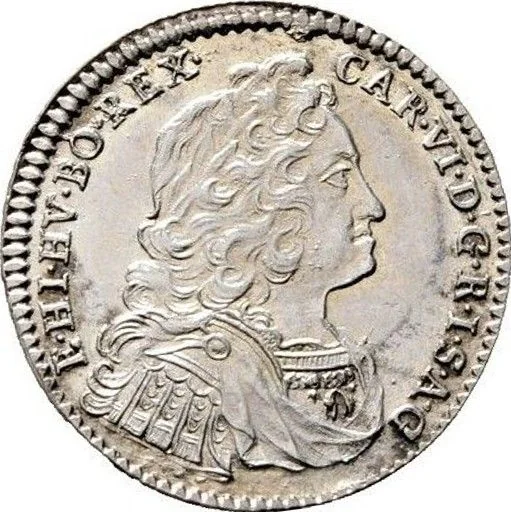
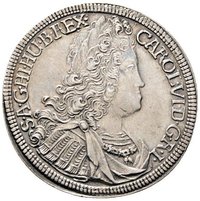
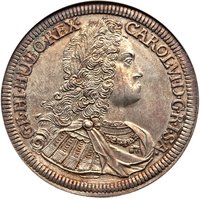
Armored bust right, truncation at rim. Legend around.
Inscription:
CAROL·VI·D·G·R·I·S·A·GE·HI·HV·BO·REX·
Script: Latin
Engraver: Josef Christof König
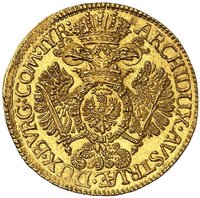
Reverse
Description:
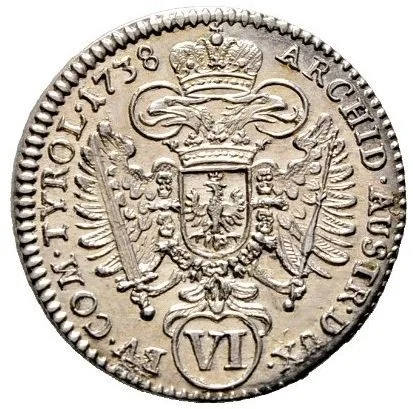
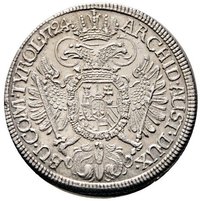
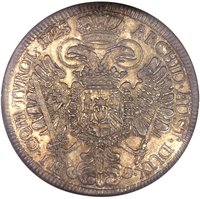
Imperial double-headed eagle with Tyrol's crowned arms on its breast, value below in a cartouche, surrounded by a legend.
Inscription:
ARCHID AUSTR DUX BV COM TYROL 1738
(VI)
(VI)
Script: Latin
Engraver: Josef Christof König
Edge
Plain
Mints
| Name | Mark |
|---|---|
| Hall | — |
Mintings
| Year | Mint Mark | Mintage | Quality | Collection |
|---|---|---|---|---|
| 1724 | — | — | ||
| 1725 | — | 412,000 | ||
| 1726 | — | — | ||
| 1728 | — | 833,000 | ||
| 1729 | — | 629,000 | ||
| 1730 | — | 512,000 | ||
| 1731 | — | 367,000 | ||
| 1732 | — | 255,000 | ||
| 1734 | — | 224,000 | ||
| 1735 | — | 157,000 | ||
| 1736 | — | 716,000 | ||
| 1737 | — | 770,000 | ||
| 1738 | — | 464,000 | ||
| 1739 | — | — | ||
| 1740 | — | 362,000 |
⭐ Rare